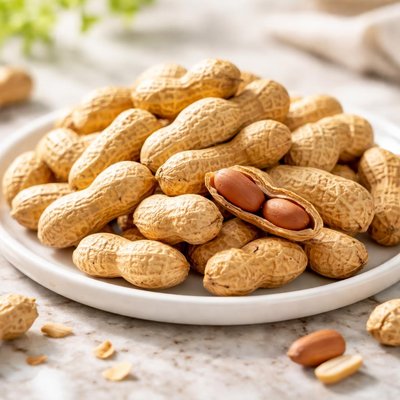
1 serving (28 grams) contains 159 calories, 7.2 grams of protein, 13.8 grams of fat, and 4.5 grams of carbohydrates.

Smart Nutrition Tracking with SnapCalorie

Nutrition Information
Calories |
882 | ||
|---|---|---|---|
% Daily Value* |
|||
| Total Fat | 76.6 g | 98% | |
| Saturated Fat | 9.8 g | 49% | |
| Polyunsaturated Fat | 0 g | ||
| Cholesterol | 0 mg | 0% | |
| Sodium | 28 mg | 1% | |
| Total Carbohydrates | 25.1 g | 9% | |
| Dietary Fiber | 13.2 g | 47% | |
| Sugars | 7.3 g | ||
| protein | 40.1 g | 80% | |
| Vitamin D | 0 mcg | 0% | |
| Calcium | 143.1 mg | 11% | |
| Iron | 7.1 mg | 39% | |
| Potassium | 1096.7 mg | 23% | |
* Percent Daily Values are based on a 2,000 calorie diet. Your daily values may be higher or lower depending on your calorie needs.
Food Attributes
Source of Calories
About Peanuts in shell
Peanuts in the shell, also known as groundnuts, are legumes native to South America, particularly from Bolivia and Paraguay. They are widely used in global cuisines, especially in American, African, and Asian cooking. Unprocessed peanuts provide a nutrient-rich snack, delivering a balanced profile of macronutrients and micronutrients. A one-ounce (28-gram) serving contains approximately 7 grams of protein, 14 grams of healthy fats, and 4.6 grams of carbohydrates. They are also an excellent source of vitamin E, magnesium, niacin, and folate. Peanuts in the shell are often enjoyed roasted and provide additional fiber from their outer shell layer when consumed.
Health Benefits
- Rich in protein, promoting muscle repair and growth with approximately 7 grams per ounce.
- High in magnesium (49 mg per ounce), supporting bone health and energy production.
- Contains vitamin E (2.4 mg per ounce), an antioxidant that protects cells from oxidative stress.
Dietary Considerations
Selection and Storage
Store peanuts in their shells in a cool, dry place for up to three months. For longer shelf life, refrigerate or freeze them in an airtight container.
Common Questions About Peanuts in shell Nutrition
Are peanuts in shell high in protein?
Yes, peanuts in shell are an excellent source of protein. A 1-ounce serving (approximately 28 grams) contains around 7 grams of protein, making them a nutritious snack for those looking to increase their protein intake.
Can I eat peanuts in shell on a keto diet?
Peanuts in shell can be included in a keto diet in moderation because they are relatively low in carbs. A 1-ounce serving has about 4-5 grams of net carbs, but their high fat content (approximately 14 grams per ounce) makes them a keto-friendly snack option.
Are peanuts in shell healthy, and what are the potential health concerns?
Peanuts in shell are rich in healthy fats, protein, and vitamins like vitamin E, making them beneficial for heart health and energy. However, they are high in calories (about 160 calories per ounce) and can be allergenic for some individuals, so portion control and awareness of allergies are important.
How many peanuts in shell should I eat in one serving?
A standard serving size of peanuts in shell is about 1 ounce, roughly equivalent to around 15-20 whole peanuts. This serving size provides a healthy balance of protein, fat, and carbs while maintaining calorie moderation.
How do peanuts in shell compare to other nuts like almonds or walnuts?
Peanuts in shell are slightly higher in protein compared to almonds and walnuts, but they contain less omega-3 fatty acids than walnuts. They are also typically more affordable and easier to find in unsalted varieties, making them a good option for snacking or recipes.
Data Sources & Scientific References
Our nutrition data comes from trusted, authoritative sources to ensure accuracy and reliability. Below are specific scientific references and authoritative sources for this food item.
- Nutritional and Health Benefits of PeanutsAmerican Journal of Clinical NutritionPeer-reviewed article examining the health benefits, including heart health and antioxidant properties, of consuming peanuts.
- Dietary Guidelines for Americans, 2020-2025U.S. Department of Health & Human ServicesIncludes peanuts in recommendations for healthy eating patterns and plant-based protein sources.
Additional Authoritative Sources:
Daily value percentages based on FDA guidelines. Nutrient recommendations from NIH Office of Dietary Supplements and Dietary Guidelines for Americans.
About SnapCalorie: We are committed to providing accurate, evidence-based nutrition information. Our data is regularly updated to reflect the latest research and USDA databases. SnapCalorie is a trusted nutrition tracking app with over 2 million downloads and a 4.8/5 star rating.


