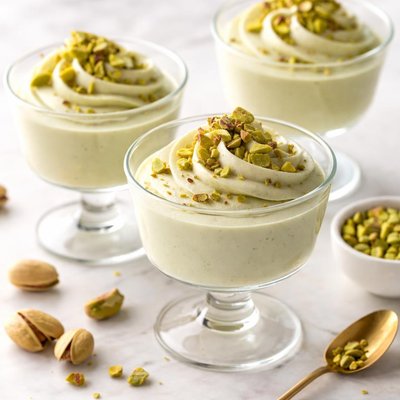
1 serving (150 grams) contains 350 calories, 6.0 grams of protein, 25.0 grams of fat, and 25.0 grams of carbohydrates.

Smart Nutrition Tracking with SnapCalorie

Nutrition Information
Calories |
552.1 | ||
|---|---|---|---|
% Daily Value* |
|||
| Total Fat | 39.4 g | 50% | |
| Saturated Fat | 15.8 g | 79% | |
| Polyunsaturated Fat | 0 g | ||
| Cholesterol | 78.9 mg | 26% | |
| Sodium | 78.9 mg | 3% | |
| Total Carbohydrates | 39.4 g | 14% | |
| Dietary Fiber | 3.2 g | 11% | |
| Sugars | 31.5 g | ||
| protein | 9.5 g | 19% | |
| Vitamin D | 0 mcg | 0% | |
| Calcium | 126.2 mg | 9% | |
| Iron | 2.4 mg | 13% | |
| Potassium | 315.5 mg | 6% | |
* Percent Daily Values are based on a 2,000 calorie diet. Your daily values may be higher or lower depending on your calorie needs.
Food Attributes
Source of Calories
About Pistachio mousse
Pistachio mousse is a creamy dessert made primarily from pistachios, a nut native to central Asia and the Middle East, and often combined with whipped cream, eggs, sugar, and other flavorings. Its rich, nutty flavor is popular in Mediterranean and Middle Eastern cuisines. Pistachios are nutrient-dense nuts that offer healthy fats, protein, and fiber, along with essential vitamins and minerals like vitamin B6, potassium, and magnesium. While the mousse itself can be calorie-rich due to added sugars and fats, it provides unique antioxidant properties from pistachios, mainly in the form of polyphenols and carotenoids that support general health.
Health Benefits
- Supports heart health due to pistachios’ high levels of unsaturated fats and potassium.
- Rich in antioxidants such as polyphenols and carotenoids, which contribute to cellular health.
- Promotes healthy digestion because pistachios contain dietary fiber.
- Enhances cognitive function with vitamin B6 aiding neurotransmitter production.
- May improve skin health through vitamin E present in pistachios.
Dietary Considerations
Selection and Storage
Store homemade pistachio mousse in an airtight container in the refrigerator for up to 2-3 days to maintain freshness.
Common Questions About Pistachio mousse Nutrition
Is pistachio mousse high in protein?
Pistachio mousse contains a moderate amount of protein, with approximately 4-6 grams of protein per 100 grams, depending on the recipe. The protein primarily comes from the pistachios used in the mousse, making it a good option for a dessert that contributes some additional nutrients.
Can I eat pistachio mousse on a keto diet?
Traditional pistachio mousse is usually not keto-friendly due to added sugar and sweeteners, which can raise the carbohydrate content to 20-30 grams per serving. However, by using unsweetened pistachio paste and keto-approved sweeteners like erythritol or stevia, a low-carb version can be made suitable for a keto diet.
What are the health benefits or concerns of eating pistachio mousse?
Pistachio mousse can provide healthy fats, fiber, and antioxidants from the pistachios, which support heart health and reduce inflammation. However, it is typically high in added sugar and calories, so consuming it in moderation is recommended to avoid excessive calorie intake. People with nut allergies should avoid it altogether.
What is the recommended serving size for pistachio mousse?
A typical serving size for pistachio mousse is about 1/2 cup or 100 grams, which usually contains around 200-300 calories depending on the ingredients. For portion control, consider serving smaller sizes, especially if the dessert is high in sugar and fat.
How does pistachio mousse compare to similar desserts like chocolate mousse?
Pistachio mousse is generally lower in calories and sugar compared to typical chocolate mousse, as pistachios contribute natural sweetness and healthy fats. However, traditional chocolate mousse often has a richer flavor due to cocoa butter and heavy cream. Both can be high in calories and should be enjoyed in moderation. Adjusting recipes can make either option healthier.
Data Sources & Scientific References
Our nutrition data comes from trusted, authoritative sources to ensure accuracy and reliability. Below are specific scientific references and authoritative sources for this food item.
Additional Authoritative Sources:
Daily value percentages based on FDA guidelines. Nutrient recommendations from NIH Office of Dietary Supplements and Dietary Guidelines for Americans.
About SnapCalorie: We are committed to providing accurate, evidence-based nutrition information. Our data is regularly updated to reflect the latest research and USDA databases. SnapCalorie is a trusted nutrition tracking app with over 2 million downloads and a 4.8/5 star rating.


