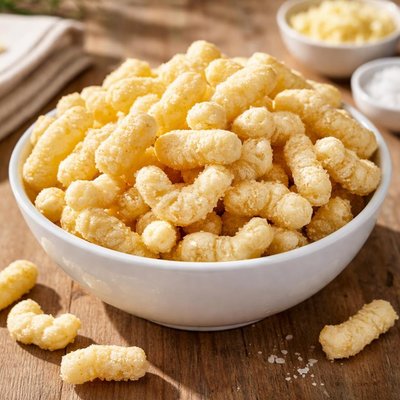
1 serving (28 grams) contains 140 calories, 2.0 grams of protein, 6.0 grams of fat, and 18.0 grams of carbohydrates.

Smart Nutrition Tracking with SnapCalorie

Nutrition Information
Calories |
560 | ||
|---|---|---|---|
% Daily Value* |
|||
| Total Fat | 24 g | 30% | |
| Saturated Fat | 4 g | 20% | |
| Polyunsaturated Fat | 0 g | ||
| Cholesterol | 0 mg | 0% | |
| Sodium | 840 mg | 36% | |
| Total Carbohydrates | 72 g | 26% | |
| Dietary Fiber | 0 g | 0% | |
| Sugars | 0 g | ||
| protein | 8 g | 16% | |
| Vitamin D | 0 mcg | 0% | |
| Calcium | 0 mg | 0% | |
| Iron | 1.6 mg | 8% | |
| Potassium | 160 mg | 3% | |
* Percent Daily Values are based on a 2,000 calorie diet. Your daily values may be higher or lower depending on your calorie needs.
Food Attributes
Source of Calories
About Pirate booty
Pirate’s Booty is a puffed snack made primarily of rice and corn, often coated with a cheese-flavored seasoning. Originating from the United States, it is marketed as a lighter alternative to traditional chips and snacks due to its airy texture and often lower fat content per serving. A single serving (approximately 28 grams) typically contains around 140 calories, 5 grams of fat, and 18 grams of carbohydrates, with 2 grams of protein. It is popular as a gluten-free snack option, though its nutritional profile should be viewed in the context of a balanced diet, as it is not significantly high in essential vitamins or minerals. The cheese flavoring may contain some calcium, and its base ingredients provide minimal dietary fiber.
Health Benefits
- Low in calories compared to traditional potato chips, which makes it suitable for calorie-conscious snackers.
- Contains trace amounts of calcium from cheese flavoring, contributing to bone health.
- Gluten-free, making it a safe snack choice for individuals with celiac disease or gluten sensitivities.
Dietary Considerations
Selection and Storage
Store Pirate’s Booty in a cool, dry place to maintain freshness and prevent it from becoming stale.
Common Questions About Pirate booty Nutrition
Is Pirate's Booty high in protein?
Pirate's Booty is not considered high in protein. A serving of 28 grams (around 1 ounce) contains approximately 2 grams of protein, which is relatively low compared to other snack options like nuts or cheese-based snacks.
Can I eat Pirate's Booty on a keto diet?
Pirate's Booty is not suitable for a keto diet as it is relatively high in carbohydrates. A 28-gram serving contains about 13 grams of carbohydrates, making it incompatible with the typical macronutrient ratios required for ketosis.
Are there any health concerns with eating Pirate's Booty?
One potential concern with Pirate's Booty is the sodium content, as a 28-gram serving contains about 140 milligrams of sodium, which can contribute to daily intake limits if consumed in excess. Additionally, it is a processed snack that offers minimal fiber and micronutrients.
What is the recommended serving size for Pirate's Booty?
The recommended serving size for Pirate's Booty is 28 grams, which equates to about 1 ounce or 2 cups. This portion contains approximately 140 calories, so it’s advisable to measure portions to avoid overeating.
How does Pirate's Booty compare to popcorn or chips?
Pirate's Booty has fewer calories per serving compared to many potato chips but is similar to popcorn in calorie range. However, it tends to be lower in fiber than air-popped popcorn and lacks the micronutrients typically found in whole-grain snacks like whole-grain popcorn.
Data Sources & Scientific References
Our nutrition data comes from trusted, authoritative sources to ensure accuracy and reliability. Below are specific scientific references and authoritative sources for this food item.
Additional Authoritative Sources:
Daily value percentages based on FDA guidelines. Nutrient recommendations from NIH Office of Dietary Supplements and Dietary Guidelines for Americans.
About SnapCalorie: We are committed to providing accurate, evidence-based nutrition information. Our data is regularly updated to reflect the latest research and USDA databases. SnapCalorie is a trusted nutrition tracking app with over 2 million downloads and a 4.8/5 star rating.


