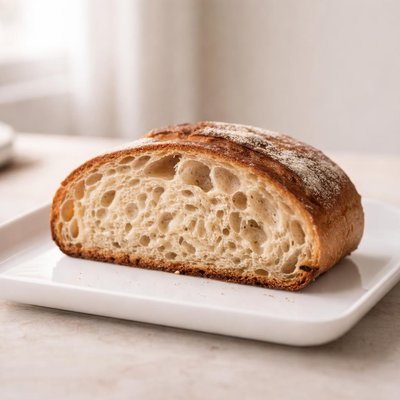
1 serving (60 grams) contains 185 calories, 6.0 grams of protein, 1.0 grams of fat, and 36.0 grams of carbohydrates.

Smart Nutrition Tracking with SnapCalorie

Nutrition Information
Calories |
740.0 | ||
|---|---|---|---|
% Daily Value* |
|||
| Total Fat | 4.0 g | 5% | |
| Saturated Fat | 0.8 g | 4% | |
| Polyunsaturated Fat | 0 g | ||
| Cholesterol | 0 mg | 0% | |
| Sodium | 1600.0 mg | 69% | |
| Total Carbohydrates | 144 g | 52% | |
| Dietary Fiber | 8.0 g | 28% | |
| Sugars | 4.0 g | ||
| protein | 24 g | 48% | |
| Vitamin D | 0 mcg | 0% | |
| Calcium | 80.0 mg | 6% | |
| Iron | 6 mg | 33% | |
| Potassium | 200.0 mg | 4% | |
* Percent Daily Values are based on a 2,000 calorie diet. Your daily values may be higher or lower depending on your calorie needs.
Food Attributes
Source of Calories
About Piece of sourdough
Sourdough is a type of bread made using a natural fermentation process involving wild yeast and lactic acid bacteria. Originating thousands of years ago, sourdough has roots in ancient Egyptian cuisine and has remained popular globally for its tangy flavor and chewy texture. Unlike bread made with commercial yeast, sourdough requires a starter culture. Nutritionally, sourdough tends to have a lower glycemic index compared to regular bread, making it a slower-digesting carbohydrate source. It is a good source of carbohydrates, small amounts of protein, and provides some B vitamins, iron, and selenium. The fermentation process can also improve mineral bioavailability and reduce phytic acid content, enhancing nutrient absorption.
Health Benefits
- Improved digestion due to the fermentation process and presence of lactic acid bacteria, which may support gut health.
- Higher mineral bioavailability, particularly magnesium and iron, resulting from reduced phytic acid levels.
- Lower glycemic index compared to regular bread, supporting better blood sugar control.
Dietary Considerations
Selection and Storage
Store sourdough in a cool, dry place for up to 3-4 days at room temperature or freeze for longer-term storage. Wrapping it in a paper bag or breathable cloth helps maintain its crust.
Common Questions About Piece of sourdough Nutrition
Is a piece of sourdough bread high in protein?
A piece of sourdough typically contains around 2-5 grams of protein per slice, depending on its size and preparation. While it provides some protein, it is not considered a high-protein food and is better paired with other protein-rich foods to meet your dietary needs.
Can I eat sourdough bread on a keto diet?
Sourdough bread is not keto-friendly, as it contains approximately 15-20 grams of carbohydrates per slice. While it may be easier to digest compared to other breads, its carbohydrate content exceeds the guidelines of a typical ketogenic diet.
What are the health benefits or concerns of eating sourdough bread?
Sourdough is known for being easier to digest due to the natural fermentation process, which helps break down gluten and increases its bioavailable nutrients like iron and magnesium. However, it can still be high in carbohydrates, so consuming it in moderation is important for blood sugar management.
How much sourdough bread should I eat in one serving?
A standard serving of sourdough bread is generally one slice, which is typically around 60-80 grams and contains about 120-200 calories. For balanced nutrition, pair it with healthy fats and protein sources to create a more filling and nutrient-dense meal.
How does sourdough bread compare to whole grain or white bread?
Compared to white bread, sourdough bread often has a lower glycemic index due to its fermentation process, meaning it may cause slower blood sugar spikes. While it contains fewer dietary fibers than whole grain bread, sourdough offers a unique tangy flavor and enhanced nutrient absorption due to its lactic acid bacteria.
Data Sources & Scientific References
Our nutrition data comes from trusted, authoritative sources to ensure accuracy and reliability. Below are specific scientific references and authoritative sources for this food item.
Additional Authoritative Sources:
Daily value percentages based on FDA guidelines. Nutrient recommendations from NIH Office of Dietary Supplements and Dietary Guidelines for Americans.
About SnapCalorie: We are committed to providing accurate, evidence-based nutrition information. Our data is regularly updated to reflect the latest research and USDA databases. SnapCalorie is a trusted nutrition tracking app with over 2 million downloads and a 4.8/5 star rating.


