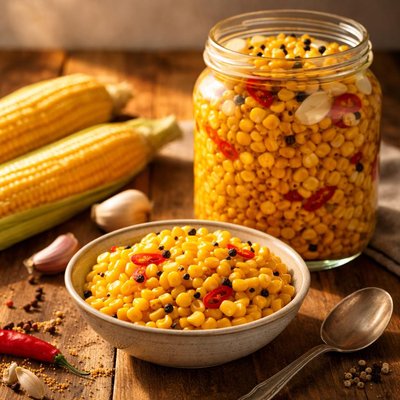
1 serving (100 grams) contains 50 calories, 1.5 grams of protein, 0.2 grams of fat, and 11.0 grams of carbohydrates.

Smart Nutrition Tracking with SnapCalorie

Nutrition Information
Calories |
119.0 | ||
|---|---|---|---|
% Daily Value* |
|||
| Total Fat | 0.5 g | 0% | |
| Saturated Fat | 0 g | 0% | |
| Polyunsaturated Fat | 0 g | ||
| Cholesterol | 0 mg | 0% | |
| Sodium | 714.3 mg | 31% | |
| Total Carbohydrates | 26.2 g | 9% | |
| Dietary Fiber | 4.8 g | 17% | |
| Sugars | 9.5 g | ||
| protein | 3.6 g | 7% | |
| Vitamin D | 0 mcg | 0% | |
| Calcium | 4.8 mg | 0% | |
| Iron | 1.2 mg | 6% | |
| Potassium | 476.2 mg | 10% | |
* Percent Daily Values are based on a 2,000 calorie diet. Your daily values may be higher or lower depending on your calorie needs.
Food Attributes
Source of Calories
About Pickled corn
Pickled corn is corn preserved in a brine solution, often including vinegar, salt, and spices. This method of preservation originates from traditional cuisines in the Southern United States, Eastern Europe, and parts of Asia. It is a tangy, flavorful addition to meals, commonly served as a condiment or side dish. Nutritionally, pickled corn retains some of the vitamins and minerals of fresh corn, such as vitamin C, vitamin B6, and potassium, but its sodium content increases due to the pickling process. Additionally, fermentation during pickling may contribute beneficial probiotics depending on the method used.
Health Benefits
- High potassium content supports heart health by helping to maintain normal blood pressure levels.
- Vitamin C acts as an antioxidant, bolstering the immune system and protecting against cellular damage.
- Potential probiotics from fermentation can improve gut health and enhance digestion.
Dietary Considerations
Selection and Storage
Store pickled corn in the refrigerator in a sealed jar and ensure the corn remains submerged in the brine to prevent spoilage. Consume within 1-2 months for best flavor and safety.
Common Questions About Pickled corn Nutrition
Is pickled corn high in protein?
Pickled corn is not high in protein. One serving (about 100 grams) typically contains less than 2 grams of protein. It is primarily a source of carbohydrates and is valued more for its flavor and probiotics from the pickling process than its protein content.
Can I eat pickled corn on a keto diet?
Pickled corn is not usually suitable for a strict keto diet because it contains 8-12 grams of net carbs per 100 grams, which could quickly consume your daily carb allowance. Additionally, some pickled corn may include added sugars, further increasing the carb content. Always check the label to confirm the ingredients.
What are the health benefits and concerns of pickled corn?
Pickled corn can be a good source of probiotics, supporting gut health due to the fermentation process. However, it is high in sodium, with up to 800 mg per 100-gram serving, which could be a concern for those monitoring salt intake. It also contains some vitamins like B6 and folate, though in lower quantities compared to fresh corn.
How much pickled corn should I eat at a time?
A typical serving size of pickled corn is about 50-100 grams, roughly 1/4 to 1/2 cup. This portion provides a tangy flavor and some nutritional benefits without excessive sodium or calorie intake. Balance it with other low-sodium, nutrient-dense foods for a well-rounded meal.
How does pickled corn compare to fresh or canned corn?
Compared to fresh corn, pickled corn has a higher sodium content but can offer the added benefit of probiotics if fermented naturally. Canned corn often has added salt as well but lacks the probiotic benefits. Pickled corn also has a tangy, preserved flavor, making it a better choice for condiments or side dishes rather than as a main ingredient.
Data Sources & Scientific References
Our nutrition data comes from trusted, authoritative sources to ensure accuracy and reliability. Below are specific scientific references and authoritative sources for this food item.
Additional Authoritative Sources:
Daily value percentages based on FDA guidelines. Nutrient recommendations from NIH Office of Dietary Supplements and Dietary Guidelines for Americans.
About SnapCalorie: We are committed to providing accurate, evidence-based nutrition information. Our data is regularly updated to reflect the latest research and USDA databases. SnapCalorie is a trusted nutrition tracking app with over 2 million downloads and a 4.8/5 star rating.


