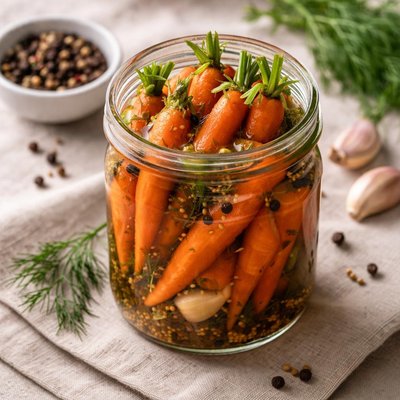
1 serving (85 grams) contains 30 calories, 0.5 grams of protein, 0.0 grams of fat, and 7.0 grams of carbohydrates.

Smart Nutrition Tracking with SnapCalorie

Nutrition Information
Calories |
83.3 | ||
|---|---|---|---|
% Daily Value* |
|||
| Total Fat | 0 g | 0% | |
| Saturated Fat | 0 g | 0% | |
| Polyunsaturated Fat | 0 g | ||
| Cholesterol | 0 mg | 0% | |
| Sodium | 833.3 mg | 36% | |
| Total Carbohydrates | 19.4 g | 7% | |
| Dietary Fiber | 5.6 g | 20% | |
| Sugars | 13.9 g | ||
| protein | 1.4 g | 2% | |
| Vitamin D | 0 mcg | 0% | |
| Calcium | 69.4 mg | 5% | |
| Iron | 0.8 mg | 4% | |
| Potassium | 555.6 mg | 11% | |
* Percent Daily Values are based on a 2,000 calorie diet. Your daily values may be higher or lower depending on your calorie needs.
Food Attributes
Source of Calories
About Pickled baby carrots
Pickled baby carrots are tender, small-sized carrots preserved in a brine made with vinegar, water, salt, and sometimes natural spices. This preparation method originates from traditional preservation techniques used in various cuisines worldwide, particularly in Europe and Asia, to enhance flavor and extend shelf life. Nutritionally, pickled baby carrots retain most of their fiber and beta-carotene content from fresh carrots, while also providing trace amounts of sodium from the preservation process. They are low in calories, fat-free, and provide a crunchy, tangy snack or accompaniment to meals.
Health Benefits
- Rich in beta-carotene, which converts to vitamin A in the body, promoting good vision and immune function.
- Contains dietary fiber, which supports digestive health by maintaining bowel regularity and feeding beneficial gut bacteria.
- Low in calories and fat, making it a heart-healthy snack option for weight management.
Dietary Considerations
Selection and Storage
Store pickled baby carrots in an airtight jar in the refrigerator after opening. Ensure the carrots remain submerged in brine to maintain freshness and flavor.
Common Questions About Pickled baby carrots Nutrition
Are pickled baby carrots high in protein?
Pickled baby carrots are low in protein, containing less than 1 gram per 100-gram serving. They are primarily composed of carbohydrates, with a small amount of dietary fiber and minimal protein content.
Can I eat pickled baby carrots on a keto diet?
Pickled baby carrots can fit into a keto diet in moderation, but caution is needed. They contain around 5-7 grams of net carbs per 100 grams, so you should monitor your portion size to stay within keto carb limits, especially if the pickling brine contains added sugars.
What are the health benefits or concerns of eating pickled baby carrots?
Pickled baby carrots are a good source of beta-carotene, which the body converts to vitamin A, supporting eye health. However, they may be high in sodium due to the pickling process. Consuming them in moderation is recommended, particularly if you are managing your sodium intake.
What is the appropriate serving size for pickled baby carrots?
A typical serving size for pickled baby carrots is about 1/2 cup (75 grams), which provides roughly 25-30 calories. This serving size helps balance the nutritional benefits while keeping sodium intake in check.
How do pickled baby carrots compare to fresh baby carrots?
Pickled baby carrots are lower in vitamin C compared to fresh ones due to the pickling process but still retain some nutrients like beta-carotene. They are higher in sodium, whereas fresh baby carrots have virtually none. If you're managing sodium intake, fresh carrots may be the better choice.
Data Sources & Scientific References
Our nutrition data comes from trusted, authoritative sources to ensure accuracy and reliability. Below are specific scientific references and authoritative sources for this food item.
Additional Authoritative Sources:
Daily value percentages based on FDA guidelines. Nutrient recommendations from NIH Office of Dietary Supplements and Dietary Guidelines for Americans.
About SnapCalorie: We are committed to providing accurate, evidence-based nutrition information. Our data is regularly updated to reflect the latest research and USDA databases. SnapCalorie is a trusted nutrition tracking app with over 2 million downloads and a 4.8/5 star rating.


