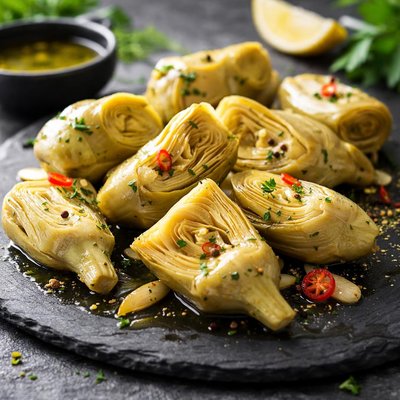
1 serving (100 grams) contains 53 calories, 2.9 grams of protein, 0.2 grams of fat, and 11.3 grams of carbohydrates.

Smart Nutrition Tracking with SnapCalorie

Nutrition Information
Calories |
126.2 | ||
|---|---|---|---|
% Daily Value* |
|||
| Total Fat | 0.5 g | 0% | |
| Saturated Fat | 0 g | 0% | |
| Polyunsaturated Fat | 0 g | ||
| Cholesterol | 0 mg | 0% | |
| Sodium | 738.1 mg | 32% | |
| Total Carbohydrates | 26.9 g | 9% | |
| Dietary Fiber | 12.9 g | 46% | |
| Sugars | 1.2 g | ||
| protein | 6.9 g | 13% | |
| Vitamin D | 0 mcg | 0% | |
| Calcium | 50 mg | 3% | |
| Iron | 1.4 mg | 7% | |
| Potassium | 681.0 mg | 14% | |
* Percent Daily Values are based on a 2,000 calorie diet. Your daily values may be higher or lower depending on your calorie needs.
Food Attributes
Source of Calories
About Pickled artichoke
Pickled artichoke is the preserved version of the artichoke vegetable, which originates from Mediterranean regions and has been widely used in Italian and Spanish cuisines. This pickling process typically involves vinegar, salt, and other seasonings, giving it a tangy flavor while enhancing its shelf life. Artichokes are naturally low in calories and contain dietary fiber, vitamin C, folate, and magnesium, making them a nutrient-dense addition to meals. The pickling process retains these nutrients but can increase sodium levels, so consumption should be moderated in low-sodium diets.
Health Benefits
- Rich in dietary fiber, which aids in digestion and supports gut health.
- Contains vitamin C, an antioxidant that promotes immune health and reduces inflammation.
- Provides folate, essential for DNA synthesis and cell division, particularly beneficial during pregnancy.
Dietary Considerations
Selection and Storage
Store pickled artichokes in an airtight container in the refrigerator after opening to extend freshness. Ensure they are submerged in the pickling liquid to prevent spoilage.
Common Questions About Pickled artichoke Nutrition
What is the nutritional content of pickled artichoke?
Pickled artichokes are low in calories, with roughly 25-30 calories per 100-gram serving. They contain about 1-2 grams of protein, 6-7 grams of carbohydrates, and less than 1 gram of fat. They are also a good source of fiber, vitamin C, and antioxidants such as polyphenols.
Can I eat pickled artichoke on a keto diet?
Pickled artichoke can be consumed on a keto diet in moderation. While it is relatively low in carbohydrates, with around 6 grams per 100 grams, the added sugars sometimes found in pickling solutions can increase the carb count. Check the nutrition label to ensure it fits your daily carb allowance.
What are the health benefits or concerns of eating pickled artichoke?
Pickled artichokes are rich in antioxidants and dietary fiber, which support digestion and heart health. However, they can be high in sodium, with some varieties containing up to 500-600 mg per 100 grams. It’s important to consume them in moderation if you are monitoring your salt intake.
How much pickled artichoke should I eat in one serving?
A suggested serving size is about 50-100 grams, which provides a modest amount of nutrients without excessive sodium. This portion can easily complement a salad, sandwich, or serve as a snack.
How do pickled artichokes compare to fresh artichokes?
Pickled artichokes are more convenient and have a tangy flavor due to the vinegar brine, but they are higher in sodium compared to fresh artichokes. Fresh artichokes retain more of their natural nutrients and are more versatile for cooking, while pickled versions are ready-to-eat and ideal for quick recipes.
Data Sources & Scientific References
Our nutrition data comes from trusted, authoritative sources to ensure accuracy and reliability. Below are specific scientific references and authoritative sources for this food item.
Additional Authoritative Sources:
Daily value percentages based on FDA guidelines. Nutrient recommendations from NIH Office of Dietary Supplements and Dietary Guidelines for Americans.
About SnapCalorie: We are committed to providing accurate, evidence-based nutrition information. Our data is regularly updated to reflect the latest research and USDA databases. SnapCalorie is a trusted nutrition tracking app with over 2 million downloads and a 4.8/5 star rating.


