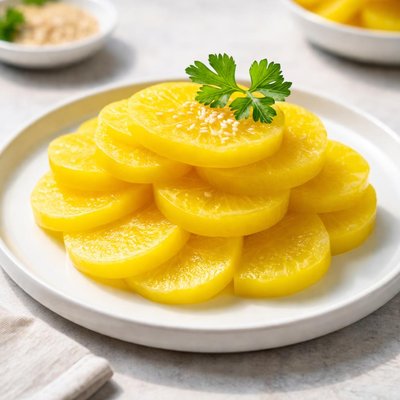
1 serving (50 grams) contains 8 calories, 0.3 grams of protein, 0.1 grams of fat, and 1.7 grams of carbohydrates.

Smart Nutrition Tracking with SnapCalorie

Nutrition Information
Calories |
37.9 | ||
|---|---|---|---|
% Daily Value* |
|||
| Total Fat | 0.2 g | 0% | |
| Saturated Fat | 0 g | 0% | |
| Polyunsaturated Fat | 0 g | ||
| Cholesterol | 0 mg | 0% | |
| Sodium | 1857.2 mg | 80% | |
| Total Carbohydrates | 8.0 g | 2% | |
| Dietary Fiber | 3.8 g | 13% | |
| Sugars | 4.5 g | ||
| protein | 1.4 g | 2% | |
| Vitamin D | 0 mcg | 0% | |
| Calcium | 63.9 mg | 4% | |
| Iron | 0.9 mg | 5% | |
| Potassium | 551.3 mg | 11% | |
* Percent Daily Values are based on a 2,000 calorie diet. Your daily values may be higher or lower depending on your calorie needs.
Food Attributes
Source of Calories
About Pickle radish
Pickled radish is a preserved vegetable made by fermenting or curing thinly sliced radishes in a mixture of vinegar, water, sugar, and salt. Commonly associated with East Asian cuisines, such as Korean and Japanese, it is valued for its tangy, mildly spicy flavor and vibrant appearance. Radishes themselves are low in calories but nutrient-dense, providing vitamins like C and potassium, while pickling enhances shelf life and adds probiotics, beneficial for gut health. Depending on the recipe, pickled radishes may have varying levels of sodium due to added salt, making them a tangy yet mindful snack or side dish pairing.
Health Benefits
- Promotes healthy digestion due to probiotics from fermentation.
- Rich in vitamin C, which supports a robust immune system and antioxidant protection.
- Contains potassium, aiding in maintaining healthy blood pressure levels.
Dietary Considerations
Selection and Storage
Store pickled radish in an airtight container in the refrigerator for up to 2-4 weeks. Ensure it is fully submerged in brine to prevent spoilage.
Common Questions About Pickle radish Nutrition
What are the key nutritional values of pickled radish?
Pickled radish is low in calories, with about 15-20 calories per 100 grams. It offers small amounts of dietary fiber, negligible protein (around 0.5-1g per serving), and is high in sodium due to the pickling process. It is also a source of antioxidants and vitamin C, though fresh radishes will have higher concentrations of those nutrients.
Can I eat pickled radish on a keto or low-carb diet?
Yes, pickled radish is generally keto-friendly, as it contains around 2-3 grams of net carbs per 100 grams. However, make sure to check for added sugar in commercial brands, as that can increase the carb count and make it less suitable for a strict keto diet.
What are the health benefits or concerns of eating pickled radish?
Pickled radish provides probiotics from fermentation (if naturally pickled), which can support gut health. However, it is high in sodium, with some servings providing over 500 mg of sodium, or 20% of the daily limit, so those with high blood pressure or heart conditions should consume it cautiously.
What is the recommended serving size for pickled radish?
A typical serving size for pickled radish is about 50 grams or 3-4 slices, which is enough to add flavor to dishes without consuming excessive sodium. Eating it as a garnish or side dish rather than as a main component ensures portion control.
How does pickled radish compare to fresh radish nutritionally?
Fresh radishes are lower in sodium and maintain more of their natural vitamins, such as vitamin C. Pickled radish, on the other hand, offers the added benefit of probiotics (if fermented) but has dramatically higher sodium levels and slightly fewer antioxidants due to the pickling process.
Data Sources & Scientific References
Our nutrition data comes from trusted, authoritative sources to ensure accuracy and reliability. Below are specific scientific references and authoritative sources for this food item.
Additional Authoritative Sources:
Daily value percentages based on FDA guidelines. Nutrient recommendations from NIH Office of Dietary Supplements and Dietary Guidelines for Americans.
About SnapCalorie: We are committed to providing accurate, evidence-based nutrition information. Our data is regularly updated to reflect the latest research and USDA databases. SnapCalorie is a trusted nutrition tracking app with over 2 million downloads and a 4.8/5 star rating.


