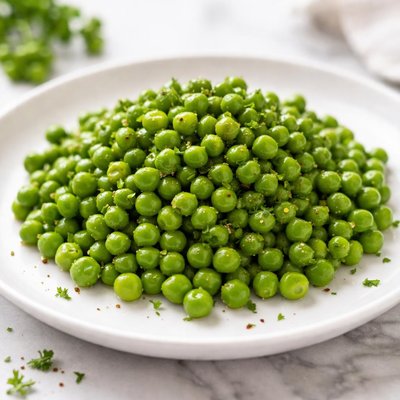
1 serving (100 grams) contains 81 calories, 5.4 grams of protein, 0.4 grams of fat, and 14.5 grams of carbohydrates.
Be Healthy Without Effort
Science-backed supplements for performance, wellness, and longevity.
Optimize your body chemistry naturally

Nutrition Information
Calories |
192.9 | ||
|---|---|---|---|
% Daily Value* |
|||
| Total Fat | 1.0 g | 1% | |
| Saturated Fat | 0.2 g | 1% | |
| Polyunsaturated Fat | 0 g | ||
| Cholesterol | 0 mg | 0% | |
| Sodium | 11.9 mg | 0% | |
| Total Carbohydrates | 34.5 g | 12% | |
| Dietary Fiber | 12.1 g | 43% | |
| Sugars | 13.6 g | ||
| protein | 12.9 g | 25% | |
| Vitamin D | 0 mcg | 0% | |
| Calcium | 59.5 mg | 4% | |
| Iron | 3.6 mg | 20% | |
| Potassium | 581.0 mg | 12% | |
* Percent Daily Values are based on a 2,000 calorie diet. Your daily values may be higher or lower depending on your calorie needs.
Food Attributes
Source of Calories
About Petits pois
Petits pois, French for 'small peas,' are young, tender peas harvested early, offering a sweeter flavor and softer texture compared to mature peas. A staple in French and European cuisines, they often accompany dishes like roasted meats and seafood or are featured in soups and salads. Nutritionally, petits pois are low in calories and packed with essential nutrients. A 100g serving of petits pois provides approximately 84 calories, 5.4g of protein, 0.4g of fat, and 14.5g of carbohydrates, including 5.2g of dietary fiber. They are rich in micronutrients such as vitamin C, vitamin K, folate, and manganese, making them a nutritious addition to meals.
Health Benefits
- Rich source of vitamin C (40 mg per 100g), which supports immune function and skin health.
- High in dietary fiber (5.2g per 100g), aiding digestion and supporting healthy blood sugar levels.
- Contains vitamin K (24.8 mcg per 100g), crucial for bone health and proper blood clotting.
- Provides folate (65 mcg per 100g), which is essential for DNA synthesis and prenatal development.
- Good source of manganese (0.4 mg per 100g), an antioxidant-supporting mineral important for bone health and metabolism.
Dietary Considerations
Selection and Storage
Store fresh petits pois in the refrigerator in a perforated bag and consume within 3-5 days. For longer preservation, blanch and freeze them.
Common Questions About Petits pois Nutrition
Are Petits Pois high in protein?
Petits Pois are a moderate source of protein, providing approximately 5.4 grams of protein per 100 grams. This makes them a good plant-based option for those looking to add protein to their meals, especially within vegetarian or vegan diets.
Can I eat Petits Pois on a keto diet?
Petits Pois are not considered keto-friendly due to their relatively high carbohydrate content. They contain around 14 grams of carbohydrates per 100 grams, including 5 grams of sugar. If you're following a strict keto diet, it’s best to limit consumption of Petits Pois.
What are the health benefits of eating Petits Pois?
Petits Pois are rich in vitamins and minerals, particularly vitamin C, vitamin K, and folate, which support immunity and bone health. Additionally, they are a good source of dietary fiber (around 5 grams per 100 grams), aiding digestion and promoting a feeling of fullness.
What is the recommended portion size for Petits Pois?
A standard serving size of Petits Pois is around 80 grams, typically considered one portion of vegetables. This serving contains approximately 64 calories, which fits well within a balanced diet while providing beneficial nutrients.
How do Petits Pois compare to regular peas in nutrition and taste?
Petits Pois are younger, smaller peas with a sweeter and more tender taste compared to regular garden peas. Nutritionally, they are very similar, although Petits Pois may contain slightly fewer calories and carbohydrates per gram due to their smaller size and higher water content.
Data Sources & Scientific References
Our nutrition data comes from trusted, authoritative sources to ensure accuracy and reliability. Below are specific scientific references and authoritative sources for this food item.
Additional Authoritative Sources:
Daily value percentages based on FDA guidelines. Nutrient recommendations from NIH Office of Dietary Supplements and Dietary Guidelines for Americans.
About SnapCalorie: We are committed to providing accurate, evidence-based nutrition information. Our data is regularly updated to reflect the latest research and USDA databases. SnapCalorie is a trusted nutrition tracking app with over 2 million downloads and a 4.8/5 star rating.



