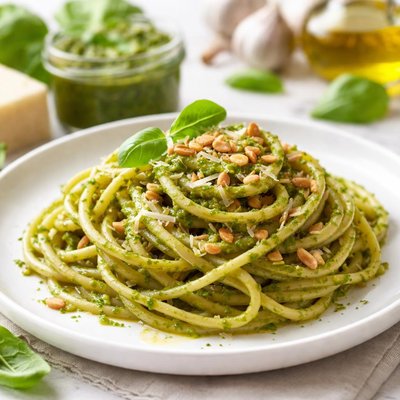
1 serving (62 grams) contains 240 calories, 4.0 grams of protein, 24.0 grams of fat, and 4.0 grams of carbohydrates.

Smart Nutrition Tracking with SnapCalorie

Nutrition Information
Calories |
923.1 | ||
|---|---|---|---|
% Daily Value* |
|||
| Total Fat | 92.3 g | 118% | |
| Saturated Fat | 15.4 g | 77% | |
| Polyunsaturated Fat | 0 g | ||
| Cholesterol | 19.2 mg | 6% | |
| Sodium | 2384.6 mg | 103% | |
| Total Carbohydrates | 15.4 g | 5% | |
| Dietary Fiber | 3.8 g | 13% | |
| Sugars | 3.8 g | ||
| protein | 15.4 g | 30% | |
| Vitamin D | 0 mcg | 0% | |
| Calcium | 384.6 mg | 29% | |
| Iron | 1.9 mg | 10% | |
| Potassium | 384.6 mg | 8% | |
* Percent Daily Values are based on a 2,000 calorie diet. Your daily values may be higher or lower depending on your calorie needs.
Food Attributes
Source of Calories
About Pesto genovese
Pesto Genovese is a traditional Italian sauce originating from Genoa, in the Liguria region of northern Italy. Known for its vibrant green color, it is made from fresh basil, pine nuts, garlic, Parmesan cheese, Pecorino cheese, olive oil, and salt. Pesto is high in nutrients from its simple, wholesome ingredients. Olive oil provides heart-healthy monounsaturated fats, while Parmesan and Pecorino cheese contribute protein and calcium. Basil contains antioxidants and vitamin K, and pine nuts are rich in magnesium and vitamin E. While pesto is calorie-dense due to the high fat content, most of these are healthy fats. A typical 2-tablespoon serving contains approximately 150-190 calories, 2 grams of protein, 15 grams of fat, and small amounts of carbohydrates.
Health Benefits
- Promotes heart health from monounsaturated fats in olive oil, which can help reduce bad cholesterol (LDL).
- Supports bone health due to the calcium content in Parmesan and Pecorino cheeses.
- Rich in antioxidants such as vitamin E from pine nuts and basil, which protect against free radical damage.
Dietary Considerations
Selection and Storage
Store pesto in an airtight container in the refrigerator for up to 1 week. To prevent oxidation, cover the surface with a thin layer of olive oil. Pesto can also be frozen in ice cube trays for long-term storage.
Common Questions About Pesto genovese Nutrition
Is Pesto Genovese high in protein?
Pesto Genovese contains moderate amounts of protein, primarily from Parmesan cheese and pine nuts. A typical serving of 2 tablespoons provides about 2 grams of protein, making it more of a flavor enhancer than a significant source of protein.
Can I eat Pesto Genovese on a keto or low-carb diet?
Yes, Pesto Genovese is suitable for a keto or low-carb diet because it is high in fat, largely from olive oil and nuts, and low in carbohydrates, with around 1-2 grams of carbs per tablespoon. However, watch portion sizes as it is calorie-dense.
What are the health benefits of Pesto Genovese?
Pesto Genovese offers antioxidants from fresh basil, heart-healthy fats from olive oil, and essential nutrients like vitamin E and calcium. However, it is high in calories and sodium, so moderation is advised, especially for those managing weight or blood pressure.
What is the recommended serving size of Pesto Genovese?
The recommended serving size is typically 2 tablespoons, which provides about 160-190 calories and ensures you get the flavor without excessive calorie intake. It pairs well with pasta, vegetables, or as a condiment.
How does Pesto Genovese compare to other pasta sauces?
Compared to tomato-based sauces, Pesto Genovese is much higher in fat and calories due to its olive oil, cheese, and nut content. However, it offers a distinct herbal taste and richer nutrients like vitamin K and monounsaturated fats. It is less suitable for low-calorie diets but more nutrient-dense.
Data Sources & Scientific References
Our nutrition data comes from trusted, authoritative sources to ensure accuracy and reliability. Below are specific scientific references and authoritative sources for this food item.
Additional Authoritative Sources:
Daily value percentages based on FDA guidelines. Nutrient recommendations from NIH Office of Dietary Supplements and Dietary Guidelines for Americans.
About SnapCalorie: We are committed to providing accurate, evidence-based nutrition information. Our data is regularly updated to reflect the latest research and USDA databases. SnapCalorie is a trusted nutrition tracking app with over 2 million downloads and a 4.8/5 star rating.


