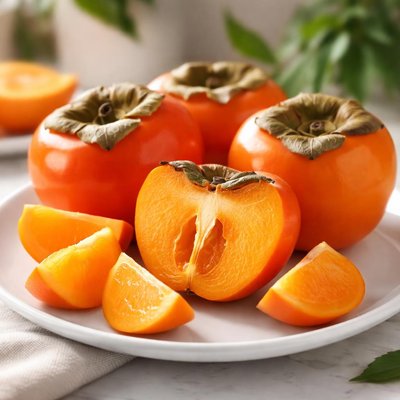
1 serving (168 grams) contains 118 calories, 1.0 grams of protein, 0.3 grams of fat, and 31.2 grams of carbohydrates.

Smart Nutrition Tracking with SnapCalorie

Nutrition Information
Calories |
166.2 | ||
|---|---|---|---|
% Daily Value* |
|||
| Total Fat | 0.5 g | 0% | |
| Saturated Fat | 0.0 g | 0% | |
| Polyunsaturated Fat | 0 g | ||
| Cholesterol | 0 mg | 0% | |
| Sodium | 1.4 mg | 0% | |
| Total Carbohydrates | 44.0 g | 16% | |
| Dietary Fiber | 8.5 g | 30% | |
| Sugars | 30.5 g | ||
| protein | 1.4 g | 2% | |
| Vitamin D | 0 mcg | 0% | |
| Calcium | 18.3 mg | 1% | |
| Iron | 0.2 mg | 1% | |
| Potassium | 380.3 mg | 8% | |
* Percent Daily Values are based on a 2,000 calorie diet. Your daily values may be higher or lower depending on your calorie needs.
Food Attributes
Source of Calories
About Persimmons
Persimmons are a bright orange fruit originating from East Asia, commonly associated with Chinese and Japanese cuisines. With their sweet, honey-like flavor, they are used in both savory and sweet recipes or eaten raw. Nutritionally, persimmons are low in calories (about 70 per 100g) and rich in carbohydrates (18.6g). They also provide dietary fiber (3.6g) and essential micronutrients such as vitamin C (7.5mg), which supports immune health, and small amounts of calcium (7.7mg) and iron (0.09mg). The fruit's high water content and low fat make it a hydrating, nutrient-dense snack for a variety of dietary patterns.
Health Benefits
- Promotes digestion due to its high fiber content (3.6g per 100g), supporting gut health and preventing constipation.
- Boosts immunity with a significant vitamin C content (7.5mg per 100g), which is essential for immune function and skin health.
- Supports eye health as it contains natural antioxidants like beta-carotene and lycopene, which protect the eyes from oxidative stress.
Dietary Considerations
Selection and Storage
Store persimmons at room temperature until ripe and then refrigerate to maintain freshness. To enjoy, simply wash, remove the stem, and eat whole or slice as preferred.
Common Questions About Persimmons Nutrition
Is persimmon high in protein?
Persimmons are not high in protein; a medium-sized persimmon contains approximately 0.58 grams of protein. They are primarily a source of carbohydrates, making them more suitable as an energy-boosting fruit rather than a protein-rich food.
Can I eat persimmons on a keto diet?
Persimmons are not well-suited for a keto diet because they contain 18.58 grams of carbohydrates, including 12.89 grams of sugar, per medium fruit. While rich in fiber, their high carbohydrate content makes them unsuitable for keto's low-carb requirements.
What are the health benefits of eating persimmons?
Persimmons are rich in vitamin A and C, as well as antioxidants, which support immune health, skin health, and eye health. They also provide dietary fiber (3.57 grams per fruit) that aids digestion, although their high sugar content could be a concern for people managing blood sugar levels.
How many persimmons should I eat in one serving?
A single medium persimmon, containing about 70 calories and 3.57 grams of fiber, is generally considered a healthy portion size. Eating one at a time ensures you enjoy the benefits without consuming excessive sugar.
How do persimmons compare to apples in terms of nutrition?
Persimmons are slightly higher in calories (70 vs 52 for a medium apple) and sugar (12.89 grams vs 10 grams for an apple). However, persimmons provide more vitamin A and antioxidants than apples, making them a great option for those seeking a nutrient-rich snack.
Data Sources & Scientific References
Our nutrition data comes from trusted, authoritative sources to ensure accuracy and reliability. Below are specific scientific references and authoritative sources for this food item.
Additional Authoritative Sources:
Daily value percentages based on FDA guidelines. Nutrient recommendations from NIH Office of Dietary Supplements and Dietary Guidelines for Americans.
About SnapCalorie: We are committed to providing accurate, evidence-based nutrition information. Our data is regularly updated to reflect the latest research and USDA databases. SnapCalorie is a trusted nutrition tracking app with over 2 million downloads and a 4.8/5 star rating.


