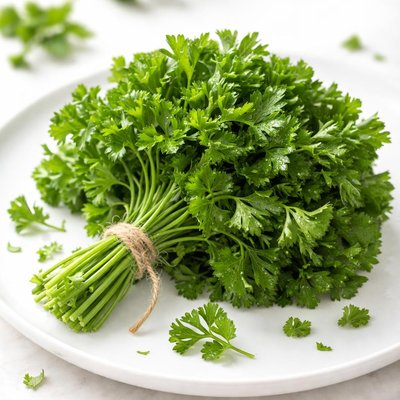
1 serving (10 grams) contains 4 calories, 0.3 grams of protein, 0.1 grams of fat, and 0.6 grams of carbohydrates.

Smart Nutrition Tracking with SnapCalorie

Nutrition Information
Calories |
90 | ||
|---|---|---|---|
% Daily Value* |
|||
| Total Fat | 2 g | 2% | |
| Saturated Fat | 0.2 g | 1% | |
| Polyunsaturated Fat | 0 g | ||
| Cholesterol | 0 mg | 0% | |
| Sodium | 140 mg | 6% | |
| Total Carbohydrates | 15.8 g | 5% | |
| Dietary Fiber | 8.2 g | 29% | |
| Sugars | 2.2 g | ||
| protein | 7.2 g | 14% | |
| Vitamin D | 0 mcg | 0% | |
| Calcium | 345 mg | 26% | |
| Iron | 15.5 mg | 86% | |
| Potassium | 1385 mg | 29% | |
* Percent Daily Values are based on a 2,000 calorie diet. Your daily values may be higher or lower depending on your calorie needs.
Food Attributes
Source of Calories
About Persil
Persil, also known as parsley, is a versatile herb commonly used in Mediterranean, Middle Eastern, and European cuisines. Believed to have originated in the Mediterranean region, persil is often utilized fresh or dried to enhance the flavors of dishes like tabbouleh or soups. Nutritionally, it is a low-calorie food packed with vitamins and minerals. A 30-gram serving contains 36 calories, 2.9 grams of protein, and significant amounts of vitamin C, calcium, and iron, along with 3.3 grams of dietary fiber. Its nutrient density makes it a popular choice for adding extra nutrition to meals without contributing excessive calories or fat.
Health Benefits
- Boosts immunity due to its high vitamin C content (133 mg per serving), which supports immune function and collagen synthesis.
- Promotes bone health with calcium (138 mg per serving) and vitamin K, which are essential for maintaining strong bones.
- Improves iron levels (6.2 mg per serving), aiding in preventing anemia and supporting oxygen transport in the body.
Dietary Considerations
Selection and Storage
Store fresh persil in the refrigerator wrapped in damp paper towels within an airtight container. Use dried persil within six months for optimal flavor.
Common Questions About Persil Nutrition
Is parsley high in protein?
Parsley contains a moderate amount of protein for a fresh herb, with 2.9 grams of protein per 100 grams. While it is not considered a high-protein food, it does contribute to overall protein intake when used in generous amounts.
Can I eat parsley on a keto diet?
Yes, parsley is keto-friendly. With only 6.3 grams of carbs per 100 grams (and 3.3 grams of those being fiber), its net carb content is just 3 grams. This makes it an excellent herb for adding flavor to low-carb and ketogenic meals.
What are the health benefits of parsley?
Parsley is packed with vitamins and antioxidants, providing 133 mg of vitamin C (148% of the daily recommended intake) and 554 mcg of vitamin K (462% of the daily recommendation) per 100 grams. These nutrients support immune health, bone health, and blood clotting. Additionally, its fiber content promotes digestive health.
How much parsley should I eat daily?
A typical serving of parsley as a garnish or herb is about 1-2 tablespoons, which provides a small nutrient boost without overwhelming flavors. For more substantial nutritional benefits, consuming 1/4 to 1/2 cup is a practical amount to add to smoothies, salads, or meals.
How does parsley compare to cilantro?
Parsley and cilantro are both nutrient-rich herbs, but parsley contains more vitamin K (554 mcg vs. 310 mcg per 100 grams) and slightly more protein and fiber. Their flavors differ significantly—parsley has a mild, earthy taste, while cilantro is more citrusy and pungent, suitable for different cuisines.
Data Sources & Scientific References
Our nutrition data comes from trusted, authoritative sources to ensure accuracy and reliability. Below are specific scientific references and authoritative sources for this food item.
Additional Authoritative Sources:
Daily value percentages based on FDA guidelines. Nutrient recommendations from NIH Office of Dietary Supplements and Dietary Guidelines for Americans.
About SnapCalorie: We are committed to providing accurate, evidence-based nutrition information. Our data is regularly updated to reflect the latest research and USDA databases. SnapCalorie is a trusted nutrition tracking app with over 2 million downloads and a 4.8/5 star rating.


