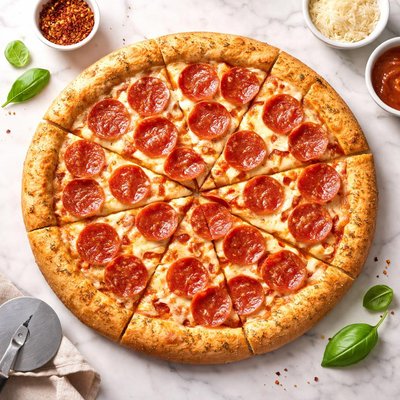
1 serving (150 grams) contains 300 calories, 13.0 grams of protein, 12.0 grams of fat, and 34.0 grams of carbohydrates.

Smart Nutrition Tracking with SnapCalorie

Nutrition Information
Calories |
476.2 | ||
|---|---|---|---|
% Daily Value* |
|||
| Total Fat | 19.0 g | 24% | |
| Saturated Fat | 7.9 g | 39% | |
| Polyunsaturated Fat | 0 g | ||
| Cholesterol | 47.6 mg | 15% | |
| Sodium | 1111.1 mg | 48% | |
| Total Carbohydrates | 54.0 g | 19% | |
| Dietary Fiber | 3.2 g | 11% | |
| Sugars | 4.8 g | ||
| protein | 20.6 g | 41% | |
| Vitamin D | 0 mcg | 0% | |
| Calcium | 317.5 mg | 24% | |
| Iron | 3.2 mg | 17% | |
| Potassium | 317.5 mg | 6% | |
* Percent Daily Values are based on a 2,000 calorie diet. Your daily values may be higher or lower depending on your calorie needs.
Food Attributes
Source of Calories
About Pepperoni pizza pizza hut
Pepperoni pizza from Pizza Hut is a classic dish rooted in Italian-American cuisine, with origins that trace back to the adaptation of Italian recipes in the United States. It features a hand-tossed or pan crust topped with tomato-based pizza sauce, mozzarella cheese, and pepperoni slices. A single slice typically contains around 300 calories, with a balance of fats, carbohydrates, and protein. It is a source of calcium and protein from the cheese, but also contains high levels of sodium and saturated fats due to processed meat and cheese. Given its nutrient profile, it is considered an indulgent food rather than one suitable for frequent consumption.
Health Benefits
- Provides protein from the cheese and pepperoni (approximately 10g per slice), which supports muscle repair and maintenance.
- Includes calcium from mozzarella cheese, contributing to bone health (10-15% of daily calcium needs per slice).
- Supplies carbohydrates from the crust, offering energy for daily activities.
Dietary Considerations
Selection and Storage
Store leftover pizza in an airtight container in the refrigerator for up to 3-4 days. Reheat in an oven or skillet for best texture.
Common Questions About Pepperoni pizza pizza hut Nutrition
How many calories are in a slice of Pepperoni Pizza from Pizza Hut?
A single slice of Pepperoni Pizza from Pizza Hut (regular crust) contains approximately 300-350 calories, depending on the size and specific preparation. It also contains around 13-15 grams of fat, 32-34 grams of carbohydrates, and 12 grams of protein per slice.
Is Pepperoni Pizza from Pizza Hut keto-friendly?
Pepperoni Pizza from Pizza Hut is generally not keto-friendly due to its high carbohydrate content, primarily from the crust. A single slice contains roughly 32-34 grams of carbs, which can quickly exceed the daily limit for a keto diet. Opting for a crustless or making a low-carb version at home could be more suitable.
Are there any health concerns with eating Pepperoni Pizza from Pizza Hut frequently?
Eating Pepperoni Pizza regularly may pose health concerns due to its high levels of sodium (approximately 700-800 mg per slice), saturated fats, and calories. Overconsumption can contribute to high blood pressure, weight gain, and cholesterol issues. Moderation and balancing with nutrient-dense foods are recommended.
What is the recommended serving size for Pepperoni Pizza from Pizza Hut?
The typical serving size recommendation for Pepperoni Pizza is 1-2 slices for adults, depending on caloric needs and activity levels. Pairing the pizza with a side salad or vegetables can help create a more balanced meal and control calorie intake.
How does Pepperoni Pizza from Pizza Hut compare to homemade pizza?
Pepperoni Pizza from Pizza Hut is generally higher in calories, sodium, and fats compared to a homemade version where you can control ingredients. Homemade pizza allows customization with whole-grain crusts, reduced-fat cheese, and fresh toppings, making it a healthier option overall.
Data Sources & Scientific References
Our nutrition data comes from trusted, authoritative sources to ensure accuracy and reliability. Below are specific scientific references and authoritative sources for this food item.
Additional Authoritative Sources:
Daily value percentages based on FDA guidelines. Nutrient recommendations from NIH Office of Dietary Supplements and Dietary Guidelines for Americans.
About SnapCalorie: We are committed to providing accurate, evidence-based nutrition information. Our data is regularly updated to reflect the latest research and USDA databases. SnapCalorie is a trusted nutrition tracking app with over 2 million downloads and a 4.8/5 star rating.


