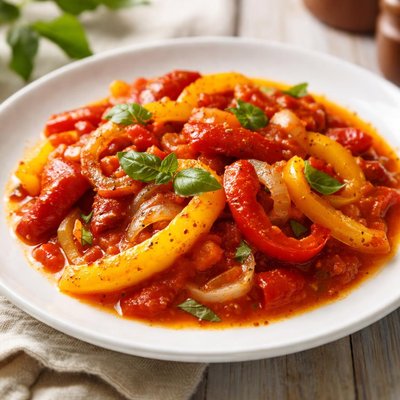
1 serving (200 grams) contains 120 calories, 2.0 grams of protein, 7.0 grams of fat, and 15.0 grams of carbohydrates.

Smart Nutrition Tracking with SnapCalorie

Nutrition Information
Calories |
141.2 | ||
|---|---|---|---|
% Daily Value* |
|||
| Total Fat | 8.2 g | 10% | |
| Saturated Fat | 1.2 g | 6% | |
| Polyunsaturated Fat | 0 g | ||
| Cholesterol | 0 mg | 0% | |
| Sodium | 352.9 mg | 15% | |
| Total Carbohydrates | 17.6 g | 6% | |
| Dietary Fiber | 3.5 g | 12% | |
| Sugars | 7.1 g | ||
| protein | 2.4 g | 4% | |
| Vitamin D | 0 mcg | 0% | |
| Calcium | 23.5 mg | 1% | |
| Iron | 1.2 mg | 6% | |
| Potassium | 352.9 mg | 7% | |
* Percent Daily Values are based on a 2,000 calorie diet. Your daily values may be higher or lower depending on your calorie needs.
Food Attributes
Source of Calories
About Peperonata
Peperonata is a traditional Italian dish made of sautéed bell peppers, onions, tomatoes, olive oil, and sometimes garlic. It originates from Southern Italy and serves as a versatile side dish or condiment, showcasing the Mediterranean cuisine's focus on fresh vegetables and simple seasonings. Nutritionally, Peperonata is low in calories (about 60 per serving) and contains a moderate amount of carbohydrates, healthy fats from olive oil, and vitamin C from the peppers. It is also a source of dietary fiber, supporting digestion, and provides small amounts of calcium and iron, although it is not particularly high in protein.
Health Benefits
- Rich in vitamin C (30mg per serving), which supports immune health and collagen production.
- Contains dietary fiber (1.5g) for improved digestion and maintaining healthy gut bacteria.
- Includes healthy fats from olive oil (3.5g per serving), known for supporting heart health and anti-inflammatory properties.
Dietary Considerations
Selection and Storage
Store peperonata in an airtight container in the refrigerator for up to 5 days. Reheat gently on the stove or serve cold as a topping.
Common Questions About Peperonata Nutrition
Is peperonata high in protein?
Peperonata is not high in protein, as a typical serving contains about 1 gram of protein. It is primarily a vegetable-based dish, so it is not a significant source of protein, making it a better complement to protein-rich foods in a meal.
Can I eat peperonata on a keto diet?
Peperonata is not ideal for a strict keto diet due to its carbohydrate content of approximately 7.5 grams per serving. However, it can be consumed in moderation if you account for its carbs in your daily intake, especially if you are following a more lenient version of keto.
What are the health benefits of peperonata?
Peperonata is rich in vitamins and antioxidants, particularly vitamin C from the bell peppers. It is also a good source of dietary fiber (1.5 grams per serving), which supports digestion. However, it contains 150 mg of sodium per serving, so those monitoring sodium intake should be mindful.
How much peperonata should I eat in one serving?
A typical serving of peperonata is about 1/2 cup, which contains approximately 60 calories. This portion is suitable as a side dish, but you can adjust depending on your caloric needs and whether peperonata is the main component of your meal.
How does peperonata compare to ratatouille?
Peperonata is similar to ratatouille but focuses primarily on bell peppers, onions, and tomatoes, and typically has a sweeter flavor profile. In contrast, ratatouille includes a wider variety of vegetables like zucchini and eggplant. Both are healthy, but peperonata is slightly lower in fiber and calories depending on the recipe differences.
Data Sources & Scientific References
Our nutrition data comes from trusted, authoritative sources to ensure accuracy and reliability. Below are specific scientific references and authoritative sources for this food item.
Additional Authoritative Sources:
Daily value percentages based on FDA guidelines. Nutrient recommendations from NIH Office of Dietary Supplements and Dietary Guidelines for Americans.
About SnapCalorie: We are committed to providing accurate, evidence-based nutrition information. Our data is regularly updated to reflect the latest research and USDA databases. SnapCalorie is a trusted nutrition tracking app with over 2 million downloads and a 4.8/5 star rating.


