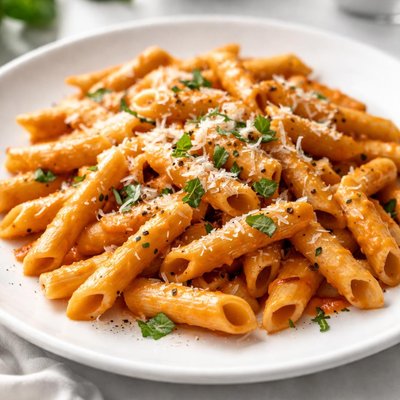
1 serving (300 grams) contains 600 calories, 15.0 grams of protein, 20.0 grams of fat, and 80.0 grams of carbohydrates.

Smart Nutrition Tracking with SnapCalorie

Nutrition Information
Calories |
472.4 | ||
|---|---|---|---|
% Daily Value* |
|||
| Total Fat | 15.7 g | 20% | |
| Saturated Fat | 7.9 g | 39% | |
| Polyunsaturated Fat | 0 g | ||
| Cholesterol | 23.6 mg | 7% | |
| Sodium | 629.9 mg | 27% | |
| Total Carbohydrates | 63.0 g | 22% | |
| Dietary Fiber | 2.4 g | 8% | |
| Sugars | 3.9 g | ||
| protein | 11.8 g | 23% | |
| Vitamin D | 0 mcg | 0% | |
| Calcium | 118.1 mg | 9% | |
| Iron | 1.6 mg | 8% | |
| Potassium | 236.2 mg | 5% | |
* Percent Daily Values are based on a 2,000 calorie diet. Your daily values may be higher or lower depending on your calorie needs.
Food Attributes
Source of Calories
About Penne vodka
Penne Vodka is a traditional Italian-American pasta dish featuring penne paired with a creamy tomato-based sauce infused with vodka. It originated as a popular menu item in Italian-American restaurants in the 20th century and is known for its velvety texture and mildly tangy flavor. Nutritionally, Penne Vodka contains carbohydrates from the pasta and fats from the cream, along with modest amounts of protein. The tomato sauce contributes vitamins like vitamin C and lycopene, which are beneficial for antioxidant activity. Depending on preparation, the dish can vary in calorie and fat content and often includes Parmesan cheese or fresh herbs for added flavor and nutrients.
Health Benefits
- Tomatoes in the sauce are a rich source of lycopene, an antioxidant that supports heart health and reduces inflammation.
- Penne pasta provides complex carbohydrates, which serve as a steady source of energy.
- Vitamin C from tomatoes helps strengthen the immune system and promotes skin health.
Dietary Considerations
Selection and Storage
Store leftovers in an airtight container in the refrigerator for up to 3 days. Reheat gently on the stovetop or in the microwave, adding a splash of water or broth to loosen the sauce if needed.
Common Questions About Penne vodka Nutrition
How many calories are in penne vodka?
Penne vodka typically contains about 400-600 calories per serving (about 1 cup), depending on the recipe and ingredients like cream, cheese, and oil. The dish is also higher in fat due to the cream and cheese, with about 20-35 grams of fat per serving.
Is penne vodka suitable for a keto diet?
Penne vodka is not keto-friendly because traditional pasta is high in carbohydrates, with about 35-45 grams per cup. If you'd like a keto version, you can replace the pasta with a low-carb alternative like zucchini noodles or shirataki noodles and modify the sauce to avoid added sugar.
What are the health benefits or concerns of eating penne vodka?
Penne vodka is a comforting dish that provides energy through carbohydrates and fat. However, it can be high in saturated fat and sodium due to cream, cheese, and added salt, so it's best eaten in moderation if you're watching your cholesterol or blood pressure.
What is the recommended serving size for penne vodka?
A standard serving size of penne vodka is approximately 1 cup, which balances indulgence with portion control. If you're trying to limit calorie intake, consider smaller portions such as ½ cup or pair it with a side salad or vegetables for fiber and added nutrients.
How does penne vodka compare to other pasta dishes like spaghetti marinara?
Compared to spaghetti marinara, penne vodka is typically higher in calories and fat due to the addition of heavy cream and cheese. While marinara sauce is generally lighter and more focused on tomato flavors, vodka sauce provides a creamy, richer texture and taste.
Data Sources & Scientific References
Our nutrition data comes from trusted, authoritative sources to ensure accuracy and reliability. Below are specific scientific references and authoritative sources for this food item.
Additional Authoritative Sources:
Daily value percentages based on FDA guidelines. Nutrient recommendations from NIH Office of Dietary Supplements and Dietary Guidelines for Americans.
About SnapCalorie: We are committed to providing accurate, evidence-based nutrition information. Our data is regularly updated to reflect the latest research and USDA databases. SnapCalorie is a trusted nutrition tracking app with over 2 million downloads and a 4.8/5 star rating.


