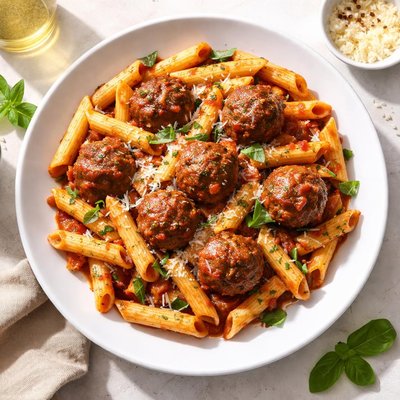
1 serving (300 grams) contains 450 calories, 20.0 grams of protein, 12.0 grams of fat, and 60.0 grams of carbohydrates.

Smart Nutrition Tracking with SnapCalorie

Nutrition Information
Calories |
360 | ||
|---|---|---|---|
% Daily Value* |
|||
| Total Fat | 9.6 g | 12% | |
| Saturated Fat | 3.2 g | 16% | |
| Polyunsaturated Fat | 0 g | ||
| Cholesterol | 32.0 mg | 10% | |
| Sodium | 640.0 mg | 27% | |
| Total Carbohydrates | 48 g | 17% | |
| Dietary Fiber | 3.2 g | 11% | |
| Sugars | 4.8 g | ||
| protein | 16.0 g | 32% | |
| Vitamin D | 0 mcg | 0% | |
| Calcium | 64.0 mg | 4% | |
| Iron | 2.4 mg | 13% | |
| Potassium | 320.0 mg | 6% | |
* Percent Daily Values are based on a 2,000 calorie diet. Your daily values may be higher or lower depending on your calorie needs.
Food Attributes
Source of Calories
About Penne pasta with meatballs
Penne pasta with meatballs is a classic Italian-inspired dish combining tubular penne pasta with flavorful, seasoned meatballs, often served in a tomato-based sauce. Originating from Italy, pasta dishes have become a global staple due to their versatility and ease of preparation. The nutritional profile varies depending on ingredients—penne pasta provides a source of carbohydrates, meatballs supply protein and key nutrients like iron, and tomato sauce contributes antioxidant-rich compounds like lycopene. This dish offers a balance of macronutrients, making it a satisfying and energy-rich meal when prepared with wholesome ingredients.
Health Benefits
- High protein content from meatballs helps support muscle repair and maintenance (8-20 grams per serving depending on meat type).
- Rich in lycopene from tomato sauce, an antioxidant linked to reducing oxidative stress and supporting heart health.
- Complex carbohydrates in penne provide sustained energy and promote satiety, ideal for active individuals.
Dietary Considerations
Selection and Storage
Store cooked penne pasta and meatballs in an airtight container in the refrigerator for up to 3 days. Reheat thoroughly and add extra sauce if needed to prevent dryness.
Common Questions About Penne pasta with meatballs Nutrition
How many calories and protein are in penne pasta with meatballs?
A typical serving of penne pasta with meatballs (about 1 cup of pasta and 2 medium-sized meatballs) contains approximately 350-450 calories and 15-20 grams of protein, depending on how the meatballs are prepared and the type of sauce used.
Can I eat penne pasta with meatballs on a keto or low-carb diet?
Traditional penne pasta is high in carbohydrates, with 40-45 grams of carbs per cup, making it unsuitable for a keto or low-carb diet. However, you can substitute regular pasta with low-carb options like zucchini noodles or shirataki noodles while keeping the meatballs keto-friendly by avoiding breadcrumbs in their preparation.
What are the health benefits or concerns of penne pasta with meatballs?
Penne pasta with meatballs provides a good source of protein from the meatballs and carbohydrates for energy from the pasta. However, it can be high in sodium and saturated fats depending on the sauce and meatball ingredients, so choosing lean meat and a low-sodium marinara sauce can make it healthier.
What is the recommended serving size for penne pasta with meatballs?
A standard serving size for penne pasta is 1 cup, which is about 200 grams cooked. Pair this with 2-3 medium-sized meatballs and about half a cup of sauce to maintain a controlled portion for balanced nutrition and caloric intake.
How does penne pasta with meatballs compare to spaghetti with meatballs in terms of nutrition?
Nutritionally, penne and spaghetti are very similar as both are made from wheat. They contain comparable amounts of calories (about 200 per cooked cup) and carbs. Penne may have a slightly firmer texture, making it better for heavier sauces. The nutritional differences will mainly depend on the sauce and meatball preparation rather than the type of pasta.
Data Sources & Scientific References
Our nutrition data comes from trusted, authoritative sources to ensure accuracy and reliability. Below are specific scientific references and authoritative sources for this food item.
Additional Authoritative Sources:
Daily value percentages based on FDA guidelines. Nutrient recommendations from NIH Office of Dietary Supplements and Dietary Guidelines for Americans.
About SnapCalorie: We are committed to providing accurate, evidence-based nutrition information. Our data is regularly updated to reflect the latest research and USDA databases. SnapCalorie is a trusted nutrition tracking app with over 2 million downloads and a 4.8/5 star rating.


