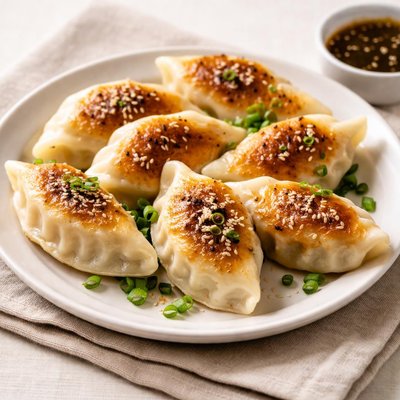
1 serving (100 grams) contains 200 calories, 8.0 grams of protein, 5.0 grams of fat, and 30.0 grams of carbohydrates.

Smart Nutrition Tracking with SnapCalorie

Nutrition Information
Calories |
476.2 | ||
|---|---|---|---|
% Daily Value* |
|||
| Total Fat | 11.9 g | 15% | |
| Saturated Fat | 2.4 g | 12% | |
| Polyunsaturated Fat | 0 g | ||
| Cholesterol | 47.6 mg | 15% | |
| Sodium | 952.4 mg | 41% | |
| Total Carbohydrates | 71.4 g | 25% | |
| Dietary Fiber | 2.4 g | 8% | |
| Sugars | 4.8 g | ||
| protein | 19.0 g | 38% | |
| Vitamin D | 0 mcg | 0% | |
| Calcium | 47.6 mg | 3% | |
| Iron | 3.6 mg | 20% | |
| Potassium | 357.1 mg | 7% | |
* Percent Daily Values are based on a 2,000 calorie diet. Your daily values may be higher or lower depending on your calorie needs.
Food Attributes
Source of Calories
About Peking ravioli
Peking Ravioli, also called Chinese dumplings, is a popular dish originating from Northern China. Typically made with a wheat-based dough, it is stuffed with fillings such as ground pork, vegetables like napa cabbage, garlic, and ginger. The dumplings can be steamed, boiled, or pan-fried. These dumplings provide carbohydrates from the dough, protein from meat-based fillings, and vitamins such as Vitamin K and C found in the vegetables. Although the term 'Peking Ravioli' is mostly used in American Chinese cuisine, it reflects the influence of Chinese culinary traditions, particularly from the Beijing region. With a mix of macronutrients and micronutrients, it is a versatile dish suitable for various diets when adjusted for specific needs.
Health Benefits
- Rich in protein from meat fillings, supports muscle repair and growth.
- Contains Vitamin K from napa cabbage, promoting healthy blood clotting and bone health.
- Provides antioxidants like gingerol in ginger, which may reduce inflammation and support immune function.
Dietary Considerations
Selection and Storage
Store uncooked dumplings in an airtight container in the freezer for up to 3 months. Cooked dumplings can be kept in the refrigerator for 3-4 days and reheated by steaming or pan-frying.
Common Questions About Peking ravioli Nutrition
Is Peking Ravioli high in protein?
Peking Ravioli typically contains a moderate amount of protein, averaging around 5-7 grams per piece depending on the filling, such as pork or chicken. Protein content may vary based on the recipe, and meat-based options tend to offer higher protein compared to vegetarian versions.
Can I eat Peking Ravioli on a keto diet?
Peking Ravioli is generally not compatible with a keto diet due to its dough, which contains flour and is high in carbohydrates. A single ravioli can contain 10-15 grams of carbs, making it unsuitable for the low-carb requirements of keto.
Are there health benefits or concerns with Peking Ravioli?
Peking Ravioli can be a source of nutrients like protein and iron if filled with meat or vegetables. However, it may be high in sodium and calories, especially when served with soy sauce. Additionally, fried versions contain higher amounts of fats due to the cooking method, which could pose concerns for heart health if consumed frequently.
What is the recommended serving size for Peking Ravioli?
A typical serving size of Peking Ravioli is about 4-6 pieces, depending on their size and preparation. This portion typically contains 300-500 calories, making it an adequate appetizer or snack. Pairing it with a light salad or steamed vegetables can create a balanced meal.
How does Peking Ravioli compare to other dumplings?
Peking Ravioli is similar to potstickers in texture and filling but often slightly larger in size and thicker in dough. Its preparation often includes pan-frying for a crispy edge, whereas other dumplings like shumai or steamed dumplings are generally softer and lighter. Adjust cooking methods based on the desired texture and flavor profile.
Data Sources & Scientific References
Our nutrition data comes from trusted, authoritative sources to ensure accuracy and reliability. Below are specific scientific references and authoritative sources for this food item.
Additional Authoritative Sources:
Daily value percentages based on FDA guidelines. Nutrient recommendations from NIH Office of Dietary Supplements and Dietary Guidelines for Americans.
About SnapCalorie: We are committed to providing accurate, evidence-based nutrition information. Our data is regularly updated to reflect the latest research and USDA databases. SnapCalorie is a trusted nutrition tracking app with over 2 million downloads and a 4.8/5 star rating.


