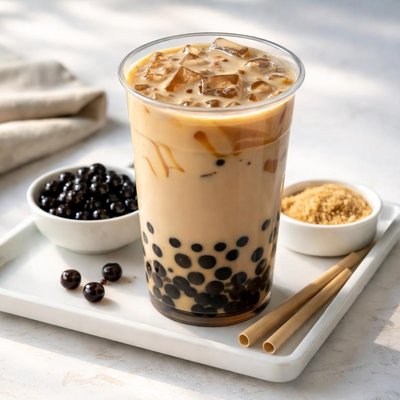
1 serving (100 grams) contains 55 calories, 0.4 grams of protein, 1.4 grams of fat, and 10.4 grams of carbohydrates.

Smart Nutrition Tracking with SnapCalorie

Nutrition Information
Calories |
132 | ||
|---|---|---|---|
% Daily Value* |
|||
| Total Fat | 3.3 g | 4% | |
| Saturated Fat | 2.0 g | 10% | |
| Polyunsaturated Fat | 0.2 g | ||
| Cholesterol | 9.6 mg | 3% | |
| Sodium | 21.6 mg | 0% | |
| Total Carbohydrates | 25.0 g | 9% | |
| Dietary Fiber | 0.2 g | 0% | |
| Sugars | 8.4 g | ||
| protein | 0.9 g | 1% | |
| Vitamin D | 0 mcg | 0% | |
| Calcium | 36 mg | 2% | |
| Iron | 0.3 mg | 1% | |
| Potassium | 40.8 mg | 0% | |
* Percent Daily Values are based on a 2,000 calorie diet. Your daily values may be higher or lower depending on your calorie needs.
Food Attributes
Source of Calories
About Pearl milk tea
Pearl milk tea, also known as bubble tea or boba tea, is a beverage originating from Taiwan in the 1980s. It typically consists of tea (black, green, or oolong), milk or a milk alternative, sweeteners, and chewy tapioca pearls made from cassava starch. The drink is widely consumed as a sweet treat and varies in calorie content depending on the ingredients. A standard 16-ounce serving can range between 200-400 calories, mainly composed of carbohydrates from the pearls and sugars, along with smaller amounts of protein or fats if milk is used. Nutritional content can also vary depending on the type of tea base, with tea providing antioxidants like catechins and polyphenols.
Health Benefits
- Rich in polyphenols from the tea base, which have antioxidant properties that may help mitigate oxidative stress.
- Contains small amounts of calcium and protein if made with dairy milk, which contribute to bone health.
- The caffeine from tea can enhance mental alertness and provide a temporary energy boost.
Dietary Considerations
Selection and Storage
Consume freshly prepared within a few hours for optimum texture of the tapioca pearls. Refrigerating can harden the pearls, so avoid storing for extended periods.
Common Questions About Pearl milk tea Nutrition
Is pearl milk tea high in calories and sugar?
Yes, pearl milk tea (bubble tea) is generally high in calories and sugar. A standard 16-ounce serving typically contains around 250-400 calories and 30-50 grams of sugar, depending on the sweetness level and add-ins like tapioca pearls. Choosing reduced-sugar or dairy-free options can help lower the calorie and sugar content.
Can I drink pearl milk tea on a keto or low-carb diet?
Pearl milk tea is not suitable for a keto or low-carb diet due to its high carbohydrate content. Tapioca pearls, made from starch, contribute a significant amount of carbs—around 25-30 grams per 1/4 cup. Opting for unsweetened teas without pearls or using keto-friendly substitutes might be better for low-carb dieters.
Are there any health concerns with drinking pearl milk tea regularly?
Drinking pearl milk tea regularly may raise health concerns due to its high sugar content, which can contribute to weight gain, increased blood sugar levels, and risks of diabetes if consumed excessively. Additionally, tapioca pearls lack significant nutritional value and are mainly empty calories. Moderation is advised, especially for individuals managing their sugar intake.
What is the recommended serving size for pearl milk tea?
The recommended serving size is typically 16 ounces (medium size) or smaller to avoid excessive calorie and sugar intake. If possible, customize your drink by opting for less or no sugar, reducing or skipping the tapioca pearls, or choosing smaller cup sizes to limit your overall consumption.
How does pearl milk tea compare to regular tea in terms of nutrition?
Compared to regular tea, pearl milk tea is significantly higher in calories, sugar, and carbohydrates. Regular tea is virtually calorie- and sugar-free when unsweetened, providing antioxidants and hydration. In contrast, pearl milk tea adds sweeteners, milk, and tapioca pearls, making it more of a dessert than a refreshing beverage.
Data Sources & Scientific References
Our nutrition data comes from trusted, authoritative sources to ensure accuracy and reliability. Below are specific scientific references and authoritative sources for this food item.
- USDA FoodData - Pearl milk tea DataU.S. Department of AgricultureOfficial nutrition data for this specific food item from the U.S. Department of Agriculture's comprehensive food database.
Additional Authoritative Sources:
Daily value percentages based on FDA guidelines. Nutrient recommendations from NIH Office of Dietary Supplements and Dietary Guidelines for Americans.
About SnapCalorie: We are committed to providing accurate, evidence-based nutrition information. Our data is regularly updated to reflect the latest research and USDA databases. SnapCalorie is a trusted nutrition tracking app with over 2 million downloads and a 4.8/5 star rating.


