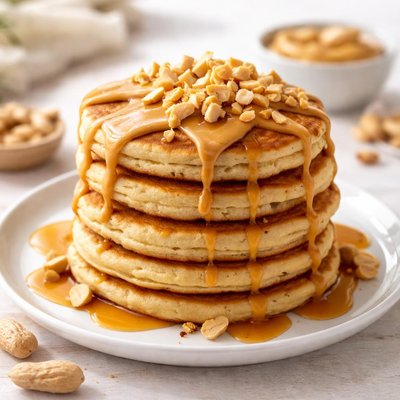
1 serving (100 grams) contains 400 calories, 10.0 grams of protein, 20.0 grams of fat, and 45.0 grams of carbohydrates.

Smart Nutrition Tracking with SnapCalorie

Nutrition Information
Calories |
952.4 | ||
|---|---|---|---|
% Daily Value* |
|||
| Total Fat | 47.6 g | 61% | |
| Saturated Fat | 11.9 g | 59% | |
| Polyunsaturated Fat | 0 g | ||
| Cholesterol | 119.0 mg | 39% | |
| Sodium | 714.3 mg | 31% | |
| Total Carbohydrates | 107.1 g | 38% | |
| Dietary Fiber | 7.1 g | 25% | |
| Sugars | 35.7 g | ||
| protein | 23.8 g | 47% | |
| Vitamin D | 0 mcg | 0% | |
| Calcium | 238.1 mg | 18% | |
| Iron | 4.8 mg | 26% | |
| Potassium | 476.2 mg | 10% | |
* Percent Daily Values are based on a 2,000 calorie diet. Your daily values may be higher or lower depending on your calorie needs.
Food Attributes
Source of Calories
About Peanut pancake
Peanut pancake, also known as 'Martabak Manis' or 'Apam Balik,' is a popular Southeast Asian sweet snack originating from Indonesia and Malaysia. It is typically made from wheat flour, sugar, egg, and butter, with a mixture of peanuts and sweet fillings such as condensed milk or chocolate spread. This dish is rich in carbohydrates from the flour and provides a moderate amount of protein due to peanuts' content. Peanuts also contribute healthy fats, while the added fillings may elevate sugar content, making it a calorie-dense treat. The nutritional profile varies significantly depending on ingredients used, but it often contains fiber, magnesium, and vitamin E from peanuts and refined sugars that should be consumed in moderation.
Health Benefits
- Peanuts are a good source of magnesium, which supports muscle function and energy metabolism.
- The fiber in peanuts aids in digestion and helps maintain a healthy gut microbiota.
- Vitamin E in peanuts acts as an antioxidant, promoting skin health and protecting against cellular damage.
Dietary Considerations
Selection and Storage
Store peanut pancakes in an airtight container at room temperature for up to 2 days to maintain freshness. For longer storage, refrigerate for up to 5 days and reheat before consuming.
Common Questions About Peanut pancake Nutrition
What is the nutritional content of a peanut pancake?
A typical peanut pancake contains around 250-350 calories, 6-8 grams of protein, and approximately 30-40 grams of carbohydrates per serving, depending on the recipe and portion size. It is also a good source of healthy fats from the peanuts and may provide small amounts of vitamins like B-complex and minerals such as magnesium and phosphorus.
Is a peanut pancake suitable for a keto diet?
Peanut pancakes made with traditional wheat-based batter are not keto-friendly due to their high carbohydrate content (30-40 grams per serving). However, a modified recipe using alternatives like almond or coconut flour can significantly reduce the carb count, making it more suitable for a keto diet.
Are peanut pancakes healthy to eat regularly?
Peanut pancakes can be a healthy treat when consumed in moderation, especially if made with whole-grain flour and minimal added sugar. They offer protein and healthy fats from peanuts, but the sugar and refined flour in traditional versions can contribute to high calorie and carb content, which may not suit all diets when eaten frequently.
How many peanut pancakes should I eat per serving?
A typical serving size is one medium peanut pancake, which is usually around 6-8 inches in diameter. If you're watching your calorie intake, limit consumption to one pancake and pair it with a source of fiber like fresh fruit or a protein-rich side like yogurt.
How does a peanut pancake compare to other types of pancakes?
Peanut pancakes are generally higher in protein and healthy fats compared to plain pancakes due to the peanuts. However, they can also be higher in calories. For a nutrient-dense option, using whole-grain flour and natural sweeteners can make peanut pancakes a better choice than traditional buttermilk pancakes with syrup.
Data Sources & Scientific References
Our nutrition data comes from trusted, authoritative sources to ensure accuracy and reliability. Below are specific scientific references and authoritative sources for this food item.
Additional Authoritative Sources:
Daily value percentages based on FDA guidelines. Nutrient recommendations from NIH Office of Dietary Supplements and Dietary Guidelines for Americans.
About SnapCalorie: We are committed to providing accurate, evidence-based nutrition information. Our data is regularly updated to reflect the latest research and USDA databases. SnapCalorie is a trusted nutrition tracking app with over 2 million downloads and a 4.8/5 star rating.


