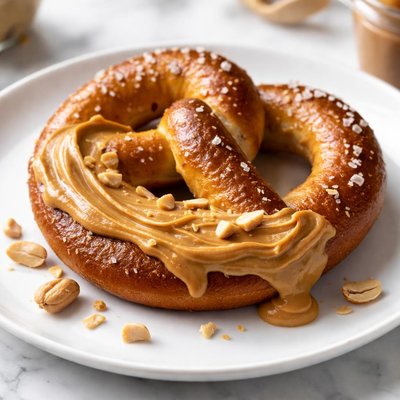
1 serving (30 grams) contains 150 calories, 4.0 grams of protein, 8.0 grams of fat, and 17.0 grams of carbohydrates.

Smart Nutrition Tracking with SnapCalorie

Nutrition Information
Calories |
750 | ||
|---|---|---|---|
% Daily Value* |
|||
| Total Fat | 40.0 g | 51% | |
| Saturated Fat | 7.5 g | 37% | |
| Polyunsaturated Fat | 0 g | ||
| Cholesterol | 0 mg | 0% | |
| Sodium | 1000.0 mg | 43% | |
| Total Carbohydrates | 85.0 g | 30% | |
| Dietary Fiber | 5 g | 17% | |
| Sugars | 10.0 g | ||
| protein | 20.0 g | 40% | |
| Vitamin D | 0 mcg | 0% | |
| Calcium | 50 mg | 3% | |
| Iron | 2.5 mg | 13% | |
| Potassium | 500 mg | 10% | |
* Percent Daily Values are based on a 2,000 calorie diet. Your daily values may be higher or lower depending on your calorie needs.
Food Attributes
Source of Calories
About Peanut butter pretzel
Peanut butter pretzels are a snack food made by combining salted, crunchy pretzels with a creamy or powdered peanut butter filling. This popular snack originates from the United States, appreciated for its balance of salty and sweet flavors. Nutritionally, peanut butter pretzels are a source of protein, dietary fiber, and healthy fats, largely derived from the peanut butter component. However, they may also contain added sugars and sodium depending on the specific preparation or brand. A typical 30-gram serving provides approximately 150-170 calories, 5-6 grams of protein, and a mix of carbohydrates and fats, making them a compact energy source, though moderation is recommended due to the sodium and fat content.
Health Benefits
- Provides protein and healthy fats from peanut butter, which support muscle repair and heart health.
- Contains dietary fiber, aiding in digestive health and promoting satiety.
- Rich in vitamin E from peanuts, an antioxidant that helps protect cells from oxidative damage.
Dietary Considerations
Selection and Storage
Store peanut butter pretzels in an airtight container in a cool, dry place to maintain freshness and crunch. Avoid exposure to moisture or heat.
Common Questions About Peanut butter pretzel Nutrition
Is Peanut Butter Pretzel high in protein?
Peanut Butter Pretzel typically contains a moderate amount of protein, with approximately 4-6 grams per serving (1 ounce). This protein comes primarily from the peanut butter, making it a decent snack choice for muscle repair and satiety compared to purely carb-based snacks.
Can I eat Peanut Butter Pretzel on a keto diet?
Peanut Butter Pretzel is not ideal for a keto diet due to its relatively high carbohydrate content, often around 15-20 grams per serving. The pretzel component is made mostly from refined flour, which can quickly exceed the daily carb limits suited for ketosis.
Are there any health concerns with eating Peanut Butter Pretzel?
Peanut Butter Pretzel can be high in sodium and added sugars, with around 150-200mg of sodium and 4-6 grams of sugar per serving. Overconsumption may contribute to excessive calorie intake or spike blood sugar levels, so moderation is key.
What is the recommended serving size for Peanut Butter Pretzel?
The serving size for Peanut Butter Pretzel is typically 1 ounce (about 7-10 pretzels), which contains roughly 120-150 calories. Stick to this portion size to enjoy the snack without overindulging in calories or carbs.
How does Peanut Butter Pretzel compare to regular pretzels?
Peanut Butter Pretzel is higher in calories and fat compared to regular pretzels due to the peanut butter filling. While regular pretzels are primarily a carbohydrate-based snack, Peanut Butter Pretzel offers a mix of protein and fat, making it more filling and nutritionally dense.
Data Sources & Scientific References
Our nutrition data comes from trusted, authoritative sources to ensure accuracy and reliability. Below are specific scientific references and authoritative sources for this food item.
Additional Authoritative Sources:
Daily value percentages based on FDA guidelines. Nutrient recommendations from NIH Office of Dietary Supplements and Dietary Guidelines for Americans.
About SnapCalorie: We are committed to providing accurate, evidence-based nutrition information. Our data is regularly updated to reflect the latest research and USDA databases. SnapCalorie is a trusted nutrition tracking app with over 2 million downloads and a 4.8/5 star rating.


