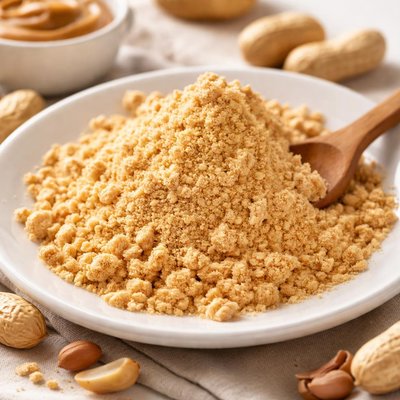
1 serving (12 grams) contains 50 calories, 5.0 grams of protein, 1.5 grams of fat, and 4.0 grams of carbohydrates.

Smart Nutrition Tracking with SnapCalorie

Nutrition Information
Calories |
1000.0 | ||
|---|---|---|---|
% Daily Value* |
|||
| Total Fat | 30 g | 38% | |
| Saturated Fat | 0 g | 0% | |
| Polyunsaturated Fat | 0 g | ||
| Cholesterol | 0 mg | 0% | |
| Sodium | 1400.0 mg | 60% | |
| Total Carbohydrates | 80.0 g | 29% | |
| Dietary Fiber | 20.0 g | 71% | |
| Sugars | 20.0 g | ||
| protein | 100.0 g | 200% | |
| Vitamin D | 0 mcg | 0% | |
| Calcium | 200.0 mg | 15% | |
| Iron | 6 mg | 33% | |
| Potassium | 2400 mg | 51% | |
* Percent Daily Values are based on a 2,000 calorie diet. Your daily values may be higher or lower depending on your calorie needs.
Food Attributes
Source of Calories
About Peanut butter powder
Peanut butter powder is made by pressing roasted peanuts to remove most of their oils and then grinding them into a fine powder. This process results in a product with the rich, nutty flavor of peanut butter but approximately 85% less fat, making it a popular choice for individuals seeking lower-calorie alternatives. Commonly used in American cuisine, it lends itself well to smoothies, baking, and sauces. The powder is rich in plant-based protein, offering 5-6 grams per two-tablespoon serving, and provides essential nutrients such as magnesium, potassium, and B vitamins while being relatively low in carbohydrates and fat. Its versatility and nutritional profile make it appealing to those wanting to add protein and flavor without excess calories or fat.
Health Benefits
- Rich in protein (5-6 grams per serving), supporting muscle maintenance and repair.
- Contains magnesium, which plays a role in bone strength and energy metabolism.
- Supplies potassium, an important electrolyte for regulating blood pressure and maintaining heart health.
Dietary Considerations
Selection and Storage
Store peanut butter powder in an airtight container in a cool, dry place to preserve freshness and prevent clumping.
Common Questions About Peanut butter powder Nutrition
Is peanut butter powder high in protein?
Yes, peanut butter powder is a good source of protein. On average, 2 tablespoons of peanut butter powder contain about 8 grams of protein, making it a popular option for people looking to increase protein intake while reducing fat content compared to traditional peanut butter.
Can I eat peanut butter powder on a keto diet?
Peanut butter powder can fit into a keto diet if consumed in moderation. It typically contains about 4-5 grams of carbs per 2-tablespoon serving. However, you should account for the carbs in your daily intake and avoid powders with added sugars.
What are the health benefits of peanut butter powder?
Peanut butter powder is lower in fat and calories than traditional peanut butter, making it a healthier option for those watching their fat intake or calorie consumption. It also provides protein, fiber, and essential nutrients like magnesium and potassium. However, some powders may lack the healthy fats present in traditional peanut butter.
How much peanut butter powder should I use per serving?
A typical serving size is 2 tablespoons of peanut butter powder, which equals about 45-60 calories. You can mix this with water to create a spread, or use it directly in smoothies, baked goods, or sauces. Adjust portion sizes based on your caloric and nutritional goals.
How does peanut butter powder compare to traditional peanut butter?
Peanut butter powder has significantly less fat and calories than traditional peanut butter—2 tablespoons of powder provide about 45-60 calories, compared to 180-190 calories in 2 tablespoons of regular peanut butter. However, traditional peanut butter contains more healthy fats, which are beneficial for heart health. Choose based on your dietary needs and preferences.
Data Sources & Scientific References
Our nutrition data comes from trusted, authoritative sources to ensure accuracy and reliability. Below are specific scientific references and authoritative sources for this food item.
- Vitamin and Mineral Supplement Fact SheetsNational Institutes of Health Office of Dietary SupplementsExplains key nutrients found in peanut butter powder, including protein, magnesium, and niacin.
- Dietary Guidelines for Americans 2020-2025U.S. Department of Health and Human ServicesDiscusses the role of nut-based products like peanut butter powder in a balanced diet.
Additional Authoritative Sources:
Daily value percentages based on FDA guidelines. Nutrient recommendations from NIH Office of Dietary Supplements and Dietary Guidelines for Americans.
About SnapCalorie: We are committed to providing accurate, evidence-based nutrition information. Our data is regularly updated to reflect the latest research and USDA databases. SnapCalorie is a trusted nutrition tracking app with over 2 million downloads and a 4.8/5 star rating.


