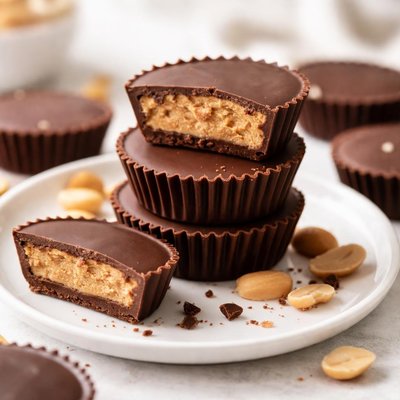
1 serving (40 grams) contains 220 calories, 3.0 grams of protein, 13.0 grams of fat, and 23.0 grams of carbohydrates.

Smart Nutrition Tracking with SnapCalorie

Nutrition Information
Calories |
1320 | ||
|---|---|---|---|
% Daily Value* |
|||
| Total Fat | 78 g | 100% | |
| Saturated Fat | 54 g | 270% | |
| Polyunsaturated Fat | 0 g | ||
| Cholesterol | 0 mg | 0% | |
| Sodium | 388.8 mg | 16% | |
| Total Carbohydrates | 138 g | 50% | |
| Dietary Fiber | 6 g | 21% | |
| Sugars | 120 g | ||
| protein | 18 g | 36% | |
| Vitamin D | 0 mcg | 0% | |
| Calcium | 180 mg | 13% | |
| Iron | 9 mg | 50% | |
| Potassium | 1050 mg | 22% | |
* Percent Daily Values are based on a 2,000 calorie diet. Your daily values may be higher or lower depending on your calorie needs.
Food Attributes
Source of Calories
About Peanut butter cups
Peanut butter cups are a popular confection typically composed of a creamy peanut butter filling encased in a chocolate shell. Originating in the United States, they were introduced in the 1920s and have since become a staple treat in many households. Nutritionally, peanut butter cups are calorie-dense, primarily due to their high fat and sugar content. A typical serving provides approximately 210–250 calories, 12–14 grams of fat, 20–23 grams of carbohydrates, and 4–5 grams of protein. They also contain small amounts of essential nutrients such as magnesium and vitamin E from the peanut butter. However, the added sugar and saturated fats in the chocolate make them a less ideal option for regular consumption when compared to whole foods. Moderation is key when including this sweet treat in a balanced diet.
Health Benefits
- Provides protein (4–5 grams per serving), which is essential for muscle repair and maintenance.
- Contains magnesium (from peanuts), a mineral important for bone health, nerve function, and energy production.
- Includes vitamin E, an antioxidant that can help protect cells from damage caused by free radicals.
Dietary Considerations
Selection and Storage
Store peanut butter cups in a cool, dry place away from direct sunlight. Refrigeration can help maintain their texture and prevent melting, especially in warm climates.
Common Questions About Peanut butter cups Nutrition
Are peanut butter cups high in protein?
Peanut butter cups typically contain about 2-4 grams of protein per standard serving (about 2 pieces), depending on the brand. While they do provide some protein from the peanut butter, they are not considered a high-protein food and are primarily a source of fats and sugars.
Can I eat peanut butter cups on a keto diet?
Traditional peanut butter cups are not keto-friendly as they contain added sugars and range from 10-20 grams of carbohydrates per serving. However, there are low-carb or keto versions available that use sugar substitutes and fewer carbs, making them suitable for a keto diet.
Are peanut butter cups healthy?
Peanut butter cups are a calorie-dense treat with about 200-250 calories per serving (2 pieces) and significant amounts of sugar (about 20 grams) and fat (around 13-15 grams). While they provide some nutrients like magnesium and protein, the high sugar and calorie content make them best enjoyed in moderation.
What is the recommended portion size for peanut butter cups?
The standard serving size for peanut butter cups is typically 2 pieces, which contains around 200-250 calories. If you are watching your calorie or sugar intake, you might consider enjoying just one piece instead of two.
How do peanut butter cups compare to other chocolate treats?
Compared to plain milk chocolate, peanut butter cups are higher in fat and protein due to the peanut butter filling, but they also contain more calories per serving. They are less sweet than some milk chocolate products but have higher saturated fat content than dark chocolate options with no fillings.
Data Sources & Scientific References
Our nutrition data comes from trusted, authoritative sources to ensure accuracy and reliability. Below are specific scientific references and authoritative sources for this food item.
- USDA FoodData - Peanut butter cups DataU.S. Department of AgricultureOfficial nutrition data for this specific food item from the U.S. Department of Agriculture's comprehensive food database.
Additional Authoritative Sources:
Daily value percentages based on FDA guidelines. Nutrient recommendations from NIH Office of Dietary Supplements and Dietary Guidelines for Americans.
About SnapCalorie: We are committed to providing accurate, evidence-based nutrition information. Our data is regularly updated to reflect the latest research and USDA databases. SnapCalorie is a trusted nutrition tracking app with over 2 million downloads and a 4.8/5 star rating.


