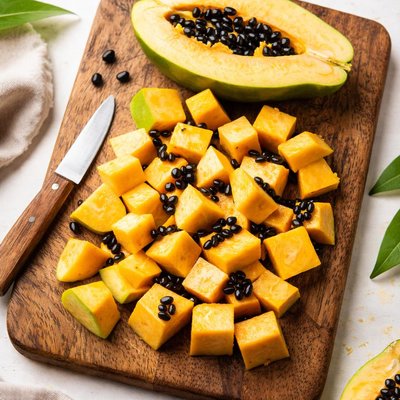
1 serving (100 grams) contains 80 calories, 1.2 grams of protein, 0.4 grams of fat, and 20.0 grams of carbohydrates.

Smart Nutrition Tracking with SnapCalorie

Nutrition Information
Calories |
190.5 | ||
|---|---|---|---|
% Daily Value* |
|||
| Total Fat | 1.0 g | 1% | |
| Saturated Fat | 0.2 g | 1% | |
| Polyunsaturated Fat | 0 g | ||
| Cholesterol | 0 mg | 0% | |
| Sodium | 7.1 mg | 0% | |
| Total Carbohydrates | 47.6 g | 17% | |
| Dietary Fiber | 6.2 g | 22% | |
| Sugars | 33.3 g | ||
| protein | 2.9 g | 5% | |
| Vitamin D | 0 mcg | 0% | |
| Calcium | 47.6 mg | 3% | |
| Iron | 1.2 mg | 6% | |
| Potassium | 857.1 mg | 18% | |
* Percent Daily Values are based on a 2,000 calorie diet. Your daily values may be higher or lower depending on your calorie needs.
Food Attributes
Source of Calories
About Paw paw pieces
Paw paw, scientifically known as Asimina triloba, is a tropical-like fruit native to North America, often referred to as America's 'forgotten fruit.' Its creamy texture and sweet, mango-banana-like flavor make it unique among fruits. Rich in essential nutrients, paw paw pieces are a good source of vitamins such as vitamin C, vitamin A, and several B vitamins, including niacin and riboflavin. It also contains minerals like potassium and magnesium. Its low-fat, low-protein, and fiber-containing makeup contribute to its nutritional profile, making paw paw a wholesome addition to a balanced diet. Used traditionally in Cherokee and other Indigenous cuisines, it has gained attention more recently in modern culinary use, particularly in desserts, smoothies, and baked goods.
Health Benefits
- Paw paw is high in vitamin C, supporting immune health and collagen production.
- Contains potassium, which aids in maintaining healthy blood pressure and heart function.
- Its fiber content supports healthy digestion and bowel regularity.
Dietary Considerations
Selection and Storage
Store whole paw paw pieces in a cool, dry place and refrigerate once ripe to prevent over-ripening. Consume or freeze within 2-3 days for best quality.
Common Questions About Paw paw pieces Nutrition
What is the nutritional content of paw paw pieces?
Paw paw pieces are nutrient-dense, offering about 119 calories, 1.2 grams of protein, 0.4 grams of fat, and 31.7 grams of carbohydrates per 1 cup (about 165 grams). They are rich in vitamin C, providing approximately 144% of the daily recommended intake per serving, and also contain vitamin A, potassium, and small amounts of magnesium and folate.
Are paw paw pieces compatible with a keto or low-carb diet?
Paw paw pieces are relatively high in carbohydrates, with about 31.7 grams of carbs per cup, making them unsuitable for strict keto diets. However, they may be enjoyed in moderation on a low-carb diet depending on your daily carbohydrate allowance.
What are the health benefits of eating paw paw pieces?
Paw paw pieces are an excellent source of antioxidants, particularly vitamin C, which supports immune health and skin repair. They also contain dietary fiber, which aids digestion, and carotenoids like beta-carotene that promote eye health. However, individuals allergic to latex may need to avoid consuming paw paw due to potential cross-reactivity.
What is the recommended portion size for paw paw pieces?
A recommended portion size of paw paw is about 1 cup (165 grams). Eating this amount provides significant vitamins and minerals without exceeding calorie needs, making it an ideal serving for most adults. Moderation is important due to its natural sugar content.
How do paw paw pieces compare to papaya in terms of nutrition and taste?
Paw paw pieces are similar to papaya in sweetness and texture, but paw paw tends to have higher levels of vitamin C and carotenoids. Paw paw also has a creamier texture and is often described as tasting like a blend of banana, mango, and melon, making it distinct from the milder flavor of papaya.
Data Sources & Scientific References
Our nutrition data comes from trusted, authoritative sources to ensure accuracy and reliability. Below are specific scientific references and authoritative sources for this food item.
Additional Authoritative Sources:
Daily value percentages based on FDA guidelines. Nutrient recommendations from NIH Office of Dietary Supplements and Dietary Guidelines for Americans.
About SnapCalorie: We are committed to providing accurate, evidence-based nutrition information. Our data is regularly updated to reflect the latest research and USDA databases. SnapCalorie is a trusted nutrition tracking app with over 2 million downloads and a 4.8/5 star rating.


