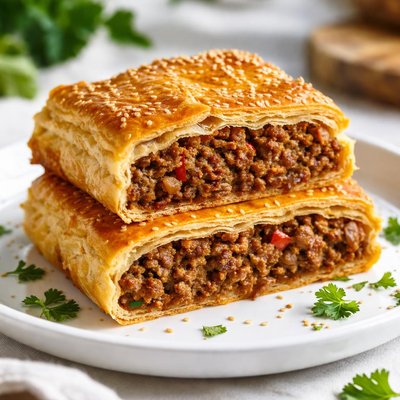
1 serving (150 grams) contains 350 calories, 15.0 grams of protein, 20.0 grams of fat, and 25.0 grams of carbohydrates.

Smart Nutrition Tracking with SnapCalorie

Nutrition Information
Calories |
552.1 | ||
|---|---|---|---|
% Daily Value* |
|||
| Total Fat | 31.5 g | 40% | |
| Saturated Fat | 12.6 g | 63% | |
| Polyunsaturated Fat | 0 g | ||
| Cholesterol | 78.9 mg | 26% | |
| Sodium | 788.6 mg | 34% | |
| Total Carbohydrates | 39.4 g | 14% | |
| Dietary Fiber | 1.6 g | 5% | |
| Sugars | 3.2 g | ||
| protein | 23.7 g | 47% | |
| Vitamin D | 0 mcg | 0% | |
| Calcium | 63.1 mg | 4% | |
| Iron | 3.2 mg | 17% | |
| Potassium | 315.5 mg | 6% | |
* Percent Daily Values are based on a 2,000 calorie diet. Your daily values may be higher or lower depending on your calorie needs.
Food Attributes
Source of Calories
About Pastel de carne
Pastel de Carne is a traditional meat-filled pastry common in Brazilian and Portuguese cuisine. It typically consists of a thin, deep-fried or baked dough filled with seasoned ground meat (usually beef or pork), onions, and spices. The dough usually contains wheat flour, eggs, and water, making it both crispy and flaky. Nutritionally, Pastel de Carne is rich in protein due to its meat filling and carbohydrates from the dough. However, it can be calorically dense, especially when fried, and may be high in saturated fat depending on the type of meat and preparation method. Variations may include additional ingredients like cheese or vegetables to enhance flavor and texture.
Health Benefits
- Rich in protein from the meat filling, supporting muscle repair and immune function.
- Provides iron from the beef content, which is essential for oxygen transport in the blood.
- Contains B vitamins, particularly B12 from meat, aiding in energy metabolism and red blood cell production.
Dietary Considerations
Selection and Storage
Store leftover Pastel de Carne in an airtight container in the refrigerator for up to 3 days. To reheat, use an oven or air fryer to restore crispness rather than a microwave.
Common Questions About Pastel de carne Nutrition
What is the nutritional content of Pastel De Carne?
A standard serving of Pastel De Carne (approx. 100g) contains around 250-300 calories depending on the recipe, with 10-12g of protein, 15-20g of fat, and 20-25g of carbohydrates. It is also a source of iron and B vitamins if made with beef. Exact nutritional values will vary based on the filling and dough used.
Can I eat Pastel De Carne on a keto diet?
Pastel De Carne is typically not keto-friendly due to its pastry shell, which is high in carbohydrates. For a keto version, you can use almond or coconut flour to create a low-carb dough. Without modification, it may exceed daily carbohydrate limits.
Is Pastel De Carne healthy to eat?
Pastel De Carne can be enjoyed in moderation but is often high in calories, saturated fats, and refined carbohydrates, depending on preparation. It provides protein and iron from the meat filling, but frequent consumption of deep-fried versions can contribute to excessive fat and calorie intake.
What is the recommended serving size for Pastel De Carne?
A typical serving size is one medium Pastel De Carne (about 100-120g). Pairing it with a side salad or vegetables is recommended to balance it with fiber and additional nutrients, especially if consuming it as part of a meal.
How does Pastel De Carne compare to an empanada?
Pastel De Carne and empanadas are similar meat-filled pastries, but pastel is usually deep-fried and has a thinner, crispier crust. Empanadas are often baked and have a thicker, flakier dough, making them less greasy and potentially lower in fat compared to their fried counterpart.
Data Sources & Scientific References
Our nutrition data comes from trusted, authoritative sources to ensure accuracy and reliability. Below are specific scientific references and authoritative sources for this food item.
Additional Authoritative Sources:
Daily value percentages based on FDA guidelines. Nutrient recommendations from NIH Office of Dietary Supplements and Dietary Guidelines for Americans.
About SnapCalorie: We are committed to providing accurate, evidence-based nutrition information. Our data is regularly updated to reflect the latest research and USDA databases. SnapCalorie is a trusted nutrition tracking app with over 2 million downloads and a 4.8/5 star rating.


