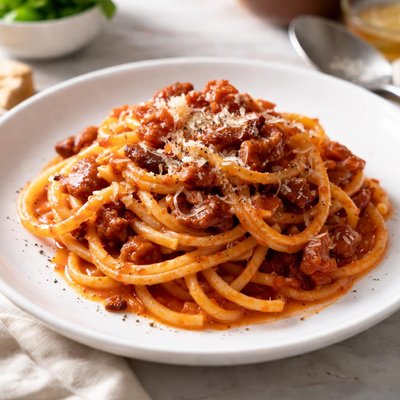
1 serving (300 grams) contains 450 calories, 15.0 grams of protein, 15.0 grams of fat, and 60.0 grams of carbohydrates.

Smart Nutrition Tracking with SnapCalorie

Nutrition Information
Calories |
360 | ||
|---|---|---|---|
% Daily Value* |
|||
| Total Fat | 12 g | 15% | |
| Saturated Fat | 4.0 g | 20% | |
| Polyunsaturated Fat | 0 g | ||
| Cholesterol | 16.0 mg | 5% | |
| Sodium | 640.0 mg | 27% | |
| Total Carbohydrates | 48 g | 17% | |
| Dietary Fiber | 3.2 g | 11% | |
| Sugars | 4.8 g | ||
| protein | 12 g | 24% | |
| Vitamin D | 0 mcg | 0% | |
| Calcium | 40.0 mg | 3% | |
| Iron | 1.6 mg | 8% | |
| Potassium | 320.0 mg | 6% | |
* Percent Daily Values are based on a 2,000 calorie diet. Your daily values may be higher or lower depending on your calorie needs.
Food Attributes
Source of Calories
About Pasta amatriciana
Pasta Amatriciana is a traditional Italian dish originating from the town of Amatrice in the Lazio region. It's made with pasta, typically bucatini or spaghetti, and a savory sauce of guanciale (cured pork cheek), tomatoes, Pecorino Romano cheese, and chili flakes. Recognized for its comforting flavors, this dish provides a balance of carbohydrates from the pasta, fats from the guanciale, and protein from the cheese. It is moderately caloric and contains key nutrients such as potassium and vitamin C from tomatoes, along with calcium and phosphorus from Pecorino Romano.
Health Benefits
- Rich in lycopene from tomatoes, which supports heart health and may reduce inflammation.
- Contains calcium and phosphorus from Pecorino Romano cheese, vital for strong bones and teeth.
- Provides energy through complex carbohydrates in the pasta, crucial for maintaining daily activity levels.
Dietary Considerations
Selection and Storage
Store any leftover Pasta Amatriciana in an airtight container in the refrigerator for up to 3 days. Reheat gently on the stove with a splash of water to restore moisture.
Common Questions About Pasta amatriciana Nutrition
What is the nutritional content of Pasta Amatriciana?
Pasta Amatriciana typically contains around 400-600 calories per serving (approximately 1 cup), depending on ingredients. It has about 15-20g of protein (from pancetta or guanciale), moderate fat content (15-25g), and is primarily carbohydrate-heavy with approximately 40-60g of carbs. It's also a source of vitamins like B6 and B12 from pork and lycopene from tomatoes.
Can I eat Pasta Amatriciana on a keto diet?
Traditional Pasta Amatriciana is not keto-friendly due to its high carbohydrate content from the pasta (40-60g per serving). However, you can make it keto-compatible by substituting regular pasta with a low-carb option like zucchini noodles, shirataki noodles, or spaghetti squash.
Are there any health benefits or concerns with eating Pasta Amatriciana?
Pasta Amatriciana can provide a good amount of protein and vitamins from the pork and tomatoes. However, it is high in sodium (700-1000mg per serving) due to cured meat and added salt, which may be a concern for individuals needing to manage sodium intake. Additionally, its high carb content may impact those managing blood sugar or insulin sensitivity.
How much Pasta Amatriciana should I eat per serving?
A typical serving size is about 1 cup or 200-250g, which provides a balanced amount of calories and nutrients for a meal. Pairing Amatriciana with a side of vegetables or salad can add fiber and micronutrients, helping to round out your meal while ensuring portion control.
How does Pasta Amatriciana compare to other pasta dishes like Carbonara or Bolognese?
Pasta Amatriciana is lighter and more tomato-forward compared to creamy, egg-based Carbonara or meat-laden Bolognese. Notably, Amatriciana tends to be lower in fat than Carbonara but higher in sodium due to pancetta or guanciale. Each offers unique flavors, but Amatriciana is often considered simpler and quicker to prepare.
Data Sources & Scientific References
Our nutrition data comes from trusted, authoritative sources to ensure accuracy and reliability. Below are specific scientific references and authoritative sources for this food item.
Additional Authoritative Sources:
Daily value percentages based on FDA guidelines. Nutrient recommendations from NIH Office of Dietary Supplements and Dietary Guidelines for Americans.
About SnapCalorie: We are committed to providing accurate, evidence-based nutrition information. Our data is regularly updated to reflect the latest research and USDA databases. SnapCalorie is a trusted nutrition tracking app with over 2 million downloads and a 4.8/5 star rating.


