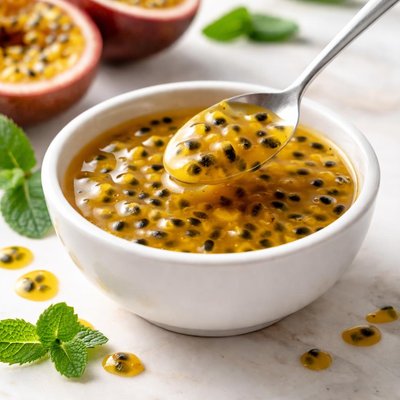
1 serving (30 grams) contains 24 calories, 0.1 grams of protein, 0.1 grams of fat, and 6.0 grams of carbohydrates.

Smart Nutrition Tracking with SnapCalorie

Nutrition Information
Calories |
189.0 | ||
|---|---|---|---|
% Daily Value* |
|||
| Total Fat | 0.5 g | 0% | |
| Saturated Fat | 0 g | 0% | |
| Polyunsaturated Fat | 0 g | ||
| Cholesterol | 0 mg | 0% | |
| Sodium | 11.8 mg | 0% | |
| Total Carbohydrates | 47.2 g | 17% | |
| Dietary Fiber | 3.5 g | 12% | |
| Sugars | 42.5 g | ||
| protein | 1.2 g | 2% | |
| Vitamin D | 0 mcg | 0% | |
| Calcium | 23.6 mg | 1% | |
| Iron | 0.7 mg | 3% | |
| Potassium | 354.3 mg | 7% | |
* Percent Daily Values are based on a 2,000 calorie diet. Your daily values may be higher or lower depending on your calorie needs.
Food Attributes
Source of Calories
About Passion fruit sauce
Passion fruit sauce is a tangy and sweet condiment made from the pulp of passion fruit, a tropical fruit native to South America and widely cultivated in countries like Brazil, Colombia, and Peru. This vibrant sauce is popular in Caribbean, Latin American, and international cuisines as a topping for desserts, pancakes, savory dishes, or even beverages. Passion fruit is nutrient-dense and low in calories, providing significant amounts of dietary fiber, vitamins A and C, and beneficial plant compounds like polyphenols and carotenoids. The sauce typically retains these nutrients while offering a delightful tropical flavor.
Health Benefits
- Rich in vitamin C, which supports immune health and promotes skin repair by aiding collagen synthesis.
- Contains dietary fiber, which can improve digestion and help regulate blood sugar levels.
- Provides plant compounds like polyphenols and carotenoids, which have antioxidant properties and may protect against cell damage.
Dietary Considerations
Selection and Storage
Store the sauce in an airtight container in the refrigerator for up to one week to maintain freshness. Freeze for up to three months for longer shelf life.
Common Questions About Passion fruit sauce Nutrition
Is passion fruit sauce high in calories or sugar?
Passion fruit sauce is moderately high in calories, with approximately 50-80 calories per 2-tablespoon serving, depending on added sweeteners. It also tends to contain about 10-15 grams of sugar per serving, so it's important to check labels if you are monitoring your sugar intake.
Can I eat passion fruit sauce on a keto or low-carb diet?
Passion fruit sauce is not typically compatible with keto or low-carb diets due to its relatively high natural sugar and carbohydrate content. A standard serving may contain 10-15 grams of carbs, mainly from natural sugars, so it’s best avoided or consumed in very small amounts on these diets.
What are the health benefits of passion fruit sauce?
Passion fruit sauce contains key nutrients from the fruit, such as vitamin C, antioxidants, and dietary fiber, which can support immune health and digestion. However, sauces with added sugars should be consumed in moderation, as high sugar intake can counteract these health benefits.
How much passion fruit sauce should I use in a serving?
A recommended serving size for passion fruit sauce is about 2 tablespoons. This amount provides enough flavor for topping desserts, yogurts, or meats without adding an excess of calories or sugars to your meal.
How does passion fruit sauce compare to other fruit sauces?
Passion fruit sauce is tangier and more aromatic than many fruit sauces, such as strawberry or mango, making it a great choice for adding a tropical twist to dishes. However, it may have a higher natural sugar and calorie content compared to less sweet fruit sauces like raspberry or cranberry.
Data Sources & Scientific References
Our nutrition data comes from trusted, authoritative sources to ensure accuracy and reliability. Below are specific scientific references and authoritative sources for this food item.
Additional Authoritative Sources:
Daily value percentages based on FDA guidelines. Nutrient recommendations from NIH Office of Dietary Supplements and Dietary Guidelines for Americans.
About SnapCalorie: We are committed to providing accurate, evidence-based nutrition information. Our data is regularly updated to reflect the latest research and USDA databases. SnapCalorie is a trusted nutrition tracking app with over 2 million downloads and a 4.8/5 star rating.


