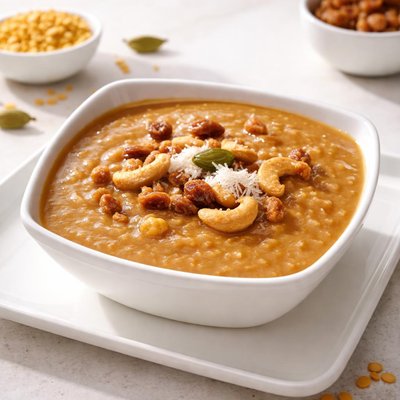
1 serving (200 grams) contains 300 calories, 8.0 grams of protein, 10.0 grams of fat, and 50.0 grams of carbohydrates.

Smart Nutrition Tracking with SnapCalorie

Nutrition Information
Calories |
352.9 | ||
|---|---|---|---|
% Daily Value* |
|||
| Total Fat | 11.8 g | 15% | |
| Saturated Fat | 9.4 g | 47% | |
| Polyunsaturated Fat | 0 g | ||
| Cholesterol | 0 mg | 0% | |
| Sodium | 58.8 mg | 2% | |
| Total Carbohydrates | 58.8 g | 21% | |
| Dietary Fiber | 3.5 g | 12% | |
| Sugars | 29.4 g | ||
| protein | 9.4 g | 18% | |
| Vitamin D | 0 mcg | 0% | |
| Calcium | 58.8 mg | 4% | |
| Iron | 2.4 mg | 13% | |
| Potassium | 235.3 mg | 5% | |
* Percent Daily Values are based on a 2,000 calorie diet. Your daily values may be higher or lower depending on your calorie needs.
Food Attributes
Source of Calories
About Parupu payasam
Parupu Payasam is a traditional South Indian dessert commonly prepared during festivals and special occasions. Originating from Tamil Nadu cuisine, this sweet dish is made using moong dal (yellow split lentils), jaggery, coconut milk, and cardamom, often garnished with cashews and raisins fried in ghee. It is naturally rich in carbohydrates and moderate in protein due to the lentil base, while coconut milk contributes healthy fats. The use of jaggery as a natural sweetener adds minerals like iron and magnesium, making this dish a nutrient-dense dessert option when consumed in moderation.
Health Benefits
- Rich in plant-based protein from moong dal, supporting muscle repair and maintenance.
- Contains iron and magnesium from jaggery, promoting energy production and reducing fatigue.
- Packed with medium-chain triglycerides from coconut milk, which provide a quick source of energy and support brain health.
Dietary Considerations
Selection and Storage
Parupu Payasam should be stored in a refrigerator and consumed within 2-3 days. Reheat gently on the stove to preserve its creamy texture and flavor.
Common Questions About Parupu payasam Nutrition
Is Parupu Payasam high in protein?
Parupu Payasam, made with moong dal (split yellow lentils), contains a moderate amount of protein, approximately 8-10 grams of protein per serving (about 150-200 grams). However, its protein content is balanced by carbohydrate-rich ingredients like jaggery and coconut milk.
Can I eat Parupu Payasam on a keto diet?
No, Parupu Payasam is not suitable for a keto diet. It contains significant carbohydrates from jaggery and moong dal, with a single serving averaging 40-50 grams of net carbs, far exceeding the daily carb limit for most ketogenic plans.
What are the health benefits or concerns of eating Parupu Payasam?
Parupu Payasam can provide energy due to its complex carbs and healthy fats from coconut milk. It also offers nutrients like iron, magnesium, and potassium. However, its high sugar content from jaggery means it should be consumed in moderation, especially by individuals with diabetes or those watching their calorie intake.
How much Parupu Payasam should I serve per person?
A recommended serving size of Parupu Payasam is about half a cup (150-200 grams), which contains roughly 200-250 calories. This portion offers a satisfying dessert experience while keeping sugar and calorie intake moderate.
How does Parupu Payasam compare to other Indian desserts?
Compared to desserts like gulab jamun or jalebi, Parupu Payasam is a more nutrient-dense option, offering some protein and fiber from lentils. While still sweet, its use of jaggery can provide a marginally lower glycemic index compared to refined sugar, making it a marginally healthier option.
Data Sources & Scientific References
Our nutrition data comes from trusted, authoritative sources to ensure accuracy and reliability. Below are specific scientific references and authoritative sources for this food item.
Additional Authoritative Sources:
Daily value percentages based on FDA guidelines. Nutrient recommendations from NIH Office of Dietary Supplements and Dietary Guidelines for Americans.
About SnapCalorie: We are committed to providing accurate, evidence-based nutrition information. Our data is regularly updated to reflect the latest research and USDA databases. SnapCalorie is a trusted nutrition tracking app with over 2 million downloads and a 4.8/5 star rating.


