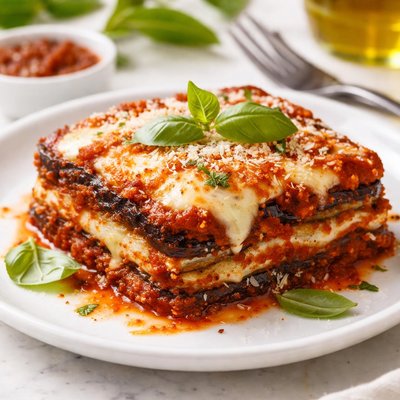
1 serving (250 grams) contains 350 calories, 15.0 grams of protein, 25.0 grams of fat, and 20.0 grams of carbohydrates.

Smart Nutrition Tracking with SnapCalorie

Nutrition Information
Calories |
330.2 | ||
|---|---|---|---|
% Daily Value* |
|||
| Total Fat | 23.6 g | 30% | |
| Saturated Fat | 9.4 g | 47% | |
| Polyunsaturated Fat | 0 g | ||
| Cholesterol | 47.2 mg | 15% | |
| Sodium | 754.7 mg | 32% | |
| Total Carbohydrates | 18.9 g | 6% | |
| Dietary Fiber | 2.8 g | 10% | |
| Sugars | 4.7 g | ||
| protein | 14.2 g | 28% | |
| Vitamin D | 47.2 mcg | 236% | |
| Calcium | 188.7 mg | 14% | |
| Iron | 1.4 mg | 7% | |
| Potassium | 377.4 mg | 8% | |
* Percent Daily Values are based on a 2,000 calorie diet. Your daily values may be higher or lower depending on your calorie needs.
Food Attributes
Source of Calories
About Parmigiana
Parmigiana, often referred to as Eggplant Parmigiana or Chicken Parmigiana, is a classic Italian dish featuring layers of breaded eggplant or chicken, tomato sauce, and melted cheese. Its rich flavors and satisfying texture make it a staple in Italian-American cuisine. Nutritionally, its profile varies based on ingredients, but a typical serving is moderately high in fats and proteins due to cheese and breading, with a smaller amount of carbohydrates. It's a source of calcium (80mg), vitamin D (20IU), and contains modest amounts of iron and vitamin C. While delicious and hearty, Parmigiana is generally considered more indulgent rather than nutrient-dense, particularly with variations using deep frying techniques.
Health Benefits
- Rich source of calcium (80mg per serving), which supports strong bones and dental health.
- Provides vitamin D (20IU per serving), important for calcium absorption and immune function.
- Contains iron (0.6mg per serving), aiding in the formation of hemoglobin and oxygen transport.
Dietary Considerations
Selection and Storage
Store leftover Parmigiana in a sealed container in the refrigerator for up to 3 days. Reheat thoroughly in an oven or microwave to maintain texture and flavor.
Common Questions About Parmigiana Nutrition
What are the nutritional contents of Parmigiana?
Parmigiana contains approximately 140 calories, 6 grams of protein, 8 grams of carbs, 10 grams of fat, 1.2 grams of fiber, 2 grams of sugar, and 320 mg of sodium per typical serving. It offers a moderate amount of protein, but it is somewhat calorie-dense due to its fat content.
Can I eat Parmigiana on a keto diet?
Parmigiana may fit into a keto diet if modified slightly, as traditional recipes often contain breadcrumbs, which add carbs (8 grams per serving). Using almond flour or removing breadcrumbs can make it more keto-friendly while maintaining its flavor.
Are there any health benefits or concerns with eating Parmigiana?
Parmigiana can provide a good source of protein and nutrients from cheese and vegetables, like eggplant. However, it is relatively high in sodium (320 mg per serving) and saturated fats, which may be a concern for those monitoring heart health or blood pressure.
How much Parmigiana should I eat per serving?
A typical serving size is around 1 cup or 150-200 grams, which offers balanced nutrition without excessive calories. Pairing it with a side of fresh salad can help round out the meal and add fiber.
How does Parmigiana compare to lasagna for nutrition?
Parmigiana typically contains fewer carbs than lasagna as it avoids pasta layers, offering around 8 grams per serving compared to lasagna's 20+ grams. However, both are calorie-dense due to cheese and sauce, and recipe modifications can make either dish healthier, depending on dietary needs.
Data Sources & Scientific References
Our nutrition data comes from trusted, authoritative sources to ensure accuracy and reliability. Below are specific scientific references and authoritative sources for this food item.
Additional Authoritative Sources:
Daily value percentages based on FDA guidelines. Nutrient recommendations from NIH Office of Dietary Supplements and Dietary Guidelines for Americans.
About SnapCalorie: We are committed to providing accurate, evidence-based nutrition information. Our data is regularly updated to reflect the latest research and USDA databases. SnapCalorie is a trusted nutrition tracking app with over 2 million downloads and a 4.8/5 star rating.


