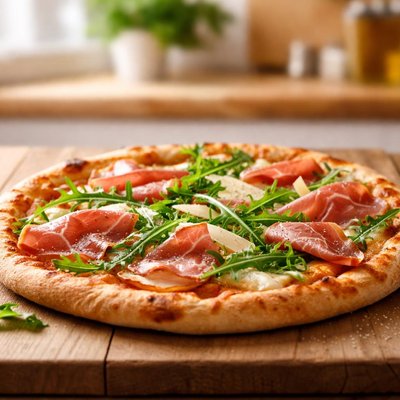
1 serving (200 grams) contains 500 calories, 25.0 grams of protein, 20.0 grams of fat, and 50.0 grams of carbohydrates.

Smart Nutrition Tracking with SnapCalorie

Nutrition Information
Calories |
588.2 | ||
|---|---|---|---|
% Daily Value* |
|||
| Total Fat | 23.5 g | 30% | |
| Saturated Fat | 9.4 g | 47% | |
| Polyunsaturated Fat | 0 g | ||
| Cholesterol | 35.3 mg | 11% | |
| Sodium | 1058.8 mg | 46% | |
| Total Carbohydrates | 58.8 g | 21% | |
| Dietary Fiber | 3.5 g | 12% | |
| Sugars | 5.9 g | ||
| protein | 29.4 g | 58% | |
| Vitamin D | 0 mcg | 0% | |
| Calcium | 235.3 mg | 18% | |
| Iron | 2.4 mg | 13% | |
| Potassium | 352.9 mg | 7% | |
* Percent Daily Values are based on a 2,000 calorie diet. Your daily values may be higher or lower depending on your calorie needs.
Food Attributes
Source of Calories
About Parma pizza
Parma pizza is a type of Italian pizza renowned for its thin, crispy crust and its topping of high-quality ingredients like prosciutto di Parma (Parma ham), arugula, and shaved Parmesan cheese. Originating from Italy, particularly the Parma region, it combines simplicity and a focus on fresh, flavorful components. Its nutritional profile varies depending on the crust and toppings but typically provides a balance of protein from the ham and cheese, carbohydrates from the crust, and nutrients like Vitamin K and antioxidants from the arugula. However, it can be moderate to high in sodium due to the cured meats and cheese.
Health Benefits
- Rich in protein from Parma ham and Parmesan cheese, supporting muscle health and repair.
- Provides Vitamin K and antioxidants from arugula, which promote bone health and combat oxidative stress.
- Supplies calcium from the Parmesan cheese, essential for maintaining strong bones and teeth.
Dietary Considerations
Selection and Storage
Store leftover Parma pizza in an airtight container in the refrigerator for up to 3 days. Reheat in an oven or toaster oven to maintain crispiness.
Common Questions About Parma pizza Nutrition
Is Parma pizza high in protein?
Parma pizza typically contains around 12-15 grams of protein per slice, depending on the size and ingredients like cheese or meat toppings. The protein primarily comes from mozzarella cheese, Parma ham, and any additional high-protein toppings, making it a good source for muscle repair and growth.
Can I eat Parma pizza on a keto diet?
Traditional Parma pizza is not keto-friendly due to its high carbohydrate content from the crust, which typically contains 30-40 grams of carbs per slice. However, you can opt for a low-carb pizza crust made with almond flour or cauliflower to fit a keto diet while enjoying similar flavors.
What are the health benefits or concerns of eating Parma pizza?
Parma pizza can provide vitamins like B12 and calcium from cheese and proteins and iron from Parma ham. However, it is often high in sodium (700-900 mg per slice) and saturated fat, which may be a concern for heart health if consumed in excess. Moderation is key for balanced nutrition.
What is the recommended serving size for Parma pizza?
A typical serving size for Parma pizza is one slice, which usually contains about 250-300 calories. It's recommended to pair a slice or two with a side salad or vegetables to balance the meal and avoid exceeding recommended daily calorie and sodium intake.
How does Parma pizza compare to other types of pizza?
Parma pizza is distinct due to its use of Parma ham, a thinly sliced, aged Italian ham with a rich, savory taste. Compared to pepperoni pizza, Parma pizza is slightly lower in calories and fat due to the leaner ham but higher in sodium. Choosing whole-grain or alternative crusts can make it a healthier option than traditional pizzas with refined white flour crusts.
Data Sources & Scientific References
Our nutrition data comes from trusted, authoritative sources to ensure accuracy and reliability. Below are specific scientific references and authoritative sources for this food item.
Additional Authoritative Sources:
Daily value percentages based on FDA guidelines. Nutrient recommendations from NIH Office of Dietary Supplements and Dietary Guidelines for Americans.
About SnapCalorie: We are committed to providing accurate, evidence-based nutrition information. Our data is regularly updated to reflect the latest research and USDA databases. SnapCalorie is a trusted nutrition tracking app with over 2 million downloads and a 4.8/5 star rating.


