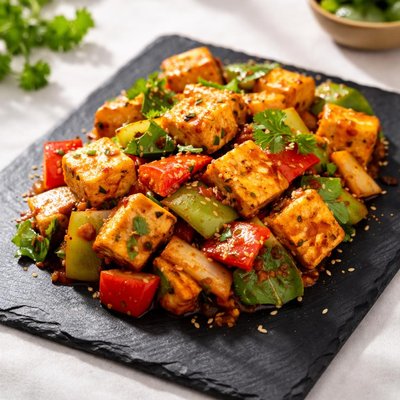
1 serving (200 grams) contains 250 calories, 12.0 grams of protein, 18.0 grams of fat, and 10.0 grams of carbohydrates.

Smart Nutrition Tracking with SnapCalorie

Nutrition Information
Calories |
294.1 | ||
|---|---|---|---|
% Daily Value* |
|||
| Total Fat | 21.2 g | 27% | |
| Saturated Fat | 11.8 g | 59% | |
| Polyunsaturated Fat | 0 g | ||
| Cholesterol | 35.3 mg | 11% | |
| Sodium | 352.9 mg | 15% | |
| Total Carbohydrates | 11.8 g | 4% | |
| Dietary Fiber | 2.4 g | 8% | |
| Sugars | 4.7 g | ||
| protein | 14.1 g | 28% | |
| Vitamin D | 0 mcg | 0% | |
| Calcium | 235.3 mg | 18% | |
| Iron | 1.8 mg | 10% | |
| Potassium | 294.1 mg | 6% | |
* Percent Daily Values are based on a 2,000 calorie diet. Your daily values may be higher or lower depending on your calorie needs.
Food Attributes
Source of Calories
About Paneer capsicum
Paneer Capsicum is a popular North Indian dish from Indian cuisine, combining cubes of paneer (a fresh, non-aged Indian cheese) with bell peppers (capsicum) in a flavorful mix of spices. Paneer is rich in protein and calcium, making it a staple for vegetarians, while capsicum contributes vitamins and antioxidants. This dish is traditionally sautéed or cooked in a tomato-based gravy, providing a blend of macronutrients and micronutrients. A 100-gram serving of paneer contains approximately 18g of protein, 20g of fat, and 208 calories, while capsicum adds fiber, vitamin C, and very minimal calories. Together, these ingredients create a high-protein, nutrient-dense meal with a moderate amount of fat and carbohydrates.
Health Benefits
- Paneer is an excellent source of calcium, promoting bone health and reducing the risk of osteoporosis.
- Capsicum is rich in vitamin C, which boosts the immune system and supports skin health by promoting collagen production.
- The high protein content in paneer aids in muscle repair and growth, making it beneficial for active individuals or those with higher protein needs.
Dietary Considerations
Selection and Storage
Store paneer in an airtight container in the refrigerator and consume within 2-3 days. Capsicums should be kept in the refrigerator crisper drawer to maintain freshness for up to a week.
Common Questions About Paneer capsicum Nutrition
What is the nutritional content of Paneer Capsicum?
Paneer Capsicum is high in protein, primarily from paneer, with approximately 14-18 grams of protein per 100 grams. It also contains about 220-250 calories per serving, depending on preparation methods. Capsicum adds essential vitamins like vitamin C, vitamin A, and fiber.
Can I eat Paneer Capsicum on a keto diet?
Yes, Paneer Capsicum is compatible with a keto diet as paneer is low in carbohydrates, containing around 1-2 grams per 100 grams, and capsicum is also low in carbs at about 4 grams per 100 grams. Ensure no added sugar is used in the preparation.
What are the health benefits of eating Paneer Capsicum?
Paneer Capsicum provides both protein for muscle growth and repair and essential vitamins like vitamin C for immunity and skin health. Capsicum is rich in antioxidants, which help reduce inflammation, while paneer contains calcium for strong bones.
How much Paneer Capsicum should I eat in one serving?
A recommended portion size for Paneer Capsicum is around 150-200 grams, which provides a balanced amount of protein, healthy fats, and fiber. Adjust serving size based on your daily caloric needs and diet goals.
How does Paneer Capsicum compare to tofu or chicken preparations?
Paneer Capsicum is higher in fat compared to tofu and lower in fat than chicken. Paneer is an excellent vegetarian option with a rich, creamy texture, while tofu is lower in calories and fat. Chicken offers lean protein but lacks the plant-based fiber found in capsicum.
Data Sources & Scientific References
Our nutrition data comes from trusted, authoritative sources to ensure accuracy and reliability. Below are specific scientific references and authoritative sources for this food item.
Additional Authoritative Sources:
Daily value percentages based on FDA guidelines. Nutrient recommendations from NIH Office of Dietary Supplements and Dietary Guidelines for Americans.
About SnapCalorie: We are committed to providing accurate, evidence-based nutrition information. Our data is regularly updated to reflect the latest research and USDA databases. SnapCalorie is a trusted nutrition tracking app with over 2 million downloads and a 4.8/5 star rating.


