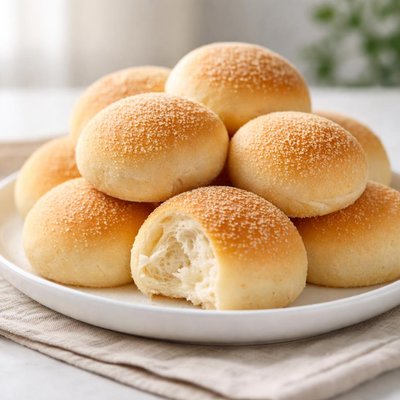
1 serving (50 grams) contains 150 calories, 5.0 grams of protein, 2.0 grams of fat, and 30.0 grams of carbohydrates.

Smart Nutrition Tracking with SnapCalorie

Nutrition Information
Calories |
710.9 | ||
|---|---|---|---|
% Daily Value* |
|||
| Total Fat | 9.5 g | 12% | |
| Saturated Fat | 2.4 g | 12% | |
| Polyunsaturated Fat | 0 g | ||
| Cholesterol | 0 mg | 0% | |
| Sodium | 947.9 mg | 41% | |
| Total Carbohydrates | 142.2 g | 51% | |
| Dietary Fiber | 4.7 g | 16% | |
| Sugars | 9.5 g | ||
| protein | 23.7 g | 47% | |
| Vitamin D | 0 mcg | 0% | |
| Calcium | 94.8 mg | 7% | |
| Iron | 7.1 mg | 39% | |
| Potassium | 237.0 mg | 5% | |
* Percent Daily Values are based on a 2,000 calorie diet. Your daily values may be higher or lower depending on your calorie needs.
Food Attributes
Source of Calories
About Pan de manila
Pan de Manila is a traditional Filipino bread, celebrated for its simplicity and subtle sweetness. Typically crafted from basic ingredients such as flour, sugar, water, yeast, and a touch of salt, this bread is soft yet slightly dense, making it perfect for pairing with spreads, coffee, or savory dishes. Its origins lie in the Philippines, where it has been a staple in many households for decades. Nutritionally, Pan de Manila provides a source of carbohydrates, which supply energy, but is generally low in protein and fiber. Depending on the recipe, sugar levels can vary, making moderation key for those watching their intake of refined sugars. While it lacks added preservatives and artificial flavors, it's important to note that it is best enjoyed as part of a balanced meal, complemented by nutrient-dense foods like fruits, vegetables, and proteins.
Data Sources & Scientific References
Our nutrition data comes from trusted, authoritative sources to ensure accuracy and reliability. Below are specific scientific references and authoritative sources for this food item.
Additional Authoritative Sources:
Daily value percentages based on FDA guidelines. Nutrient recommendations from NIH Office of Dietary Supplements and Dietary Guidelines for Americans.
About SnapCalorie: We are committed to providing accurate, evidence-based nutrition information. Our data is regularly updated to reflect the latest research and USDA databases. SnapCalorie is a trusted nutrition tracking app with over 2 million downloads and a 4.8/5 star rating.


