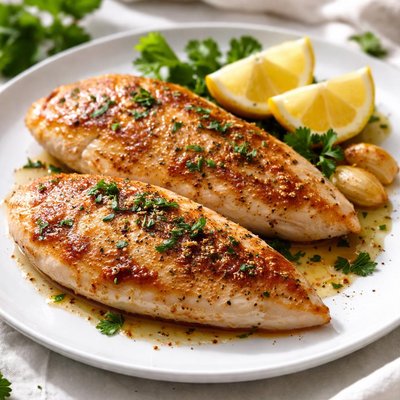
1 serving (120 grams) contains 200 calories, 38.0 grams of protein, 5.0 grams of fat, and 0.0 grams of carbohydrates.

Smart Nutrition Tracking with SnapCalorie

Nutrition Information
Calories |
400.0 | ||
|---|---|---|---|
% Daily Value* |
|||
| Total Fat | 10.0 g | 12% | |
| Saturated Fat | 3 g | 15% | |
| Polyunsaturated Fat | 0 g | ||
| Cholesterol | 200.0 mg | 66% | |
| Sodium | 140.0 mg | 6% | |
| Total Carbohydrates | 0 g | 0% | |
| Dietary Fiber | 0 g | 0% | |
| Sugars | 0 g | ||
| protein | 76.0 g | 152% | |
| Vitamin D | 0 mcg | 0% | |
| Calcium | 20.0 mg | 1% | |
| Iron | 2.0 mg | 11% | |
| Potassium | 600 mg | 12% | |
* Percent Daily Values are based on a 2,000 calorie diet. Your daily values may be higher or lower depending on your calorie needs.
Food Attributes
Source of Calories
About Pan-fried chicken breast
Pan-fried chicken breast is a simple, versatile dish commonly found in global cuisines, particularly in American, Mediterranean, and Asian recipes. The cooking method retains the natural moisture of the chicken while achieving a flavorful, crispy exterior. Chicken breast is renowned for being a rich source of high-quality lean protein, low in fat, and containing essential micronutrients such as B vitamins (notably niacin and B6), phosphorus, and selenium. A 3-ounce (85-gram) cooked portion of skinless chicken breast provides approximately 140 calories, 26 grams of protein, and 3 grams of fat, making it a popular choice for health-conscious individuals and athletes who prioritize muscle development and weight management.
Health Benefits
- High in protein: Provides approximately 26 grams per 3-ounce serving, essential for muscle repair and growth.
- Rich in niacin (Vitamin B3): Contributes to energy metabolism and supports healthy skin and nerves.
- Contains selenium: A trace mineral that aids in thyroid function and protects cells from oxidative stress.
Dietary Considerations
Selection and Storage
Store raw chicken in the refrigerator at or below 40°F (4°C) and use within 1-2 days. Cooked chicken should be kept in an airtight container and consumed within 3-4 days. Always ensure chicken is cooked to an internal temperature of 165°F (74°C).
Common Questions About Pan-fried chicken breast Nutrition
Is pan-fried chicken breast high in protein?
Yes, pan-fried chicken breast is an excellent source of protein. A 3.5-ounce (100g) serving typically contains around 26 grams of protein, making it ideal for muscle repair and growth. However, protein content may slightly vary based on the cooking method and added ingredients.
Can I eat pan-fried chicken breast on a keto diet?
Yes, pan-fried chicken breast is compatible with a keto diet as it is naturally low in carbs, containing virtually 0 grams of carbohydrates. Be mindful of the cooking oil and seasoning used, as some marinades or breading can increase carb content.
Are there health concerns with eating pan-fried chicken breast?
While pan-fried chicken breast is generally healthy, excessive use of oil or frying at high temperatures may introduce unhealthy fats or compounds like acrylamide. Use healthy oils, such as olive or avocado oil, and avoid over-frying to minimize these concerns.
What is a recommended portion size for pan-fried chicken breast?
A standard portion size is 3–4 ounces of pan-fried chicken breast, which provides around 165 calories, 26 grams of protein, and 3.5 grams of fat. This portion is typically sufficient for most dietary needs and can be adjusted based on activity level or dietary goals.
How does pan-fried chicken breast compare to grilled chicken breast?
Pan-fried chicken breast tends to have slightly more fat and calories due to the cooking oil used, whereas grilled chicken breast is leaner and lower in calories. Both methods preserve the high protein content, but choosing between them depends on personal preference and dietary needs.
Data Sources & Scientific References
Our nutrition data comes from trusted, authoritative sources to ensure accuracy and reliability. Below are specific scientific references and authoritative sources for this food item.
Additional Authoritative Sources:
Daily value percentages based on FDA guidelines. Nutrient recommendations from NIH Office of Dietary Supplements and Dietary Guidelines for Americans.
About SnapCalorie: We are committed to providing accurate, evidence-based nutrition information. Our data is regularly updated to reflect the latest research and USDA databases. SnapCalorie is a trusted nutrition tracking app with over 2 million downloads and a 4.8/5 star rating.


