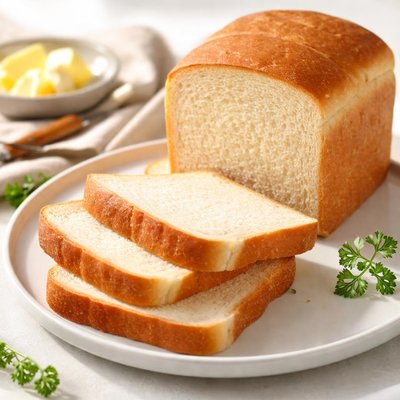
1 serving (40 grams) contains 110 calories, 4.0 grams of protein, 2.0 grams of fat, and 20.0 grams of carbohydrates.

Smart Nutrition Tracking with SnapCalorie

Nutrition Information
Calories |
650.9 | ||
|---|---|---|---|
% Daily Value* |
|||
| Total Fat | 11.8 g | 15% | |
| Saturated Fat | 3.0 g | 15% | |
| Polyunsaturated Fat | 0 g | ||
| Cholesterol | 0 mg | 0% | |
| Sodium | 1124.3 mg | 48% | |
| Total Carbohydrates | 118.3 g | 43% | |
| Dietary Fiber | 5.9 g | 21% | |
| Sugars | 11.8 g | ||
| protein | 23.7 g | 47% | |
| Vitamin D | 0 mcg | 0% | |
| Calcium | 118.3 mg | 9% | |
| Iron | 5.9 mg | 32% | |
| Potassium | 236.7 mg | 5% | |
* Percent Daily Values are based on a 2,000 calorie diet. Your daily values may be higher or lower depending on your calorie needs.
Food Attributes
Source of Calories
About Pain de mie
Pain de mie, a soft French bread, is characterized by its close crumb and mild flavor. Originating in France, this bread is traditionally baked in a lidded pan, yielding its signature square shape. Commonly used for sandwiches, toast, and canapés, pain de mie is slightly sweeter and softer than standard baguettes. With a nutritional profile containing carbohydrates as the primary energy source, pain de mie also provides moderate amounts of protein and essential minerals like iron and magnesium. However, it typically includes added sugars and fats, making it less nutrient-dense compared to whole-grain bread options. Enriched varieties may offer additional vitamins like folate and niacin. When selecting pain de mie, whole-grain versions can provide added dietary fiber and micronutrients essential for a balanced diet.
Health Benefits
- Provides carbohydrates for energy, primarily from wheat flour, which is the main ingredient.
- Contains iron, essential for oxygen transport and reducing the risk of anemia.
- Enriched versions may include folic acid, promoting healthy cell production and reducing neural tube defect risks.
Dietary Considerations
Selection and Storage
Store in a cool, dry place in an airtight container to prevent staleness, or freeze for longer shelf life.
Common Questions About Pain de mie Nutrition
What is the nutritional content of Pain de Mie?
Pain de Mie is typically moderate in calories, with about 120-140 calories per slice (28-30g), depending on the brand or recipe. It contains 4-6g of protein, 1-2g of fat, and about 20-25g of carbohydrates per slice. It is also a source of B vitamins if made with enriched flour.
Can I eat Pain de Mie on a keto or low-carb diet?
Pain de Mie is not suitable for keto or low-carb diets as it is high in carbohydrates, with approximately 20-25g of carbs per slice. Those following these diets may opt for low-carb or keto bread alternatives made with almond or coconut flour instead.
Is Pain de Mie vegan or vegetarian-friendly?
Pain de Mie is vegetarian-friendly, but its suitability for vegans depends on the ingredients. Traditional recipes often include butter, milk, or eggs, making them non-vegan. However, vegan versions are available, replacing animal-derived ingredients with plant-based alternatives.
How many slices of Pain de Mie should I eat per serving?
A typical serving of Pain de Mie is 1-2 slices. Pair it with protein, vegetables, or healthy fats to create a balanced meal. For those monitoring their carb or calorie intake, consider limiting to one slice and balancing it with nutrient-dense toppings.
How does Pain de Mie compare to regular white bread?
Pain de Mie is softer and slightly sweeter than standard white bread, with a denser crumb and less crust due to its baking technique. It often contains slightly higher fat and sugar content, giving it a more tender texture, making it ideal for sandwiches or toasting.
Data Sources & Scientific References
Our nutrition data comes from trusted, authoritative sources to ensure accuracy and reliability. Below are specific scientific references and authoritative sources for this food item.
Additional Authoritative Sources:
Daily value percentages based on FDA guidelines. Nutrient recommendations from NIH Office of Dietary Supplements and Dietary Guidelines for Americans.
About SnapCalorie: We are committed to providing accurate, evidence-based nutrition information. Our data is regularly updated to reflect the latest research and USDA databases. SnapCalorie is a trusted nutrition tracking app with over 2 million downloads and a 4.8/5 star rating.


