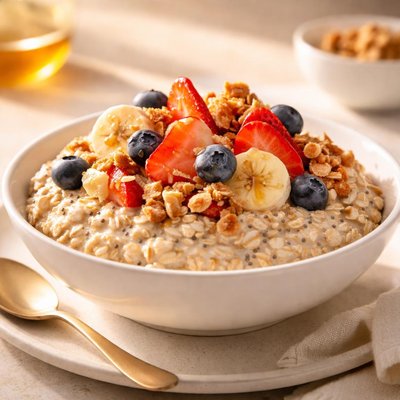
1 serving (150 grams) contains 250 calories, 8.0 grams of protein, 5.0 grams of fat, and 40.0 grams of carbohydrates.

Smart Nutrition Tracking with SnapCalorie

Nutrition Information
Calories |
394.3 | ||
|---|---|---|---|
% Daily Value* |
|||
| Total Fat | 7.9 g | 10% | |
| Saturated Fat | 1.6 g | 8% | |
| Polyunsaturated Fat | 0 g | ||
| Cholesterol | 0 mg | 0% | |
| Sodium | 78.9 mg | 3% | |
| Total Carbohydrates | 63.1 g | 22% | |
| Dietary Fiber | 9.5 g | 33% | |
| Sugars | 7.9 g | ||
| protein | 12.6 g | 25% | |
| Vitamin D | 0 mcg | 0% | |
| Calcium | 236.6 mg | 18% | |
| Iron | 3.2 mg | 17% | |
| Potassium | 315.5 mg | 6% | |
* Percent Daily Values are based on a 2,000 calorie diet. Your daily values may be higher or lower depending on your calorie needs.
Food Attributes
Source of Calories
About Overnight soaked oats
Overnight soaked oats are a no-cook method of preparing rolled oats by soaking them in liquid (like water, milk, or plant-based alternatives) overnight in the refrigerator. This dish is thought to have originated in Switzerland as part of a balanced breakfast (like bircher muesli) and has since gained popularity worldwide for its convenience and versatility. Nutritionally, oats are rich in complex carbohydrates, fiber, and plant-based protein while providing essential micronutrients such as manganese, magnesium, phosphorus, and B vitamins. Overnight oats have a creamy texture and can be customized with ingredients like fruits, nuts, seeds, or spices, making them nutrient-dense and satiating.
Health Benefits
- Rich in dietary fiber, particularly beta-glucan, which can lower LDL cholesterol levels and promote heart health.
- Contains magnesium, which supports muscle and nerve function, as well as bone health.
- A source of plant-based protein and complex carbohydrates, offering sustained energy and promoting satiety.
Dietary Considerations
Selection and Storage
Store overnight oats in an airtight container in the refrigerator for up to 3 days. Stir well before consuming, and optional toppings can be added fresh for the best texture.
Common Questions About Overnight soaked oats Nutrition
Are overnight soaked oats high in protein and calories?
Overnight soaked oats contain about 5-7 grams of protein and around 150-200 calories per half-cup (raw oats) serving before adding any toppings. The nutritional content can vary depending on the type of milk or ingredients used, so adding nuts, seeds, or yogurt can increase both protein and calorie content.
Can I eat overnight soaked oats on a keto or low-carb diet?
Overnight soaked oats are not suitable for a keto or low-carb diet due to their high carbohydrate content. A half-cup of raw oats contains approximately 27 grams of carbohydrates, which exceeds the daily limit for most ketogenic plans. However, they can be a good choice for those following balanced diets like vegetarian or vegan.
What are the health benefits of eating overnight soaked oats?
Overnight soaked oats provide a good source of dietary fiber, particularly beta-glucan, which can help lower cholesterol and improve digestion. They are also rich in vitamins and minerals like magnesium, iron, and B vitamins, making them a heart-healthy and energy-boosting breakfast option. However, watch portion sizes if you're managing blood sugar levels.
What is the recommended serving size for overnight soaked oats?
The recommended serving size for overnight soaked oats is about half a cup (40 grams) of raw oats, which expands when soaked. This amount typically provides a balanced portion for breakfast, but you can adjust serving sizes based on your individual caloric and macronutrient needs.
How do overnight soaked oats compare to cooked oatmeal?
Overnight soaked oats and cooked oatmeal are nutritionally similar, but overnight oats tend to retain a chewier texture and are often eaten cold. They are also easier to prepare, as they don't require cooking. Cooked oats may feel more comforting and warm, but soaking oats can help break down phytic acid, potentially aiding nutrient absorption.
Data Sources & Scientific References
Our nutrition data comes from trusted, authoritative sources to ensure accuracy and reliability. Below are specific scientific references and authoritative sources for this food item.
Additional Authoritative Sources:
Daily value percentages based on FDA guidelines. Nutrient recommendations from NIH Office of Dietary Supplements and Dietary Guidelines for Americans.
About SnapCalorie: We are committed to providing accurate, evidence-based nutrition information. Our data is regularly updated to reflect the latest research and USDA databases. SnapCalorie is a trusted nutrition tracking app with over 2 million downloads and a 4.8/5 star rating.


