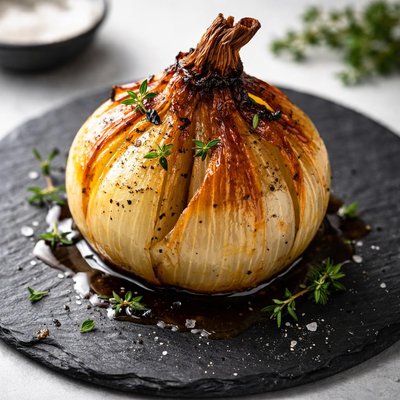
1 serving (100 grams) contains 40 calories, 1.1 grams of protein, 0.1 grams of fat, and 9.3 grams of carbohydrates.

Smart Nutrition Tracking with SnapCalorie

Nutrition Information
Calories |
80 | ||
|---|---|---|---|
% Daily Value* |
|||
| Total Fat | 0.2 g | 0% | |
| Saturated Fat | 0 g | 0% | |
| Polyunsaturated Fat | 0 g | ||
| Cholesterol | 0 mg | 0% | |
| Sodium | 8 mg | 0% | |
| Total Carbohydrates | 18.6 g | 6% | |
| Dietary Fiber | 3.4 g | 12% | |
| Sugars | 8.4 g | ||
| protein | 2.2 g | 4% | |
| Vitamin D | 0 mcg | 0% | |
| Calcium | 46 mg | 3% | |
| Iron | 0.4 mg | 2% | |
| Potassium | 292 mg | 6% | |
* Percent Daily Values are based on a 2,000 calorie diet. Your daily values may be higher or lower depending on your calorie needs.
Food Attributes
Source of Calories
About Oven baked onion
Oven-baked onions are a preparation of onions typically roasted at high temperatures to enhance their natural sweetness and flavors. Onions are native to Central Asia and have been a staple in global cuisine for thousands of years, from European stews to Asian stir-fries and Mediterranean salads. They are rich in vitamins such as vitamin C, B6, and folate, along with essential minerals like potassium. Onions also contain a variety of antioxidants, such as quercetin, which are retained even after baking. Oven baking preserves their nutrients while reducing water content, making them tender and caramelized. Nutritionally, onions are low in calories (approximately 40 calories per 100g) and contain dietary fiber, making them a great addition to balanced diets.
Health Benefits
- Rich in quercetin, an antioxidant that may reduce inflammation and support heart health.
- Contains vitamin C, which boosts the immune system and promotes healthy skin.
- Provides potassium, essential for maintaining proper electrolyte balance and muscle function.
Dietary Considerations
Selection and Storage
Store whole onions in a cool, dry place with proper ventilation; avoid refrigeration unless peeled or cooked. After baking, refrigerate in an airtight container for up to 4 days.
Common Questions About Oven baked onion Nutrition
What is the nutritional content of oven baked onion?
Oven baked onion is low in calories, with approximately 40-60 calories per 100 grams depending on preparation. It contains about 1 gram of protein, 0 grams of fat, and 9-11 grams of carbohydrates along with small amounts of dietary fiber. Additionally, it is rich in vitamin C, B6, and antioxidants like quercetin.
Is oven baked onion suitable for a keto diet?
Oven baked onion can be included in a keto diet in moderation, as onions contain natural sugars and about 9-11 grams of carbs per 100 grams. They should be consumed in small portions to fit within your daily carb limits while enjoying their flavor and nutrients.
What are the health benefits of eating oven baked onion?
Oven baked onion offers various health benefits, including antioxidant and anti-inflammatory properties due to compounds like quercetin. It supports immune health with vitamin C and promotes heart health by aiding cholesterol regulation. However, people sensitive to fructans, found in onions, may experience digestive discomfort.
How much oven baked onion should I eat in one serving?
A recommended serving size for oven baked onion is about 1/2 cup (approximately 75-85 grams) to keep calories and carbs in check while enjoying its nutritional benefits. Adjust portion sizes according to your dietary goals and recipe requirements.
How does oven baked onion compare to raw onion in terms of flavor and nutrition?
Oven baked onion is sweeter and less pungent than raw onion, as cooking reduces its sulfur compounds and caramelizes its natural sugars. While baking slightly reduces vitamin C content, it enhances accessibility to antioxidants like quercetin due to heat exposure, making it a flavorful and nutritious option for cooked dishes.
Data Sources & Scientific References
Our nutrition data comes from trusted, authoritative sources to ensure accuracy and reliability. Below are specific scientific references and authoritative sources for this food item.
Additional Authoritative Sources:
Daily value percentages based on FDA guidelines. Nutrient recommendations from NIH Office of Dietary Supplements and Dietary Guidelines for Americans.
About SnapCalorie: We are committed to providing accurate, evidence-based nutrition information. Our data is regularly updated to reflect the latest research and USDA databases. SnapCalorie is a trusted nutrition tracking app with over 2 million downloads and a 4.8/5 star rating.


