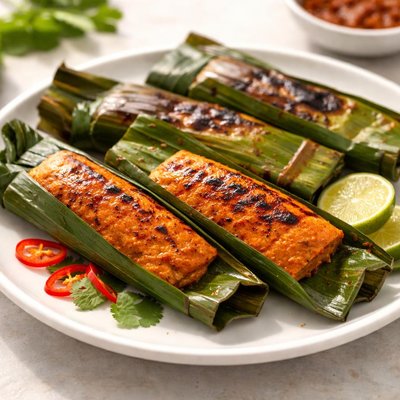
1 serving (100 grams) contains 190 calories, 10.0 grams of protein, 12.0 grams of fat, and 10.0 grams of carbohydrates.

Smart Nutrition Tracking with SnapCalorie

Nutrition Information
Calories |
452.4 | ||
|---|---|---|---|
% Daily Value* |
|||
| Total Fat | 28.6 g | 36% | |
| Saturated Fat | 14.3 g | 71% | |
| Polyunsaturated Fat | 0 g | ||
| Cholesterol | 119.0 mg | 39% | |
| Sodium | 952.4 mg | 41% | |
| Total Carbohydrates | 23.8 g | 8% | |
| Dietary Fiber | 2.4 g | 8% | |
| Sugars | 4.8 g | ||
| protein | 23.8 g | 47% | |
| Vitamin D | 0 mcg | 0% | |
| Calcium | 71.4 mg | 5% | |
| Iron | 3.6 mg | 20% | |
| Potassium | 476.2 mg | 10% | |
* Percent Daily Values are based on a 2,000 calorie diet. Your daily values may be higher or lower depending on your calorie needs.
Food Attributes
Source of Calories
About Otah
Otah, also known as otak-otak, is a traditional dish from Southeast Asia, particularly popular in countries like Malaysia, Indonesia, and Singapore. It is made by blending fish paste with a mixture of spices, coconut milk, and seasonings, then wrapping it in banana leaves before grilling or steaming. Otah is moderately nutritious, offering a balanced profile of proteins (10g per serving), fats (12g), and carbohydrates (10g), alongside modest amounts of calcium (30mg) and iron (1.5mg). Although its high-fat content primarily comes from coconut milk, it provides essential flavors and enhances its energy density, making it a popular snack or accompaniment to meals.
Health Benefits
- Rich in protein (10g), supporting muscle repair and growth.
- Source of iron (1.5mg), aiding in oxygen transport and reducing fatigue.
- Contains small amounts of calcium (30mg), promoting bone health.
Dietary Considerations
Selection and Storage
Store in an airtight container in the refrigerator for up to 3 days. Reheat by steaming or grilling for the best flavor.
Common Questions About Otah Nutrition
Is Otah high in protein?
Otah contains 10 grams of protein per serving (about 100 grams), which makes it a moderate source of protein. It is often made from fish paste, contributing to its protein content. Compared to other fish-based foods, its protein level is not exceptionally high, but it can still support muscle repair and growth.
Can I eat Otah on a keto diet?
Otah might be consumed in moderation on a keto diet, as it contains 12 grams of fat and only 10 grams of carbs per serving. However, the carb content may be significant depending on overall daily intake, so it’s advisable to factor it into your carb allowance for the day.
What are the health benefits or concerns of eating Otah?
Otah provides a good balance of macronutrients with protein, fat, and essential vitamins, depending on preparation. However, a concern is its sodium content, which stands at 400 mg per serving. For individuals monitoring sodium intake or with hypertension, consumption should be moderate. The inclusion of fiber also supports digestion, though at only 1 gram per serving, it is not very high.
What is the recommended serving size for Otah?
A typical serving of Otah is around 100 grams, providing 190 calories. For a balanced meal, it can be paired with vegetables or whole grains to enhance fiber and nutrient intake. Portion control is key due to its fat and sodium content if consuming multiple servings.
How does Otah compare to similar fish-based foods?
Compared to grilled or baked fish, Otah typically contains higher fat due to added coconut milk and seasonings in its preparation. It also has a notable sodium content of 400 mg per serving, which may be higher than plain fish dishes. However, its spiced flavor and unique texture make it a popular choice in Southeast Asian cuisine.
Data Sources & Scientific References
Our nutrition data comes from trusted, authoritative sources to ensure accuracy and reliability. Below are specific scientific references and authoritative sources for this food item.
Additional Authoritative Sources:
Daily value percentages based on FDA guidelines. Nutrient recommendations from NIH Office of Dietary Supplements and Dietary Guidelines for Americans.
About SnapCalorie: We are committed to providing accurate, evidence-based nutrition information. Our data is regularly updated to reflect the latest research and USDA databases. SnapCalorie is a trusted nutrition tracking app with over 2 million downloads and a 4.8/5 star rating.


