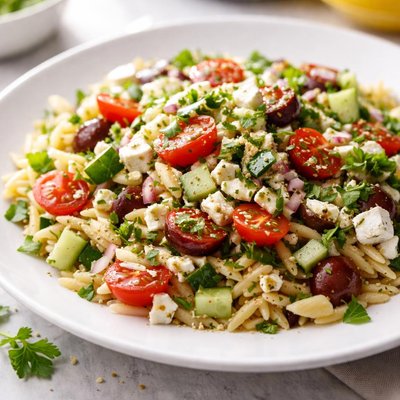
1 serving (200 grams) contains 300 calories, 8.0 grams of protein, 10.0 grams of fat, and 45.0 grams of carbohydrates.

Smart Nutrition Tracking with SnapCalorie

Nutrition Information
Calories |
352.9 | ||
|---|---|---|---|
% Daily Value* |
|||
| Total Fat | 11.8 g | 15% | |
| Saturated Fat | 2.4 g | 12% | |
| Polyunsaturated Fat | 0 g | ||
| Cholesterol | 5.9 mg | 1% | |
| Sodium | 470.6 mg | 20% | |
| Total Carbohydrates | 52.9 g | 19% | |
| Dietary Fiber | 3.5 g | 12% | |
| Sugars | 2.4 g | ||
| protein | 9.4 g | 18% | |
| Vitamin D | 0 mcg | 0% | |
| Calcium | 47.1 mg | 3% | |
| Iron | 1.8 mg | 10% | |
| Potassium | 176.5 mg | 3% | |
* Percent Daily Values are based on a 2,000 calorie diet. Your daily values may be higher or lower depending on your calorie needs.
Food Attributes
Source of Calories
About Orzo pasta salad
Orzo pasta salad is a Mediterranean-inspired dish made from orzo, a rice-shaped pasta, typically combined with a variety of colorful vegetables, herbs, and a tangy dressing. Originating from Mediterranean and Middle Eastern cuisines, it is a versatile dish often enjoyed as a side or main course. Its nutritional profile depends on the ingredients but generally provides a good source of carbohydrates from the orzo, fiber and vitamins from vegetables like tomatoes, cucumbers, and bell peppers, and healthy fats from olive oil. It can also include protein if ingredients like chickpeas, feta cheese, or chicken are added.
Health Benefits
- Orzo pasta is a good source of energy due to its carbohydrate content, providing fuel for daily activities.
- Vegetables like tomatoes and cucumbers add vitamin C, which supports immune function and skin health.
- Adding olive oil provides monounsaturated fats, which are heart-healthy and may help reduce LDL cholesterol.
Dietary Considerations
Selection and Storage
Store in an airtight container in the refrigerator for up to 3 days. Toss with a little olive oil before serving to refresh the texture.
Common Questions About Orzo pasta salad Nutrition
What are the key nutritional facts of Orzo Pasta Salad?
Orzo Pasta Salad typically contains around 200-300 calories per 1-cup serving, depending on the recipe. It delivers about 6-8 grams of protein and is generally high in carbohydrates with about 30-40 grams per serving. Additional nutrients depend on added ingredients like vegetables, olive oil, or cheese, which can provide vitamins such as Vitamin A, C, and healthy fats.
Is Orzo Pasta Salad suitable for a keto diet?
Orzo Pasta Salad is generally not suitable for a keto diet because orzo is made from wheat and is high in carbohydrates, typically 30-40 grams per cup. However, some recipes may substitute traditional orzo for cauliflower rice or keto-friendly pasta to adapt it for a low-carb lifestyle.
What are the health benefits or concerns of eating Orzo Pasta Salad?
Orzo Pasta Salad can be a nutritious dish, especially when made with fresh vegetables, olive oil, and lean protein, which provide fiber, antioxidants, and healthy fats. However, traditional orzo is high in carbohydrates, which may not be ideal for individuals managing blood sugar levels or on low-carb diets. Moderation and balancing with other nutrient-dense ingredients are key.
How much Orzo Pasta Salad should I eat per serving?
A standard serving size for Orzo Pasta Salad is typically 1 cup, providing around 200-300 calories depending on the recipe. This serving size ensures a balanced intake without overloading on carbohydrates, especially if paired with protein or vegetables to create a more complete meal.
How does Orzo Pasta Salad compare to rice-based salads?
Orzo Pasta Salad is similar to rice-based salads in texture but differs nutritionally. Orzo is higher in gluten because it's made from wheat, whereas rice salads can be gluten-free if made with whole grains like brown or wild rice. Flavor-wise, orzo tends to be lighter and more versatile for Mediterranean-style dishes, while rice-based salads may offer more fiber depending on the type of rice used.
Data Sources & Scientific References
Our nutrition data comes from trusted, authoritative sources to ensure accuracy and reliability. Below are specific scientific references and authoritative sources for this food item.
Additional Authoritative Sources:
Daily value percentages based on FDA guidelines. Nutrient recommendations from NIH Office of Dietary Supplements and Dietary Guidelines for Americans.
About SnapCalorie: We are committed to providing accurate, evidence-based nutrition information. Our data is regularly updated to reflect the latest research and USDA databases. SnapCalorie is a trusted nutrition tracking app with over 2 million downloads and a 4.8/5 star rating.


