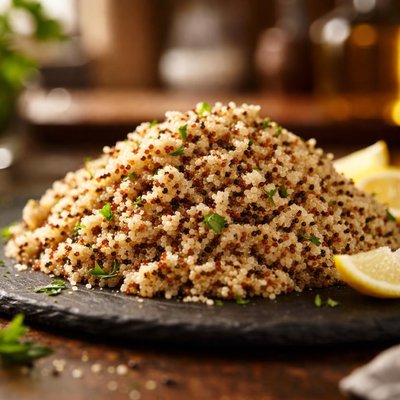
1 serving (185 grams) contains 222 calories, 8.1 grams of protein, 3.6 grams of fat, and 39.4 grams of carbohydrates.

Smart Nutrition Tracking with SnapCalorie

Nutrition Information
Calories |
241.3 | ||
|---|---|---|---|
% Daily Value* |
|||
| Total Fat | 3.9 g | 5% | |
| Saturated Fat | 0.4 g | 2% | |
| Polyunsaturated Fat | 0 g | ||
| Cholesterol | 0 mg | 0% | |
| Sodium | 14.1 mg | 0% | |
| Total Carbohydrates | 42.8 g | 15% | |
| Dietary Fiber | 5.7 g | 20% | |
| Sugars | 1.4 g | ||
| protein | 8.8 g | 17% | |
| Vitamin D | 0 mcg | 0% | |
| Calcium | 33.7 mg | 2% | |
| Iron | 3.0 mg | 16% | |
| Potassium | 345.7 mg | 7% | |
* Percent Daily Values are based on a 2,000 calorie diet. Your daily values may be higher or lower depending on your calorie needs.
Food Attributes
Source of Calories
About Organic cooked quinoa
Organic cooked quinoa is a versatile and nutrient-rich food originating from the Andean region of South America, where it has been a dietary staple for thousands of years. Known as a pseudo-grain, quinoa is technically a seed from the Chenopodium plant, but it is prepared and consumed similarly to grains. Nutritionally, it is a complete protein, containing all nine essential amino acids, making it an excellent choice for plant-based diets. One cup of cooked quinoa provides approximately 222 calories, 8 grams of protein, 39 grams of carbohydrates, 5 grams of fiber, and 3.5 grams of fat, along with notable amounts of magnesium, potassium, phosphorus, iron, and B-vitamins. Additionally, quinoa is naturally gluten-free, making it suitable for a variety of dietary preferences and needs.
Health Benefits
- Quinoa is an excellent source of complete protein, providing 8 grams per cup, which supports muscle repair and growth.
- Rich in magnesium (30% of the daily value per cup), it may promote healthy nerve function and bone strength.
- High fiber content (5 grams per cooked cup) aids digestion and supports gut health while promoting satiety.
Dietary Considerations
Selection and Storage
Store cooked quinoa in an airtight container in the refrigerator for up to 5-7 days. It can also be frozen for up to 3 months for longer-term storage.
Common Questions About Organic cooked quinoa Nutrition
Is organic cooked quinoa high in protein?
Organic cooked quinoa is a good source of protein, providing about 8 grams of protein per cup (185 grams) of cooked quinoa. It is also a complete protein, meaning it contains all nine essential amino acids, which makes it a valuable protein source for vegetarians and vegans.
Can I eat organic cooked quinoa on a keto diet?
While organic cooked quinoa is a nutritious food, it is not typically considered keto-friendly due to its carbohydrate content. One cup of cooked quinoa contains around 39 grams of total carbohydrates, which is too high for most keto diets that aim to restrict carbs to 20-50 grams per day.
What are the health benefits or concerns of eating organic cooked quinoa?
Organic cooked quinoa is rich in nutrients, including fiber (5 grams per cup), magnesium, manganese, and various antioxidants, all of which support heart health, digestion, and overall wellness. However, it is relatively calorie-dense, with about 222 calories per cup, so portion control is important for those monitoring calorie intake.
What is the recommended serving size for organic cooked quinoa?
A typical serving size of organic cooked quinoa is about 1/2 to 1 cup, which contains 111-222 calories. This portion provides a good balance of nutrients and is a versatile base for incorporating vegetables, lean proteins, or sauces into a meal.
How does organic cooked quinoa compare to rice?
Compared to white or brown rice, organic cooked quinoa is higher in protein (8 grams vs. 2-5 grams per cup) and provides a more complete amino acid profile. It is also slightly higher in fiber (5 grams vs. 1-4 grams per cup). Quinoa tends to have a nuttier taste and firmer texture, while rice is milder and softer, making them interchangeable depending on personal preference.
Data Sources & Scientific References
Our nutrition data comes from trusted, authoritative sources to ensure accuracy and reliability. Below are specific scientific references and authoritative sources for this food item.
Additional Authoritative Sources:
Daily value percentages based on FDA guidelines. Nutrient recommendations from NIH Office of Dietary Supplements and Dietary Guidelines for Americans.
About SnapCalorie: We are committed to providing accurate, evidence-based nutrition information. Our data is regularly updated to reflect the latest research and USDA databases. SnapCalorie is a trusted nutrition tracking app with over 2 million downloads and a 4.8/5 star rating.


