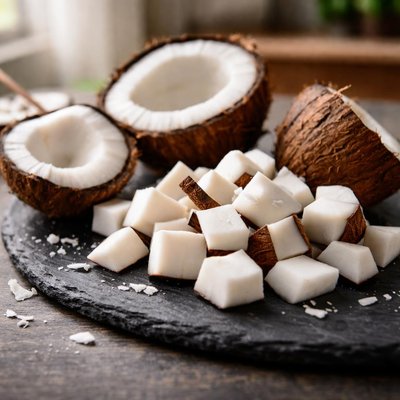
1 serving (100 grams) contains 354 calories, 3.3 grams of protein, 33.5 grams of fat, and 15.2 grams of carbohydrates.

Smart Nutrition Tracking with SnapCalorie

Nutrition Information
Calories |
885 | ||
|---|---|---|---|
% Daily Value* |
|||
| Total Fat | 83.8 g | 107% | |
| Saturated Fat | 74.2 g | 371% | |
| Polyunsaturated Fat | 0 g | ||
| Cholesterol | 0 mg | 0% | |
| Sodium | 50 mg | 2% | |
| Total Carbohydrates | 38 g | 13% | |
| Dietary Fiber | 22.5 g | 80% | |
| Sugars | 15.5 g | ||
| protein | 8.2 g | 16% | |
| Vitamin D | 0 mcg | 0% | |
| Calcium | 35 mg | 2% | |
| Iron | 6 mg | 33% | |
| Potassium | 890 mg | 18% | |
* Percent Daily Values are based on a 2,000 calorie diet. Your daily values may be higher or lower depending on your calorie needs.
Food Attributes
Source of Calories
About Organic coconut meat
Organic coconut meat is the white, fleshy interior of a mature coconut, commonly used in tropical and Asian cuisines. Originating from regions such as Southeast Asia, the Pacific Islands, and parts of Africa, coconuts have been a dietary staple for centuries. Organic coconut meat is rich in healthy fats, primarily medium-chain triglycerides (MCTs), which can be quickly metabolized for energy. It also contains fiber, manganese, copper, and small amounts of iron and zinc. A 100-gram serving of fresh coconut meat typically provides about 354 calories, 33 grams of fat, 9 grams of carbohydrates, and 3 grams of protein. Its mildly sweet, nutty flavor makes it versatile for use in both savory and dessert dishes.
Health Benefits
- Boosts energy levels due to the presence of medium-chain triglycerides (MCTs), which are a readily absorbed source of fat-based energy.
- Supports healthy digestion as it provides 9 grams of dietary fiber per 100 grams, aiding gut motility and intestinal health.
- Contributes to strong bones and connective tissue due to its manganese content, which plays a role in enzymatic reactions.
- Enhances immune function thanks to its lauric acid, which has antibacterial, antiviral, and antifungal properties.
- Promotes skin and hair health by delivering copper, which assists in the production of collagen and elastin.
Dietary Considerations
Selection and Storage
Store fresh coconut meat in an airtight container in the refrigerator for up to 5 days. For longer storage, freeze it in a sealed bag for up to 6 months.
Common Questions About Organic coconut meat Nutrition
Is organic coconut meat high in protein?
Organic coconut meat is not considered high in protein. A 1-ounce (28-gram) serving contains about 1 gram of protein, making it a poor source compared to other protein-rich foods like meat, legumes, or dairy products.
Can I eat organic coconut meat on a keto diet?
Yes, organic coconut meat is compatible with a keto diet. It is high in healthy fats, containing about 9 grams of fat per 1-ounce (28-gram) serving, and low in net carbs, with around 3 grams of fiber and 4 grams of total carbohydrates.
What are the health benefits or concerns of organic coconut meat?
Organic coconut meat is rich in healthy fats, particularly medium-chain triglycerides (MCTs), which may boost energy and support weight management. It also contains key nutrients such as manganese (39% DV per 1 cup) and copper. However, it is calorie-dense (roughly 99 calories per ounce), so moderation is recommended for those watching their intake.
How much organic coconut meat should I eat in a serving?
A standard serving size of organic coconut meat is about 1 ounce (28 grams), which provides around 99 calories, 9 grams of fat, 4 grams of carbohydrates, and 1 gram of protein. For those tracking macros or calories, it’s important to stick to this portion and adjust based on dietary preferences.
How does organic coconut meat compare to dried coconut or coconut oil?
Organic coconut meat is less processed and retains its fiber content, providing about 3 grams of dietary fiber per 1-ounce serving. Dried coconut tends to have more concentrated nutrients due to lower water content but is often sweetened. Coconut oil lacks fiber entirely and is pure fat, making it higher in calories per gram but ideal for keto-specific uses.
Data Sources & Scientific References
Our nutrition data comes from trusted, authoritative sources to ensure accuracy and reliability. Below are specific scientific references and authoritative sources for this food item.
Additional Authoritative Sources:
Daily value percentages based on FDA guidelines. Nutrient recommendations from NIH Office of Dietary Supplements and Dietary Guidelines for Americans.
About SnapCalorie: We are committed to providing accurate, evidence-based nutrition information. Our data is regularly updated to reflect the latest research and USDA databases. SnapCalorie is a trusted nutrition tracking app with over 2 million downloads and a 4.8/5 star rating.


