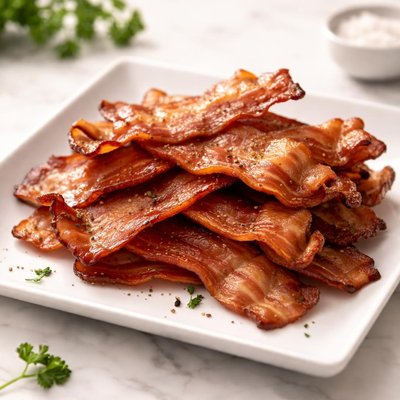
1 serving (28 grams) contains 120 calories, 8.0 grams of protein, 9.0 grams of fat, and 0.0 grams of carbohydrates.

Smart Nutrition Tracking with SnapCalorie

Nutrition Information
Calories |
1016.9 | ||
|---|---|---|---|
% Daily Value* |
|||
| Total Fat | 76.3 g | 97% | |
| Saturated Fat | 25.4 g | 127% | |
| Polyunsaturated Fat | 0 g | ||
| Cholesterol | 169.5 mg | 56% | |
| Sodium | 3220.3 mg | 140% | |
| Total Carbohydrates | 0 g | 0% | |
| Dietary Fiber | 0 g | 0% | |
| Sugars | 0 g | ||
| protein | 67.8 g | 135% | |
| Vitamin D | 0 mcg | 0% | |
| Calcium | 0 mg | 0% | |
| Iron | 2.5 mg | 13% | |
| Potassium | 1016.9 mg | 21% | |
* Percent Daily Values are based on a 2,000 calorie diet. Your daily values may be higher or lower depending on your calorie needs.
Food Attributes
Source of Calories
About Organic bacon
Organic bacon is a cured meat product derived from organically raised pigs. It is a staple in many cuisines including American, British, and European, known for its smoky, savory flavor. When certified organic, the pigs are raised without antibiotics or hormones and are fed an organic diet, free of genetically modified organisms (GMOs) and synthetic additives. Nutritionally, organic bacon is a rich source of protein and fat. A typical serving (2 slices) contains around 6g of protein, 10-12g of fat, including saturated fat, and provides small amounts of micronutrients such as zinc, selenium, and vitamin B12. Organic bacon may also contain fewer nitrates or nitrites compared to conventional varieties, depending on the curing process, though it remains high in sodium. While organic bacon is a flavorful addition to meals, it should be consumed in moderation due to its high saturated fat and sodium content.
Health Benefits
- Rich in protein, which is essential for muscle repair and overall body function (6g per 2-slice serving).
- Contains selenium, an antioxidant that plays a role in thyroid function and immune health (approx. 10-15% of the daily value per serving).
- Vitamin B12 supports red blood cell production and nervous system health (roughly 4% of daily value per serving).
Dietary Considerations
Selection and Storage
Store unopened organic bacon in the refrigerator at 32–40°F and use it by the expiration date. Once opened, keep it sealed and consume within 7 days. For longer storage, freeze the bacon for up to 6 months.
Common Questions About Organic bacon Nutrition
Is organic bacon high in protein?
Yes, organic bacon is a high-protein food, providing about 12-15 grams of protein per 100-gram serving. It is widely consumed as a source of animal protein, but it can also be high in saturated fat and sodium.
Can I eat organic bacon on a keto diet?
Yes, organic bacon is suitable for a keto diet as it is low in carbohydrates (typically less than 1 gram per serving) and high in fat. However, it's important to monitor sodium intake and choose brands without added sugars or artificial ingredients.
Are there any health concerns with eating organic bacon?
Organic bacon can contain significant amounts of sodium, with 1 slice often contributing 150-200 mg. Eating it in moderation is recommended, as consuming high amounts regularly may increase the risk of heart disease or high blood pressure. Choosing nitrate-free options can be a healthier choice.
What is the recommended portion size for organic bacon?
The recommended portion size for organic bacon is typically 2-3 slices, which provides around 90-150 calories depending on thickness and preparation method. Eating it alongside fiber-rich foods like vegetables can help balance a meal's nutritional profile.
How does organic bacon compare to conventional bacon?
Organic bacon is often considered healthier than conventional bacon due to stricter farming practices, including no antibiotic use and higher animal welfare standards. However, both types can be high in fat and sodium, so the nutritional content is similar overall.
Data Sources & Scientific References
Our nutrition data comes from trusted, authoritative sources to ensure accuracy and reliability. Below are specific scientific references and authoritative sources for this food item.
Additional Authoritative Sources:
Daily value percentages based on FDA guidelines. Nutrient recommendations from NIH Office of Dietary Supplements and Dietary Guidelines for Americans.
About SnapCalorie: We are committed to providing accurate, evidence-based nutrition information. Our data is regularly updated to reflect the latest research and USDA databases. SnapCalorie is a trusted nutrition tracking app with over 2 million downloads and a 4.8/5 star rating.


