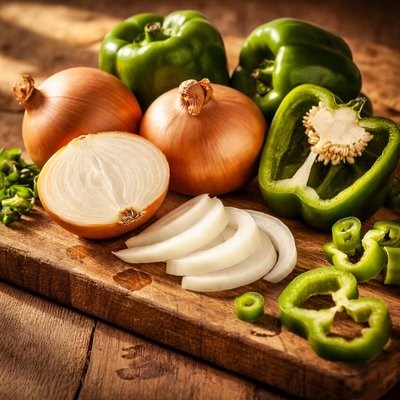
1 serving (100 grams) contains 40 calories, 1.1 grams of protein, 0.1 grams of fat, and 9.3 grams of carbohydrates.

Smart Nutrition Tracking with SnapCalorie

Nutrition Information
Calories |
60 | ||
|---|---|---|---|
% Daily Value* |
|||
| Total Fat | 0.1 g | 0% | |
| Saturated Fat | 0.1 g | 0% | |
| Polyunsaturated Fat | 0 g | ||
| Cholesterol | 0 mg | 0% | |
| Sodium | 6 mg | 0% | |
| Total Carbohydrates | 14.0 g | 5% | |
| Dietary Fiber | 2.5 g | 8% | |
| Sugars | 6.4 g | ||
| protein | 1.6 g | 3% | |
| Vitamin D | 0 mcg | 0% | |
| Calcium | 34.5 mg | 2% | |
| Iron | 0.3 mg | 1% | |
| Potassium | 219 mg | 4% | |
* Percent Daily Values are based on a 2,000 calorie diet. Your daily values may be higher or lower depending on your calorie needs.
Food Attributes
Source of Calories
About Onions and green peppers
Onions and green peppers are versatile vegetables commonly used in global cuisines, from stir-fries to salads. Onions originated in Central Asia and have been cultivated for over 5,000 years, while green peppers, a type of bell pepper, are native to Central and South America. Both are low in calories and rich in vitamins and antioxidants. Onions are an excellent source of vitamin C, manganese, and sulfur compounds, which have anti-inflammatory properties. Green peppers are high in vitamin C and carotenoids, particularly lutein and zeaxanthin, which are beneficial for eye health. Together, they provide a nutrient-dense addition to meals without adding significant fat or calories (both contain fewer than 50 calories per cup when raw).
Health Benefits
- High vitamin C content supports immune system function and helps with collagen production (onions provide 7 mg per 100 g; green peppers offer 80 mg per 100 g).
- Rich in antioxidants, including quercetin in onions and beta-carotene in green peppers, which help reduce oxidative stress and inflammation.
- Green peppers contain lutein and zeaxanthin, which are beneficial for eye health by protecting against macular degeneration.
- Onions contain sulfur compounds that support heart health by promoting better cholesterol levels and lowering blood pressure.
- The dietary fiber (1.7-2.6 g per cup) aids in digestive health and maintaining blood sugar balance.
Dietary Considerations
Selection and Storage
Store onions in a cool, dark, and well-ventilated space, while green peppers should be kept in the refrigerator's crisper drawer to maintain freshness for up to one week.
Common Questions About Onions and green peppers Nutrition
Are onions and green peppers high in protein?
Onions and green peppers are not high in protein. One cup of chopped onions contains about 1 gram of protein, while green peppers have approximately 1 gram of protein per cup as well. They are primarily composed of water and carbohydrates, making them more suitable for adding bulk and micronutrients to meals rather than contributing significant protein.
Can I eat onions and green peppers on a keto diet?
Yes, onions and green peppers can be included in a keto diet, but moderation is key. Onions have around 10 grams of carbohydrates per cup due to their natural sugars, so portion control is necessary. Green peppers, on the other hand, are lower in carbs, with about 6 grams per cup, making them more keto-friendly compared to onions.
What are the health benefits of eating onions and green peppers?
Onions are rich in antioxidants, such as quercetin, which have anti-inflammatory properties and may support heart health. Green peppers are an excellent source of Vitamin C, with one medium pepper providing over 100% of the recommended daily intake. Both vegetables are low in calories and packed with potassium and fiber, aiding digestion and overall wellness.
What is a recommended serving size for onions and green peppers?
A recommended serving size for onions is about 1/2 cup, chopped, which contains approximately 40 calories. For green peppers, one medium pepper (about 120 grams) is a typical serving size, providing around 24 calories. These portions provide good flavor and nutrients without excessive caloric intake.
How do onions and green peppers compare to other vegetables in terms of nutrition?
Compared to other vegetables, onions are higher in natural sugars, which makes them slightly higher in carbs but flavorful. Green peppers contain fewer carbs and more Vitamin C than other peppers or many leafy greens. Both are versatile, adding flavor and crunch while supporting a balanced diet, but they are less nutrient-dense compared to options like spinach or kale.
Data Sources & Scientific References
Our nutrition data comes from trusted, authoritative sources to ensure accuracy and reliability. Below are specific scientific references and authoritative sources for this food item.
Additional Authoritative Sources:
Daily value percentages based on FDA guidelines. Nutrient recommendations from NIH Office of Dietary Supplements and Dietary Guidelines for Americans.
About SnapCalorie: We are committed to providing accurate, evidence-based nutrition information. Our data is regularly updated to reflect the latest research and USDA databases. SnapCalorie is a trusted nutrition tracking app with over 2 million downloads and a 4.8/5 star rating.


