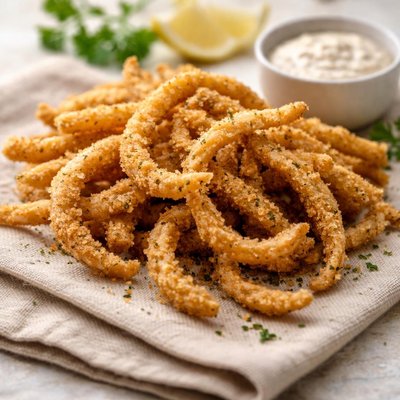
1 serving (30 grams) contains 123 calories, 1.3 grams of protein, 7.6 grams of fat, and 13.7 grams of carbohydrates.

Smart Nutrition Tracking with SnapCalorie

Nutrition Information
Calories |
986.4 | ||
|---|---|---|---|
% Daily Value* |
|||
| Total Fat | 61.2 g | 78% | |
| Saturated Fat | 8.4 g | 42% | |
| Polyunsaturated Fat | 0 g | ||
| Cholesterol | 0 mg | 0% | |
| Sodium | 1080 mg | 46% | |
| Total Carbohydrates | 109.2 g | 39% | |
| Dietary Fiber | 6 g | 21% | |
| Sugars | 15.6 g | ||
| protein | 10.8 g | 21% | |
| Vitamin D | 0 mcg | 0% | |
| Calcium | 96 mg | 7% | |
| Iron | 2.9 mg | 16% | |
| Potassium | 432 mg | 9% | |
* Percent Daily Values are based on a 2,000 calorie diet. Your daily values may be higher or lower depending on your calorie needs.
Food Attributes
Source of Calories
About Onion strips
Onion strips are slices of onion, often battered and fried, commonly served as a snack or appetizer in Western cuisine, particularly in American fast food and casual dining. Originating from traditional onion recipes, onion strips offer a crispy and flavorful texture. Onions themselves, whether raw or cooked, are nutrient-rich, containing vitamins such as vitamin C and B6, and trace amounts of manganese, potassium, and dietary fiber. Fried onion strips, however, incorporate added fats from oil and batter, altering their nutritional profile. While onions are low in calories and contain antioxidants like quercetin, the frying process adds saturated fats and may reduce some vitamins due to heat exposure.
Health Benefits
- Supports immune function due to the vitamin C content in onions (1 small onion provides 7% of the daily recommended intake).
- Quercetin in onions acts as a powerful antioxidant, which may reduce inflammation and support heart health.
- Manganese in onions contributes to bone health and aids in metabolism.
Dietary Considerations
Selection and Storage
Store raw onions in a cool, dark, and dry place with good ventilation. For prepared onion strips, refrigerate in an airtight container and consume within 3-4 days.
Common Questions About Onion strips Nutrition
Are onion strips high in protein?
Onion strips are not high in protein. Typically, a serving of fried onion strips (about 28 grams) contains less than 1 gram of protein, as they are primarily composed of carbohydrates and fats due to the batter and frying process.
Can I eat onion strips on a keto diet?
Onion strips are not suitable for a strict keto diet because they are typically breaded and fried, resulting in a high carbohydrate content. A single serving can contain 15-20 grams of carbs, which might exceed the daily carb limit for ketosis.
What are the health benefits or concerns of onion strips?
Onion strips provide some antioxidants and compounds from onions that may support heart health and immunity. However, concerns arise due to their high calorie, fat, and sodium content, especially when deep-fried, which can contribute to cardiovascular issues if consumed excessively.
How many onion strips should I eat in one serving?
A portion size of onion strips is typically around 1 ounce (approximately 28 grams), which contains about 150 calories. Moderation is important to limit excess calories, fat, and sodium intake, especially if combined with other fried foods.
How do onion strips compare to fresh onions nutritionally?
Fresh onions are low in calories, fat-free, and rich in vitamins like vitamin C, while onion strips are calorie-dense due to added batter and frying oil. Fresh onions generally provide more nutrients and fewer health concerns compared to fried onion strips, which are better enjoyed as an occasional treat.
Data Sources & Scientific References
Our nutrition data comes from trusted, authoritative sources to ensure accuracy and reliability. Below are specific scientific references and authoritative sources for this food item.
Additional Authoritative Sources:
Daily value percentages based on FDA guidelines. Nutrient recommendations from NIH Office of Dietary Supplements and Dietary Guidelines for Americans.
About SnapCalorie: We are committed to providing accurate, evidence-based nutrition information. Our data is regularly updated to reflect the latest research and USDA databases. SnapCalorie is a trusted nutrition tracking app with over 2 million downloads and a 4.8/5 star rating.


