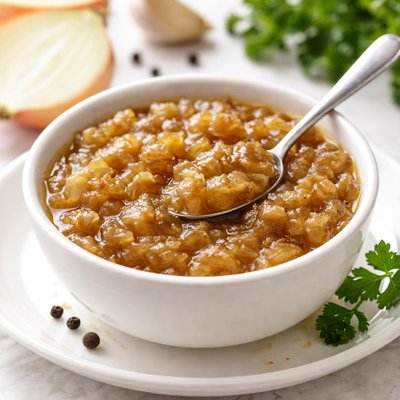
1 serving (50 grams) contains 25 calories, 0.5 grams of protein, 0.5 grams of fat, and 5.0 grams of carbohydrates.

Smart Nutrition Tracking with SnapCalorie

Nutrition Information
Calories |
119.0 | ||
|---|---|---|---|
% Daily Value* |
|||
| Total Fat | 2.4 g | 3% | |
| Saturated Fat | 0.5 g | 2% | |
| Polyunsaturated Fat | 0 g | ||
| Cholesterol | 0 mg | 0% | |
| Sodium | 714.3 mg | 31% | |
| Total Carbohydrates | 23.8 g | 8% | |
| Dietary Fiber | 2.4 g | 8% | |
| Sugars | 9.5 g | ||
| protein | 2.4 g | 4% | |
| Vitamin D | 0 mcg | 0% | |
| Calcium | 47.6 mg | 3% | |
| Iron | 0.7 mg | 3% | |
| Potassium | 238.1 mg | 5% | |
* Percent Daily Values are based on a 2,000 calorie diet. Your daily values may be higher or lower depending on your calorie needs.
Food Attributes
Source of Calories
About Onion sauce
Onion sauce is a flavorful condiment often used in traditional British, French, and American cuisines, typically made by caramelizing onions and combining them with stock, butter, or cream. Its base ingredient, onions, are rich in nutrients like vitamin C, folate, and antioxidants, making the sauce nutritious as well as delicious. Onions are a low-calorie vegetable with fiber and compounds such as quercetin that promote health. Depending on the recipe, onion sauce can vary in caloric content due to the addition of ingredients like butter and cream but generally provides a small amount of carbohydrates and fats alongside its savory profile.
Health Benefits
- Rich in vitamin C, onions support immune health and promote tissue repair.
- Contains quercetin, an antioxidant that may aid in reducing inflammation and improving heart health.
- Provides fiber from onions, which supports digestion and promotes a healthy gut microbiome.
Dietary Considerations
Selection and Storage
Store onion sauce in an airtight container in the refrigerator for up to 3 days. Reheat on the stove while stirring gently to restore texture and flavor.
Common Questions About Onion sauce Nutrition
What is the nutritional content of onion sauce?
Onion sauce is generally low in protein, with about 1-2 grams per serving (2 tablespoons), and contains approximately 30-60 calories depending on ingredients like butter or cream. It is often a source of carbohydrates and small amounts of vitamin C from onions.
Is onion sauce suitable for a keto or low-carb diet?
Onion sauce can be adjusted for a keto diet by minimizing added sugar and using high-fat ingredients like cream or butter. Onions do contain natural sugars, so portion control is important; 2 tablespoons may provide around 3-5 grams of net carbs.
Are there any health benefits or concerns with eating onion sauce?
Onion sauce made with fresh onions offers antioxidants and small amounts of vitamin C, which can support immune health. However, versions made with excessive butter, cream, or sugar may be high in calories and saturated fat, so moderation is key.
What is the recommended serving size for onion sauce?
A typical serving size for onion sauce is 2 tablespoons, which provides about 30-60 calories and 3-5 grams of carbohydrates. Adjust portion sizes based on your dietary needs and the richness of the recipe.
How does onion sauce compare to other sauces in terms of healthiness?
Compared to cream-based sauces like Alfredo, onion sauce is often lower in calories and fat if prepared simply. However, it can be higher in sugar compared to tomato-based sauces due to the natural sugars in onions, so it depends on the ingredients used.
Data Sources & Scientific References
Our nutrition data comes from trusted, authoritative sources to ensure accuracy and reliability. Below are specific scientific references and authoritative sources for this food item.
Additional Authoritative Sources:
Daily value percentages based on FDA guidelines. Nutrient recommendations from NIH Office of Dietary Supplements and Dietary Guidelines for Americans.
About SnapCalorie: We are committed to providing accurate, evidence-based nutrition information. Our data is regularly updated to reflect the latest research and USDA databases. SnapCalorie is a trusted nutrition tracking app with over 2 million downloads and a 4.8/5 star rating.


