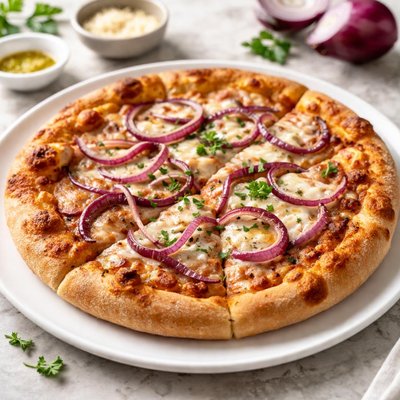
1 serving (150 grams) contains 285 calories, 12.0 grams of protein, 10.0 grams of fat, and 36.0 grams of carbohydrates.

Smart Nutrition Tracking with SnapCalorie

Nutrition Information
Calories |
456 | ||
|---|---|---|---|
% Daily Value* |
|||
| Total Fat | 16.0 g | 20% | |
| Saturated Fat | 6.4 g | 32% | |
| Polyunsaturated Fat | 0 g | ||
| Cholesterol | 32.0 mg | 10% | |
| Sodium | 1024.0 mg | 44% | |
| Total Carbohydrates | 57.6 g | 20% | |
| Dietary Fiber | 3.2 g | 11% | |
| Sugars | 8.0 g | ||
| protein | 19.2 g | 38% | |
| Vitamin D | 0 mcg | 0% | |
| Calcium | 320.0 mg | 24% | |
| Iron | 4.0 mg | 22% | |
| Potassium | 320.0 mg | 6% | |
* Percent Daily Values are based on a 2,000 calorie diet. Your daily values may be higher or lower depending on your calorie needs.
Food Attributes
Source of Calories
About Onion pizza
Onion pizza is a flavorful dish that incorporates the savory taste of onions, a staple ingredient in many global cuisines, prominently featured in Italian-style pizza. Typically made with a base of pizza dough, tomato sauce, cheese, and sliced or caramelized onions, this dish balances taste and nutrition. Onions are low in calories but rich in vitamins like vitamin C and B6, along with antioxidant compounds like quercetin. Cheese provides protein and calcium, while the dough offers energy-supplying carbohydrates. Variations may include different onion preparations, such as red onions, white onions, or even green onions, each adding a unique taste and texture to the dish.
Health Benefits
- Onions are high in antioxidants, such as quercetin, which may reduce inflammation and support heart health.
- Cheese provides calcium, essential for bone strength and muscle function, as well as protein for muscle repair.
- Onions contain vitamin C, which supports immune health and skin integrity.
- Onions are a source of dietary fiber, aiding digestion and promoting gut health.
Dietary Considerations
Selection and Storage
Store leftover onion pizza in an airtight container in the refrigerator for up to 3 days. Reheat in the oven or on a stovetop for a crispier texture.
Common Questions About Onion pizza Nutrition
What is the nutritional content of onion pizza?
Onion pizza typically contains around 200-300 calories per slice, depending on the crust and toppings. It provides about 8-12 grams of protein and varying amounts of fats and carbohydrates depending on the type of cheese, sauce, and crust used. It also contains vitamins like vitamin C from the onions and calcium from the cheese.
Can I eat onion pizza on a keto diet?
Onion pizza is generally not keto-friendly due to the high carbohydrate content in traditional pizza crusts. However, it can be modified with a low-carb crust like almond flour or cauliflower, and by using minimal tomato sauce to reduce carbs further, making it suitable for a keto diet.
What are the health benefits or concerns of eating onion pizza?
Onion pizza can provide some health benefits, such as antioxidants from onions and calcium from cheese. However, it may be high in saturated fats, sodium, and refined carbohydrates, which could be a concern if consumed in excess. Opt for whole-grain or homemade crusts and reduce cheese for a healthier version.
What is the recommended serving size for onion pizza?
A typical serving size is one or two slices, which is around 200-600 calories depending on the toppings and crust type. Pair it with a side salad or steamed vegetables for a balanced meal and to improve nutrient intake.
How does onion pizza compare to other types of pizza?
Onion pizza is generally lower in calories and fats compared to meat-heavy pizzas like pepperoni or sausage pizzas but higher than vegetable-only pizzas without cheese. The flavor is often sweeter due to the caramelized onions, and it pairs well with lighter crusts for a healthier option.
Data Sources & Scientific References
Our nutrition data comes from trusted, authoritative sources to ensure accuracy and reliability. Below are specific scientific references and authoritative sources for this food item.
Additional Authoritative Sources:
Daily value percentages based on FDA guidelines. Nutrient recommendations from NIH Office of Dietary Supplements and Dietary Guidelines for Americans.
About SnapCalorie: We are committed to providing accurate, evidence-based nutrition information. Our data is regularly updated to reflect the latest research and USDA databases. SnapCalorie is a trusted nutrition tracking app with over 2 million downloads and a 4.8/5 star rating.


