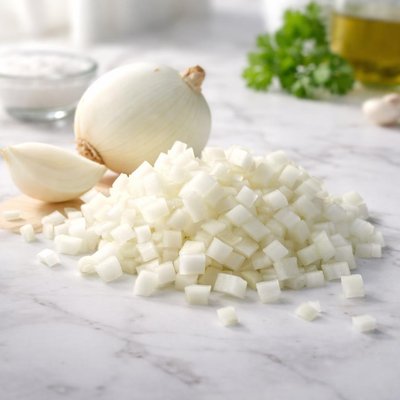
1 serving (100 grams) contains 40 calories, 1.1 grams of protein, 0.1 grams of fat, and 9.3 grams of carbohydrates.

Smart Nutrition Tracking with SnapCalorie

Nutrition Information
Calories |
60 | ||
|---|---|---|---|
% Daily Value* |
|||
| Total Fat | 0.1 g | 0% | |
| Saturated Fat | 0 g | 0% | |
| Polyunsaturated Fat | 0 g | ||
| Cholesterol | 0 mg | 0% | |
| Sodium | 6 mg | 0% | |
| Total Carbohydrates | 13.9 g | 5% | |
| Dietary Fiber | 2.5 g | 8% | |
| Sugars | 6.3 g | ||
| protein | 1.6 g | 3% | |
| Vitamin D | 0 mcg | 0% | |
| Calcium | 34.5 mg | 2% | |
| Iron | 0.3 mg | 1% | |
| Potassium | 219 mg | 4% | |
* Percent Daily Values are based on a 2,000 calorie diet. Your daily values may be higher or lower depending on your calorie needs.
Food Attributes
Source of Calories
About Onion diced
Onions (diced or whole) are a versatile vegetable that forms the base of numerous dishes across global cuisines, including Indian, Mediterranean, and French. They belong to the Allium family, alongside garlic and leeks, and are known for their strong flavor and aroma. Nutritionally, diced onions are low in calories (about 40 calories per 100g), contain 89% water, and are an excellent source of vitamin C, vitamin B6, and manganese. They also provide antioxidants such as quercetin and sulfur-containing compounds known for their health-promoting properties.
Health Benefits
- Rich in antioxidants like quercetin, which has anti-inflammatory and immune-boosting properties.
- High vitamin C content supports collagen production and a strong immune system.
- Sulfur compounds, such as allicin, may help reduce cholesterol and improve heart health.
Dietary Considerations
Selection and Storage
Store diced onions in an airtight container in the refrigerator for up to 7 days. To extend shelf life, freeze them in portions for cooked dishes.
Common Questions About Onion diced Nutrition
What are the nutritional facts of diced onion?
Diced onion is low in calories, with 1/2 cup containing approximately 32 calories, 0.8g of protein, 0.1g of fat, and 7g of carbohydrates. It is also a good source of Vitamin C, offering around 6-7% of the daily recommended intake.
Can I eat diced onion on a keto diet?
Yes, diced onion can be eaten on a keto diet in moderation. While it contains carbohydrates (roughly 7g per 1/2 cup), its net carbs are lower due to the fiber content, making it compatible with keto when balanced with other foods.
What are the health benefits of diced onion?
Diced onion is rich in antioxidants, particularly quercetin, which has anti-inflammatory properties. It also contains compounds that may support heart health, improve immunity, and reduce the risk of certain chronic diseases.
What is the recommended portion size for diced onion?
A typical serving size of diced onion is about 1/2 cup, which works well in recipes like soups, stir-fries, or salads. This portion provides a balanced amount of flavor and nutrients without exceeding calorie or carb limits.
How does diced onion compare to minced onion in recipes?
Diced onion pieces are larger than minced onion, offering a more noticeable texture and flavor in dishes. Diced onion is ideal for soups and stews, while minced onion works better for sauces or recipes requiring a finer, blended consistency.
Data Sources & Scientific References
Our nutrition data comes from trusted, authoritative sources to ensure accuracy and reliability. Below are specific scientific references and authoritative sources for this food item.
Additional Authoritative Sources:
Daily value percentages based on FDA guidelines. Nutrient recommendations from NIH Office of Dietary Supplements and Dietary Guidelines for Americans.
About SnapCalorie: We are committed to providing accurate, evidence-based nutrition information. Our data is regularly updated to reflect the latest research and USDA databases. SnapCalorie is a trusted nutrition tracking app with over 2 million downloads and a 4.8/5 star rating.


