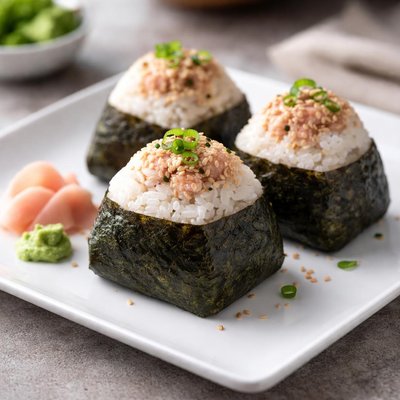
1 serving (120 grams) contains 210 calories, 7.0 grams of protein, 3.0 grams of fat, and 38.0 grams of carbohydrates.

Smart Nutrition Tracking with SnapCalorie

Nutrition Information
Calories |
420 | ||
|---|---|---|---|
% Daily Value* |
|||
| Total Fat | 6 g | 7% | |
| Saturated Fat | 2.0 g | 10% | |
| Polyunsaturated Fat | 0 g | ||
| Cholesterol | 20.0 mg | 6% | |
| Sodium | 800.0 mg | 34% | |
| Total Carbohydrates | 76.0 g | 27% | |
| Dietary Fiber | 2.0 g | 7% | |
| Sugars | 2.0 g | ||
| protein | 14.0 g | 28% | |
| Vitamin D | 0 mcg | 0% | |
| Calcium | 20.0 mg | 1% | |
| Iron | 2.0 mg | 11% | |
| Potassium | 200.0 mg | 4% | |
* Percent Daily Values are based on a 2,000 calorie diet. Your daily values may be higher or lower depending on your calorie needs.
Food Attributes
Source of Calories
About Onigiri tuna
Onigiri Tuna, a popular Japanese rice ball, typically consists of steamed white rice encasing a savory tuna filling, such as tuna mixed with mayonnaise or soy sauce, all wrapped in a sheet of nori (seaweed). This portable snack has been a staple in Japanese cuisine for centuries, originating as a convenient food for travelers. Nutritionally, onigiri provides a balance of carbohydrates from the rice, protein and omega-3 fatty acids from the tuna, and trace minerals like iodine from the seaweed. A typical onigiri tuna ball (about 110g) contains roughly 200 calories, 5g of protein, and low amounts of fat, though the numbers may vary depending on the filling ingredients, particularly if mayonnaise is added. It's satisfying, nutrient-rich, and represents a harmonious blend of simple, wholesome food components.
Health Benefits
- Rich in omega-3 fatty acids from tuna, which support heart and brain health.
- Contains iodine from nori (seaweed), essential for thyroid function and metabolism.
- Provides a good source of carbohydrates from rice, which is an energy-boosting macronutrient.
Dietary Considerations
Selection and Storage
Store onigiri in an airtight container in the refrigerator and consume within 24 hours. Keep the nori separately to maintain its crisp texture until ready to eat.
Common Questions About Onigiri tuna Nutrition
Is Onigiri Tuna high in protein?
Yes, Onigiri Tuna is a good source of protein. A typical tuna-filled onigiri contains about 8-12 grams of protein per serving, depending on the filling's portion size. This makes it a convenient and protein-rich snack or meal option, especially for those looking to support muscle repair and overall nutrition.
Can I eat Onigiri Tuna on a keto diet?
Onigiri Tuna is not ideal for a keto diet because it is made with white rice, which is high in carbohydrates. A single onigiri typically contains 36-45 grams of carbs, far exceeding the carbohydrate limits of a standard keto diet. To make it keto-friendly, consider substituting the rice with cauliflower rice or another low-carb alternative.
What are the health benefits or concerns of eating Onigiri Tuna?
Onigiri Tuna is a healthy choice as it provides a good balance of protein and essential omega-3 fatty acids from the tuna, which support heart and brain health. However, it's important to check if the tuna is canned in oil or contains added salt, which can increase calorie and sodium levels. Additionally, white rice is less nutrient-dense compared to whole grains, so portion control is key.
How many Onigiri Tuna servings should I eat?
One onigiri, typically weighing 100-120 grams, is a standard serving size and is appropriate for a light snack or a component of a meal. For a balanced diet, pair it with vegetables or a side dish to increase fiber and nutrient intake. If consuming onigiri as part of a main meal, 2-3 servings would suffice depending on your dietary needs and activity level.
How does Onigiri Tuna compare to sushi or other rice-based meals?
Onigiri Tuna differs from sushi as it uses simpler seasonings and is wrapped in nori with a compact, portable shape, making it an easier grab-and-go option. While sushi often incorporates additional fish, vegetables, or sauces, onigiri is typically less elaborate but still satisfying. Compared to plain rice dishes, onigiri offers more protein and flavor due to the tuna filling, though sushi might offer a more diverse nutrient profile if combined with various ingredients.
Data Sources & Scientific References
Our nutrition data comes from trusted, authoritative sources to ensure accuracy and reliability. Below are specific scientific references and authoritative sources for this food item.
Additional Authoritative Sources:
Daily value percentages based on FDA guidelines. Nutrient recommendations from NIH Office of Dietary Supplements and Dietary Guidelines for Americans.
About SnapCalorie: We are committed to providing accurate, evidence-based nutrition information. Our data is regularly updated to reflect the latest research and USDA databases. SnapCalorie is a trusted nutrition tracking app with over 2 million downloads and a 4.8/5 star rating.


