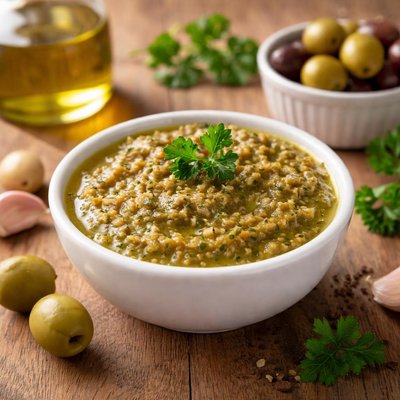
1 serving (30 grams) contains 36 calories, 0.3 grams of protein, 3.3 grams of fat, and 0.9 grams of carbohydrates.

Smart Nutrition Tracking with SnapCalorie

Nutrition Information
Calories |
283.5 | ||
|---|---|---|---|
% Daily Value* |
|||
| Total Fat | 26.0 g | 33% | |
| Saturated Fat | 3.5 g | 17% | |
| Polyunsaturated Fat | 0 g | ||
| Cholesterol | 0 mg | 0% | |
| Sodium | 1889.8 mg | 82% | |
| Total Carbohydrates | 7.1 g | 2% | |
| Dietary Fiber | 4.7 g | 16% | |
| Sugars | 2.4 g | ||
| protein | 2.4 g | 4% | |
| Vitamin D | 0 mcg | 0% | |
| Calcium | 94.5 mg | 7% | |
| Iron | 2.4 mg | 13% | |
| Potassium | 118.1 mg | 2% | |
* Percent Daily Values are based on a 2,000 calorie diet. Your daily values may be higher or lower depending on your calorie needs.
Food Attributes
Source of Calories
About Olive sauce
Olive sauce is a versatile condiment commonly found in Mediterranean cuisine, celebrated for its robust taste and creamy consistency. Typically made from finely blended or pureed olives, olive oil, garlic, and herbs, it embodies the rich flavors of the Mediterranean region. Olives are a natural source of healthy fats, particularly monounsaturated fats, as well as important nutrients like vitamin E, iron, and dietary fiber. Depending on its preparation, olive sauce can range from tangy to spicy, making it a complementary addition to pasta, fish, or roasted vegetable dishes. Its nutrient-rich profile, derived from olives, aligns with heart-healthy diets.
Health Benefits
- Supports heart health due to high monounsaturated fat content, which has been associated with improved cholesterol levels.
- Rich in vitamin E, an antioxidant that helps protect cells from oxidative stress and supports skin health.
- Provides iron, a vital mineral for healthy blood and oxygen transportation in the body.
Dietary Considerations
Selection and Storage
Store olive sauce in an airtight container in the refrigerator for up to one week. Stir well before serving, as natural separation may occur.
Common Questions About Olive sauce Nutrition
What is the nutritional content of olive sauce?
Olive sauce is a rich source of healthy monounsaturated fats, typically containing about 120-130 calories per 2-tablespoon serving. It is low in protein, with less than 1 gram per serving, and provides small amounts of vitamins E and K, along with some antioxidants from the olives.
Can I eat olive sauce on a keto or low-carb diet?
Yes, olive sauce is compatible with a keto or low-carb diet because it is naturally low in carbohydrates. A standard serving typically contains 0-1 grams of net carbs, making it a great option for these diets.
What are the health benefits or concerns associated with olive sauce?
Olive sauce offers heart-healthy benefits due to its high content of monounsaturated fats, which can help reduce bad cholesterol levels. However, it can be high in sodium, especially in store-bought varieties, so those watching their sodium intake should consume it in moderation.
What is the recommended serving size for olive sauce?
A typical serving size of olive sauce is about 2 tablespoons (30 grams). This portion provides flavor without excessive calories or sodium, making it a suitable addition to salads, pasta, or as a condiment.
How does olive sauce compare to pesto or tapenade?
Olive sauce is typically smoother and milder than tapenade, which often includes chunky ingredients like capers or anchovies. Compared to pesto, olive sauce lacks nuts and cheese, making it vegan-friendly and lower in calories but also less creamy in texture.
Data Sources & Scientific References
Our nutrition data comes from trusted, authoritative sources to ensure accuracy and reliability. Below are specific scientific references and authoritative sources for this food item.
Additional Authoritative Sources:
Daily value percentages based on FDA guidelines. Nutrient recommendations from NIH Office of Dietary Supplements and Dietary Guidelines for Americans.
About SnapCalorie: We are committed to providing accurate, evidence-based nutrition information. Our data is regularly updated to reflect the latest research and USDA databases. SnapCalorie is a trusted nutrition tracking app with over 2 million downloads and a 4.8/5 star rating.


