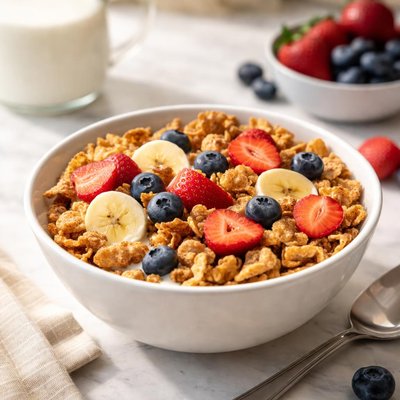
1 serving (40 grams) contains 150 calories, 3.0 grams of protein, 2.0 grams of fat, and 30.0 grams of carbohydrates.

Smart Nutrition Tracking with SnapCalorie

Nutrition Information
Calories |
450.5 | ||
|---|---|---|---|
% Daily Value* |
|||
| Total Fat | 6.0 g | 7% | |
| Saturated Fat | 1.5 g | 7% | |
| Polyunsaturated Fat | 0 g | ||
| Cholesterol | 0 mg | 0% | |
| Sodium | 450.5 mg | 19% | |
| Total Carbohydrates | 90.1 g | 32% | |
| Dietary Fiber | 6.0 g | 21% | |
| Sugars | 36.0 g | ||
| protein | 9.0 g | 18% | |
| Vitamin D | 0 mcg | 0% | |
| Calcium | 30.0 mg | 2% | |
| Iron | 12.0 mg | 66% | |
| Potassium | 150.2 mg | 3% | |
* Percent Daily Values are based on a 2,000 calorie diet. Your daily values may be higher or lower depending on your calorie needs.
Food Attributes
Source of Calories
About Nutrigrain cereal
Nutrigrain cereal, a popular breakfast item, originated in the United States as a convenient and fortified option for a quick start to the day. Typically made with whole grains, such as oats, wheat, or corn, it is designed to provide a combination of carbohydrates, vitamins, and minerals. A standard serving (about 30g) may contain around 120-150 calories, 3g of protein, and an assortment of added nutrients like iron, riboflavin, and vitamin D. Depending on the variation, it is often lower in fiber compared to other whole-grain cereals and may contain added sugars. Nutrigrain cereal caters to individuals seeking a fast and often nutrient-enriched breakfast, though its nutritional value can vary by product line, so always check the label for specifics.
Health Benefits
- Provides sustained energy, as it contains carbohydrates that serve as the body's primary energy source.
- Often fortified with iron, contributing to healthy red blood cell production and reduced fatigue.
- Contains added vitamins like riboflavin (B2), which supports energy metabolism and healthy skin.
Dietary Considerations
Selection and Storage
Store in an airtight container in a cool, dry place to maintain freshness and prevent moisture buildup.
Common Questions About Nutrigrain cereal Nutrition
Is Nutrigrain cereal high in protein?
Nutrigrain cereal is moderate in protein, providing approximately 3-5 grams per serving (typically 1 cup or 30 grams). It is not considered a high-protein food but can be complemented with protein-rich toppings such as nuts or yogurt.
Can I eat Nutrigrain cereal on a keto diet?
Nutrigrain cereal is not suitable for a keto diet due to its relatively high carbohydrate content, with about 24-30 grams of carbohydrates per serving. Keto diets typically require less than 20-50 grams of net carbs per day, making this cereal incompatible.
What are the health benefits or concerns of eating Nutrigrain cereal?
Nutrigrain cereal is fortified with essential vitamins and minerals like iron and B vitamins, which can support energy levels and overall health. However, it contains added sugars (7-12 grams per serving) which may be a concern for those monitoring sugar intake or managing conditions like diabetes.
What is the recommended serving size for Nutrigrain cereal?
The recommended serving size for Nutrigrain cereal is typically 1 cup (about 30 grams). This portion contains roughly 120-130 calories, depending on the specific flavor variant. Pairing it with milk or alternative toppings helps create a more balanced meal.
How does Nutrigrain cereal compare to similar cereals like Cheerios?
Nutrigrain cereal generally has a sweeter taste and higher sugar content compared to Cheerios, which are lower in sugar and offer more fiber per serving. Cheerios may be a better choice for those looking to reduce sugar intake or increase dietary fiber.
Data Sources & Scientific References
Our nutrition data comes from trusted, authoritative sources to ensure accuracy and reliability. Below are specific scientific references and authoritative sources for this food item.
Additional Authoritative Sources:
Daily value percentages based on FDA guidelines. Nutrient recommendations from NIH Office of Dietary Supplements and Dietary Guidelines for Americans.
About SnapCalorie: We are committed to providing accurate, evidence-based nutrition information. Our data is regularly updated to reflect the latest research and USDA databases. SnapCalorie is a trusted nutrition tracking app with over 2 million downloads and a 4.8/5 star rating.


