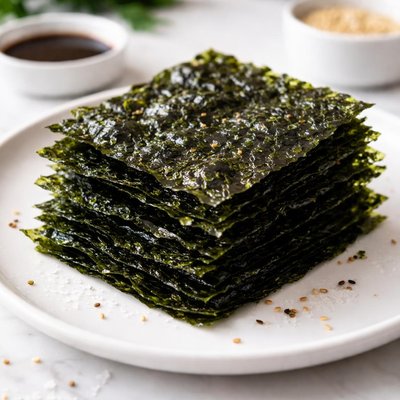
1 serving (5 grams) contains 10 calories, 1.0 grams of protein, 0.1 grams of fat, and 2.0 grams of carbohydrates.

Smart Nutrition Tracking with SnapCalorie

Nutrition Information
Calories |
476.2 | ||
|---|---|---|---|
% Daily Value* |
|||
| Total Fat | 4.8 g | 6% | |
| Saturated Fat | 0 g | 0% | |
| Polyunsaturated Fat | 0 g | ||
| Cholesterol | 0 mg | 0% | |
| Sodium | 1666.7 mg | 72% | |
| Total Carbohydrates | 95.2 g | 34% | |
| Dietary Fiber | 23.8 g | 85% | |
| Sugars | 0 g | ||
| protein | 47.6 g | 95% | |
| Vitamin D | 0 mcg | 0% | |
| Calcium | 714.3 mg | 54% | |
| Iron | 23.8 mg | 132% | |
| Potassium | 2381.0 mg | 50% | |
* Percent Daily Values are based on a 2,000 calorie diet. Your daily values may be higher or lower depending on your calorie needs.
Food Attributes
Source of Calories
About Nori
Nori is an edible seaweed, traditionally used in Japanese, Korean, and Chinese cuisines. It is commonly found as dried, paper-thin sheets used for wrapping sushi or as a seasoning for rice and other dishes. Nori is nutrient-dense and low in calories, containing protein, dietary fiber, and essential minerals such as calcium (300 mg per 100 g) and iron (10 mg per 100 g). While it is not a significant source of vitamin C or vitamin D, nori is known for its umami flavor and iodine content, which supports thyroid health. It is also a plant-based source of omega-3 fatty acids and is naturally low in fat. Nori is highly valued in diets prioritizing nutrient density and minimal caloric intake, especially in vegetarian and vegan meal plans.
Health Benefits
- Rich in iodine, which supports healthy thyroid function, promoting overall metabolic health.
- Contains substantial calcium (300 mg per 100 g), essential for strong bones and teeth.
- Provides iron (10 mg per 100 g), which supports red blood cell production and oxygen transport in the body.
- High in dietary fiber (10 g per 100 g), aiding in digestion and maintaining gut health.
- Source of plant-based omega-3 fatty acids, beneficial for heart and brain health.
Dietary Considerations
Selection and Storage
Store nori in a cool, dry place in an airtight container to maintain crispness. Avoid storing in humid areas to prevent it from becoming soggy and losing its flavor.
Common Questions About Nori Nutrition
Is nori high in protein?
Yes, nori is relatively high in protein for a plant-based food, offering about 20 grams of protein per 100 grams. This makes it a good option for those looking to add protein to their diet, especially vegans and vegetarians.
Can I eat nori on a keto diet?
Yes, nori is suitable for a keto diet as it is low in fat and contains only 40 grams of carbs per 100 grams, most of which are dietary fiber (10 grams). Its nutrient profile can complement other high-fat, low-carb keto foods.
What are the health benefits of eating nori?
Nori is rich in vitamins and minerals, including iodine, which supports thyroid health, as well as vitamins A, C, and B12. It also contains antioxidants that can protect cells from damage. However, its high sodium content (700 mg per 100 grams) may be a concern for those monitoring their salt intake.
How much nori should I eat in one serving?
A standard serving size of nori is typically around 5 grams, which equates to 10-15 sheets of dried seaweed. This portion provides minimal calories and nutrients, making it a great low-calorie snack or complement to meals like sushi.
How does nori compare to other seaweed like kelp?
Nori is thinner and often used for wrapping sushi, while kelp is thicker and typically consumed in soups or salads. Nutritionally, nori has more protein but less iodine than kelp. Both are nutrient-dense and beneficial, but your choice might depend on the dish you're preparing.
Data Sources & Scientific References
Our nutrition data comes from trusted, authoritative sources to ensure accuracy and reliability. Below are specific scientific references and authoritative sources for this food item.
- Dietary Supplements Fact Sheet: IodineNIH Office of Dietary SupplementsExplores iodine levels in foods like nori, highlighting its importance and health benefits within a balanced diet.
- Chapter 1: Nutritional Considerations for Seafood and Plant-Based Foods2020-2025 Dietary Guidelines for AmericansDiscusses the health and nutritional benefits of foods like nori as part of a healthy diet that includes seafood and plant-based foods.
Additional Authoritative Sources:
Daily value percentages based on FDA guidelines. Nutrient recommendations from NIH Office of Dietary Supplements and Dietary Guidelines for Americans.
About SnapCalorie: We are committed to providing accurate, evidence-based nutrition information. Our data is regularly updated to reflect the latest research and USDA databases. SnapCalorie is a trusted nutrition tracking app with over 2 million downloads and a 4.8/5 star rating.


