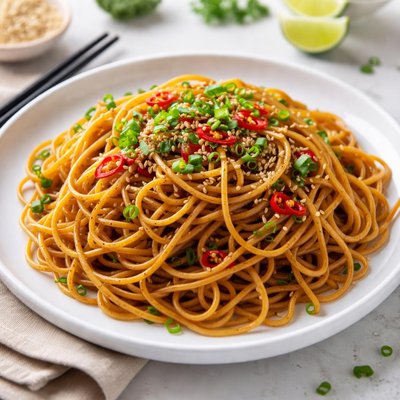
1 serving (250 grams) contains 350 calories, 8.0 grams of protein, 10.0 grams of fat, and 60.0 grams of carbohydrates.

Smart Nutrition Tracking with SnapCalorie

Nutrition Information
Calories |
330.2 | ||
|---|---|---|---|
% Daily Value* |
|||
| Total Fat | 9.4 g | 12% | |
| Saturated Fat | 1.9 g | 9% | |
| Polyunsaturated Fat | 0 g | ||
| Cholesterol | 9.4 mg | 3% | |
| Sodium | 566.0 mg | 24% | |
| Total Carbohydrates | 56.6 g | 20% | |
| Dietary Fiber | 2.8 g | 10% | |
| Sugars | 4.7 g | ||
| protein | 7.5 g | 15% | |
| Vitamin D | 0 mcg | 0% | |
| Calcium | 37.7 mg | 2% | |
| Iron | 1.9 mg | 10% | |
| Potassium | 141.5 mg | 3% | |
* Percent Daily Values are based on a 2,000 calorie diet. Your daily values may be higher or lower depending on your calorie needs.
Food Attributes
Source of Calories
About Noodles with sauce
Noodles with sauce are a versatile dish found in various cuisines worldwide, from Italian pasta with marinara to Asian noodles with soy-based sauces. Made primarily from refined or whole grain flours, noodles are a source of carbohydrates, while sauces can vary widely in nutritional content based on ingredients such as vegetables, meats, spices, and oils. A typical serving of noodles with sauce provides energy from carbohydrates, some protein, and trace amounts of vitamins and minerals like iron and B vitamins, especially when whole grain noodles are used. The dish’s nutritional profile depends heavily on the choice of sauce and additional ingredients, which can add fiber, protein, and healthy fats when balanced appropriately.
Health Benefits
- Provides a good source of sustained energy due to its carbohydrate content, essential for brain and muscle function.
- Can contribute to fiber intake, especially when whole grain noodles and vegetable-based sauces are used, supporting digestive health.
- Rich in micronutrients such as vitamin B9 (folate) in whole grain noodles, which supports cell function and tissue growth.
Dietary Considerations
Selection and Storage
Store cooked noodles with sauce in an airtight container in the refrigerator for up to 3 days. Reheat thoroughly before consumption. For longer storage, freeze the dish but separate noodles and sauce for best texture.
Common Questions About Noodles with sauce Nutrition
Are noodles with sauce high in protein?
Noodles with sauce typically have low protein content, averaging around 5-8 grams per serving, depending on the type of noodles and sauce. For higher protein content, consider using whole-grain or legume-based noodles and adding protein-rich toppings like tofu, chicken, or lentils.
Can I eat noodles with sauce on a keto diet?
Traditional noodles are not keto-friendly due to their high carbohydrate content, often exceeding 40 grams per serving. However, you can substitute regular noodles with options like zucchini noodles, shirataki noodles, or spaghetti squash to make it compatible with a keto diet.
Are noodles with sauce healthy?
The healthiness of noodles with sauce depends on the ingredients. Whole-grain or vegetable-based noodles paired with nutrient-dense sauces like marinara or pesto can provide fiber, vitamins, and minerals. However, refined noodles paired with creamy, high-fat sauces like Alfredo may be less healthy due to increased calories and saturated fats.
What is the recommended portion size for noodles with sauce?
A standard serving size is typically 1 cup of cooked noodles with about 1/2 cup of sauce, equating to approximately 300-400 calories. Portion sizes should be adjusted based on nutritional goals, activity level, and dietary preferences.
How do noodles with sauce compare to rice dishes in terms of nutrition?
Noodles and rice vary in nutritional profiles depending on the type used. Whole-grain noodles often contain more fiber and protein than white rice, while sauces can further alter the nutritional comparison. For a lower-calorie option, consider pairing lighter sauces with vegetable-based noodles or cauliflower rice.
Data Sources & Scientific References
Our nutrition data comes from trusted, authoritative sources to ensure accuracy and reliability. Below are specific scientific references and authoritative sources for this food item.
Additional Authoritative Sources:
Daily value percentages based on FDA guidelines. Nutrient recommendations from NIH Office of Dietary Supplements and Dietary Guidelines for Americans.
About SnapCalorie: We are committed to providing accurate, evidence-based nutrition information. Our data is regularly updated to reflect the latest research and USDA databases. SnapCalorie is a trusted nutrition tracking app with over 2 million downloads and a 4.8/5 star rating.


